
Quick answer
The Turkey teeth horror stories that can be traced to a source come from an inquest, UK and Irish dentists and press interviews, not from social media. They describe the same few things: a plan that grew after arrival, crowns far beyond what was needed, implants placed without a clear way back, and no teeth to wear in the months between. The reports show what can happen, not how often. Each case below ends with the question a pre-payment check would have put.
Some people fly home from Turkey with fewer teeth than they left with, and no date for getting the rest. The Turkey teeth horror stories that fill social media are mostly impossible to check. The ones below are different: each was reported by an inquest, a UK or Irish dentist, or a news outlet, and each can be traced to a published record. They are not here to frighten you out of treatment abroad. They are here because the same few things go wrong again and again, and every one of them can be asked about before a deposit is paid.
Why do we only use Turkey teeth horror stories with a source you can open?
A story on TikTok has no records behind it. You cannot see the X-rays, the quote or the clinic's side, and a video that reaches millions can be about a different country, a different decade or no real patient at all. We left all of that out.
Every case on this page comes from something published and checkable: the report of a coroner's inquest, a dentist writing about a patient, a national broadcaster's interview, a news agency feature, or the case file of a dental defence organisation. In each one we tell you only what the report says. We add no city, price or detail it does not give.
None of the sources names the clinic involved, so neither do we. That matters for how you read them. A person's account of what happened to them is one side of a story; the clinic's side is not in these reports. They also do not tell you how often such things happen, a point we come back to below.
Each case gets the same three parts: what happened, who reported it, and what a check before paying would have asked. Where we say a check "would have asked" something, we mean it would have told the patient what was and was not known beforehand. We do not claim any check would have prevented what followed. Medicine carries risk at well-run clinics too.
What happened to the Norfolk man left with no teeth?
This case involves a death by suicide. If it echoes how you feel, Samaritans will listen at any hour on 116 123, free from any phone, in the UK and Ireland.
What happened. A 48-year-old forklift driver and father of three, whose inquest was held in Norfolk, went to a private clinic in Turkey in January 2025 to have his teeth replaced because of gum disease. After his teeth were removed he expected temporary dentures. He was told none would be provided and that he would have to wait six months before returning for new implants.
Back in the UK his mental health declined, the inquest heard. He struggled to eat, drank heavily and worried about unexpected costs for a procedure he saw as a failure. On 24 April 2025 emergency services were called and he was taken to hospital, where a senior practitioner described strong suicidal thoughts. It was decided he did not need psychiatric admission. He was found dead at home on 28 April 2025. The coroner recorded a conclusion of suicide and said that several lessons had been identified. His widow said his problems had been overlooked at every chance.
Who reported it. The inquest, held at a Norfolk coroner's court, and the press reports of it. The reports do not name the clinic or give the clinic's account.
What it does and does not show. A death like this never has a single cause, and nothing in the reports says the dental work itself caused it. What is on the record is narrower and more practical: a man was left without teeth for what was planned as six months, with no interim solution, and the cost and the sense of failure weighed on him.
What a check before paying would have asked. The plain questions here are about the gap. After the extractions, what will I wear, who provides it, and what happens to my eating, speaking and work for the months before the final teeth? If the answer is "nothing", you can decide whether you can live with that, and whether the people around you know what you are facing. The same applies to a relative planning a full extraction abroad. If you are worried about someone, ask how they are coping with the waiting, not only with the surgery.
What happened when an implant went through the sinus in Antalya?
What happened. A 41-year-old mother of two and professional DJ told a national radio outlet in February 2026 that she travelled to Antalya in April 2024 after a veneer fell out. She said the treatment cost £3,000; the report set that against a UK price it put at nearer £50,000. She flew out on a Monday and had surgery the next day. All her teeth were removed, and she was told she needed a bone graft and a sinus lift. The plan was seven implants in the top jaw and six in the bottom, more than had first been discussed. She said she was awake throughout. She went home with temporary dentures and was due back about five months later for the fixed teeth.
About a week after she returned she developed facial swelling and constant discharge from her nose. She was seen several times by her GP and a local hospital and told she was fine, until she called 999 fearing sepsis. An emergency dentist found that one implant had pierced into her nose, and apparently no sinus lift had been done. A later scan by another dentist showed implants piercing the sinuses and nose. She went on to develop a severe tissue-destroying condition inside her nose and was left with no septum. She was reported to have three implants left in the top jaw and six in the bottom, daily pain and about 30 tablets a day, and to be unable to work. A local dentist refused to examine the implants because she had gone to Turkey.
Who reported it. The interview was published by a national radio outlet, which also quoted the chair of the British Dental Association saying that many UK dentists are picking up the pieces when things go wrong. A spokesperson for her local NHS body was quoted saying the NHS cannot usually provide corrective treatment for complications of private elective procedures unless there is a medical need.
What it does and does not show. This is her account as reported. The clinic's side is not in the report, and nothing in it establishes what caused the condition in her nose. What it records is a plan larger than first discussed, surgery the day after she flew out, a sinus lift that was reported as needed but apparently not done, and a patient who found that help at home was hard to get.
What a check before paying would have asked. Was the number of implants fixed after an examination of her jaw, with imaging, before she flew? With surgery the day after arrival, any change to the plan left little time to take it to her own dentist. A scan beforehand, and the written plan, would at least have given her and a UK dentist a record of what the bone looked like and what was intended.
What if five implants are quoted and then all your teeth must go?
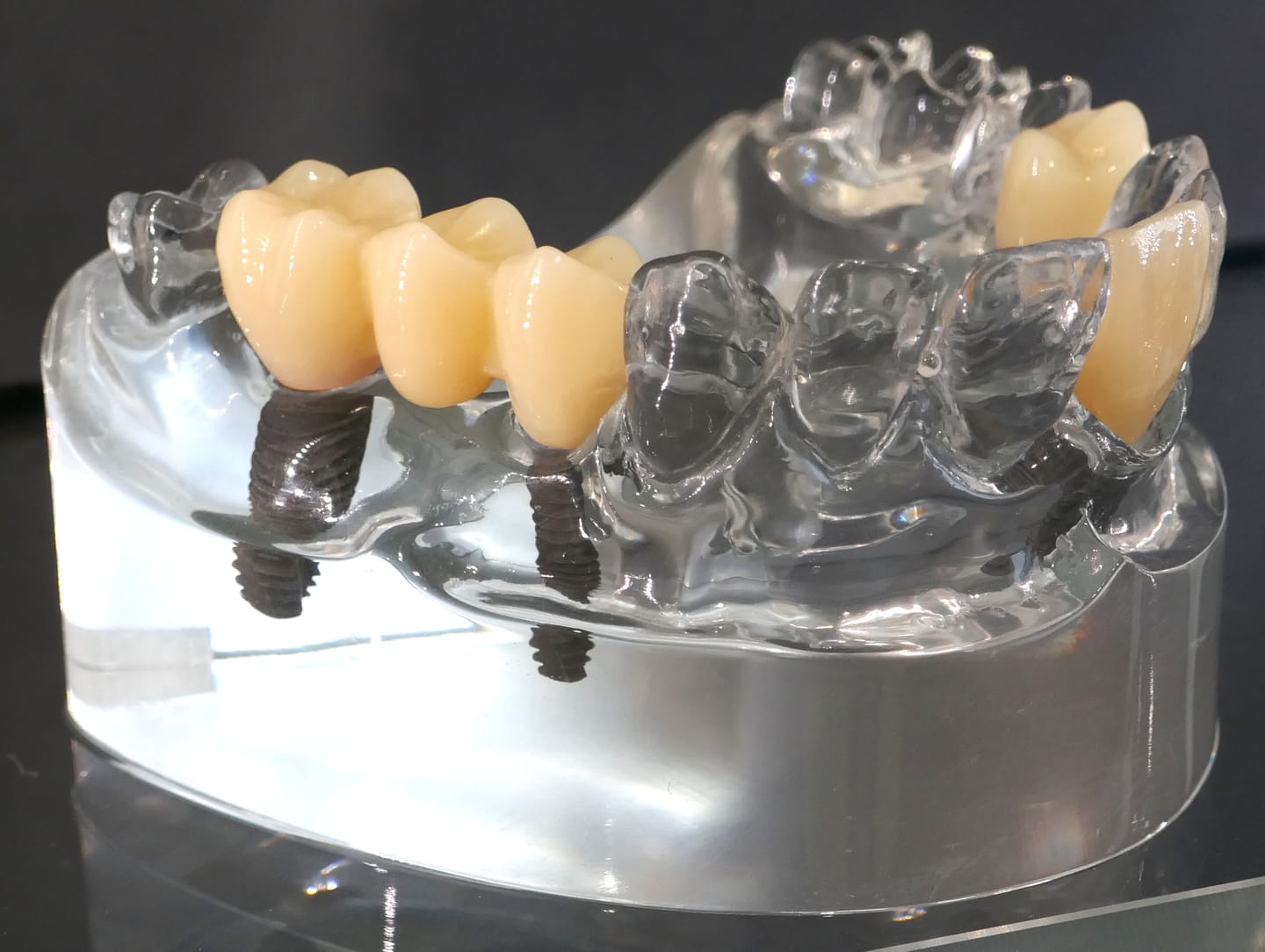
What happened. A 42-year-old engineer from Manchester described to a news agency in 2022 how she had been quoted for five implants in Turkey. When treatment was about to start, the dentists said they would need to remove all her teeth. She knew the work had gone wrong, she said, when she took off her mask afterwards and saw big gaps under her gums and visible metal from the implants.
Repairs were quoted at three to four times what the Turkish work had cost, the report said. After persistent effort she recovered some money from the clinic in Istanbul. The Turkish dentist offered to treat her again if she returned; she said she was too afraid to go back. She now wears veneers.
Who reported it. A news agency feature on the dental tourism industry, carried by a European news outlet in October 2022. The clinic is not named and its response is not in the text we read.
What it does and does not show. It shows a plan that changed from five implants to a full extraction at the point of treatment, and a patient who then had very little room to say no. It does not tell us whether the new plan was clinically justified.
What a check before paying would have asked. When a plan grows on arrival, treat it as a new offer. Ask for the reason in writing, tooth by tooth, and for time to think and to show it to your own dentist. A clinic that expects a decision in the chair has told you something about how it works. Before you travel, ask what would make the plan change and what you would pay if it did.
How do three crowns become twenty?
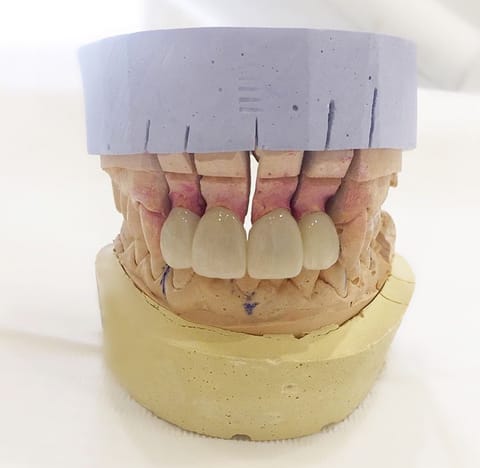
What happened. A reconstructive dentistry specialist and former president of the Irish Dental Association described, in an Irish newspaper in May 2025, a patient who needed three crowns and whitening and came back from abroad with twenty crowns. The same specialist said he sees about six patients a month with problems after treatment abroad, and that putting them right takes about six months, with appointments roughly every three weeks, each lasting around three hours. The article put the cost of repair in Ireland at potentially tens of thousands of euros.
A second record, from a dental defence organisation. A dental defence organisation published an anonymised case file for its members. A 29-year-old with crowded teeth and inflamed gums asked a UK dentist for fast crown treatment. The dentist declined to place crowns, explaining that crowns on unaligned, unrestored teeth meant heavy reduction with a significant risk of damaging the nerve. He advised stabilising the gums first, then orthodontics and whitening. The patient left before the discussion finished.
A month later, after treatment in Turkey, he had upper and lower crowns and came back with jaw ache, sensitivity, pain in four or five teeth, sore gums and affected speech. The UK dentist found six front crowns joined together, and X-rays showed changes at the tips of three teeth, probably pointing to nerve disease needing root canal treatment. He had been given antibiotics in Turkey and was taking them, which the case file links to his pain being bearable. Many crowns were later replaced and multiple root canal treatments were needed. The patient was seeking a refund from the Turkish dentist; the outcome was not known.
Who reported it. The first is a specialist dentist's description of one patient; the second is an anonymised case file written by the defence organisation. Neither names a clinic, and neither identifies the patient.
What it does and does not show. The two accounts are different and should not be merged. In the Irish case we know only that the number of crowns far exceeded what the patient was said to need. In the UK case the patient had been advised against crowns at that stage by the dentist who examined him, and went to a clinic that did them. Neither proves that every clinic over-treats.
What a check before paying would have asked. Which teeth need what, one by one, and why crowns rather than a smaller option such as whitening or bonding? A plan that counts units ("20 crowns", "full smile") instead of giving a reason for each tooth is a plan you cannot compare with a second opinion. Ask your own dentist what they would do, and if they advise against it, ask why before you pay anyone to say yes.
What happens when UK practices will not touch your Turkey teeth?
What happened. A dentist writing in a Northern Ireland newspaper in October 2026 described a patient who had all their teeth removed in Turkey and implants placed in the top and bottom jaw, with temporary dentures. The patient said they could not wear the dentures. The Turkish practice told them to come back, but their circumstances had changed and they could not afford to fly again for the final teeth. They had rung six implant practices in Belfast and, in the patient's words as relayed, no one would touch them. The writer added that dental teams hear stories like this almost weekly.
Who reported it. A UK dentist, in a signed newspaper article, describing a patient. This is second-hand, and the patient is not identified. We do not know which clinic or when the work was done.
What it does and does not show. Practices may decline a patient for different reasons, such as not knowing the implant system, not wanting to take over someone else's plan or not having capacity; the article does not say which applied. What it shows is how a plan that depends on a second flight can leave someone stranded if the second flight stops being possible.
What a check before paying would have asked. If the final stage happens in Turkey, can I afford to return, and what if I cannot? If the final stage happens at home, which UK or Irish dentist has agreed to do it, and have they seen the plan and the implant details? Ring a local practice before you travel and ask whether they would take on the restorative stage of work started abroad. It is a much better conversation to have in advance than after you land.
What do the Turkey teeth horror stories have in common?
The reports do not say whether anyone checked the plan before paying, so we cannot claim that nobody did. What they show is a set of weak points that appear again and again, and each of them is something you can test in advance.
- The plan changed or grew after the patient arrived. Five implants became a full extraction; thirteen implants, a graft and a sinus lift went beyond what had first been discussed.
- The count had no visible reason. Three crowns became twenty, with no tooth-by-tooth justification in the account.
- Nothing covered the gap. Several months with no usable teeth, or dentures that could not be worn.
- The way back was costly or closed. A second flight the patient could not afford; a clinic that offered a repeat visit to a patient who was too afraid to go.
- Help at home was patchy. A dentist who refused to examine implants, practices that turned someone away, and an NHS body saying it cannot usually provide corrective treatment for private elective work.
None of these is unique to Turkey, and none belongs to every clinic. Together they describe a particular way of selling treatment: a low price, a short trip and a relationship that can stop when the patient flies home. A clinic that works well can answer each of these points in writing before you pay, and a clinic that cannot is giving you information.
Looking at a Turkish dental clinic and not sure what you can trust?
An investigation checks the official registration, the doctors recorded and the claims the clinic has made, against documents, before you pay a deposit.
Clinic Investigation £29
One clinic. Evidence-based research. Clear findings and limitations.
Investigate my clinicAre these the worst Turkey teeth cases, and how common is bad Turkey teeth work?
They are not a ranking and not a sample. We picked cases because they had a published source, and a story that reaches a newspaper or an inquest is, by its nature, among the more serious ones.
How often treatment in Turkey goes badly is not known. The dentists who write about it count patients who came through their doors, which is not the same as a failure rate, and patients whose work holds up for years rarely appear in a newspaper or at a coroner's court. Be wary of anyone who quotes a percentage in either direction, whether it is a clinic promising it never happens or a video saying it always does.
What the reports do settle is smaller and still important: that these things happen, that they are costly and slow to repair, and that when they do, the patient is often the one who carries the cost and the travel. That is a reason to ask more questions before paying, not a verdict on a country. Good dentistry is also practised in Turkey.
If you are reading this because it has already happened to you, start with Turkey teeth gone wrong: what to do next for what to do first, and how to complain about a clinic in Turkey for the routes open to you.
How can you avoid becoming the next Turkey teeth story?
Seven checks, each one aimed at a weak point in the cases above. Apart from the first, each is a written answer you ask the clinic for, ideally before any deposit.
1. Does the clinic exist as authorised, and under which name?
"The register" is the Ministry of Health list of facilities authorised to treat international patients. Search the clinic's legal name with our register search. The register records authorisation, the doctors recorded against a facility and its address; it does not record which treatments a facility performs, who treats you on a given day, prices or complaints. See what the register can and cannot tell you. The name should match your contract and your payment details.
2. Who exactly will treat you?
Ask for the full name and registration details of the dentist who will do the work, and compare it with the doctors recorded for the facility. A name that is missing is a question to put to the clinic, not a disqualification, because entries can be out of date. "Our expert team" is not an answer.
3. Is there a plan made after an examination?
A price quoted from photographs describes a smile, not your mouth. Ask for a plan based on imaging of your own jaw, and show it to your own dentist before you pay. If it changes on arrival, treat the change as a new offer: in writing, with time to decide. The five-implants-to-full-extraction story is a plan that changed in the chair.
4. Is it itemised tooth by tooth?
For each tooth: what is planned, how much will be removed, and what the alternatives are. For extractions and implants, the reason for each and the implant system, length and diameter. A count without reasons is how three crowns can become twenty.
5. What will you wear between the stages?
Ask what you will have in your mouth after extractions, who provides it, whether it is included in the price and what happens if you cannot wear it. Ask how long the wait is for the final teeth and where the final stage takes place. This is the check that matters most for the Norfolk case, and it is also about who you will be able to talk to while you wait.
6. If it goes wrong, who pays and how do you get back?
Ask for the guarantee in writing, with its length and what it excludes, who pays for flights, hotel and remedial work, who you contact from home and how fast they reply, and the clinic's complaints procedure. Then ask yourself honestly whether you could afford a second trip. If you pay by UK credit card, ask your issuer whether the purchase is covered; Irish patients should ask their bank about chargeback.
7. Who will look after the work at home?
Before you book, ring a dentist near you and ask whether they would accept a patient with treatment done abroad and what they would need from the clinic. Take your X-rays, treatment record, consent forms and implant details home with you. If your own dentist advised against a treatment, ask why before a clinic tells you otherwise. And read how to tell fake clinic reviews before you rely on star ratings.
Copyable checklist
- Register: clinic found by legal name; name matches contract and payment details
- Dentist: full name and registration details for the person who will treat me; compared with the register entry; gaps put to the clinic
- Plan: made after an examination with imaging of my jaw; shown to my own dentist; changes after arrival in writing
- Itemised: every tooth, with reason, extent and alternatives; implant system, length and diameter written down
- Interim: what I wear between stages, who provides it, how long the wait is, where the final stage happens
- If it fails: guarantee, who pays for flights and rework, contact route, complaints procedure, and whether I could afford a second trip; card protection asked about
- At home: a local dentist who has agreed to see me; records and implant details in my hands before I leave
How does a Clinimora investigation help?
The register tells you whether a facility is authorised. It does not tell you what the clinic's own paperwork shows, whether the doctors recorded against it are the ones who will treat you, or whether the promises in its quote hold together. A Clinic Investigation takes one named clinic and builds a dossier on exactly those questions, with the findings and their limits stated. It does not assess your mouth or promise an outcome: that remains for your own dentist, and for you.
Clinics cannot pay Clinimora for anything. The aim is the opposite of a horror story: to put the documents in front of you before the money leaves your account, so that the decision is yours. Read the Research Pass page to see what is included.
Already chosen a dental clinic in Turkey?
An investigation checks the official registration, the provider details and the claims the clinic has made, against documents.
Clinic Investigation £29
One clinic. Evidence-based research. Clear findings and limitations.
Investigate my clinicFrequently asked questions
What are the most common Turkey teeth horror stories?
In the cases we could trace to a source, the pattern is a plan that changed on arrival (more implants, all teeth extracted), many more crowns than the patient needed, implants that became infected or pierced the sinus, and patients left without usable teeth for months. These are reports of what happened to individuals, not a measure of how often it happens.
Are the Turkey teeth horror stories on TikTok and Facebook true?
Some may be, but a video or a post is a claim you cannot open and check: no records, no dentist's report, no second side. The six cases on this page were chosen because each has a published source behind it. Treat an unsourced story as a prompt for your own questions to the clinic, not as proof either way.
How common is bad Turkey teeth work?
Nobody can say. UK and Irish dentists report seeing patients with problems, and one Irish specialist described about six such patients a month, but those counts are people who turned up, not a failure rate. Patients whose work holds up do not appear in newspapers or at inquests. Be wary of any figure quoted in either direction.
How much does it cost to fix botched Turkey teeth?
It varies enormously and no single figure is reliable. In one report, repair quotes were three to four times what the Turkish work had cost, and an Irish specialist described remedial courses lasting about six months, with long appointments every three weeks. Ask a UK or Irish dentist for a written, itemised repair plan before comparing.
Will a UK dentist treat me if my Turkey teeth have failed?
Some will, some will not. Reports describe patients turned away by several practices, and a dental defence organisation has advised dentists that urgent treatment to relieve pain should not be refused, with complex repair referred to a specialist. Ring early, bring every record, and say clearly that you need an assessment.
Can I complain or get money back if I regret my Turkey teeth?
You can complain in writing to the clinic and through the Turkish channels, and ask your card issuer whether a claim is possible; none of these is automatic. Our guide on how to complain about a clinic in Turkey sets out the routes, and the gone-wrong guide covers what to do first if you are in pain.
How can I check a Turkish dental clinic before I pay?
Search the Ministry of Health register for the clinic's legal name, ask for the full name of the dentist who will treat you, and get a tooth-by-tooth plan after an examination, with the cost of each part and what happens if the plan changes. A Clinimora Clinic Investigation checks the clinic's registration, doctors and claims against documents.