
Quick answer
In 2026 Turkish inspectors and police sealed an unlicensed three-storey clinic building in Istanbul, raided nine addresses in Bursa where foreign nationals allegedly posed as doctors, and closed unlicensed dental clinics in Bursa and Şanlıurfa. These are allegations, not verdicts, and none of the reports says a UK or Irish patient was involved. The common thread is that patients found these places through a website or social media, which cannot prove a licence. Check the register entry, the authorisation certificate, the named doctors and the treatment address before you pay.
In March 2026, Istanbul health inspectors and police sealed a three-storey building in Altunizade, in the Üsküdar district. Inside were a dental office, a hair transplant centre and rooms for aesthetic procedures. The building had no operating licence and no tax registration. What brought the inspectors was a patient's complaint, after the patient had booked through the clinic's website and been treated. That is what an unlicensed clinic in Turkey looks like when it is found.
This page sets out what Turkish press reports and official actions in 2026 show about unlicensed clinics and fake doctors, and what you can check before you pay. A warning on how to read it: every 2026 case below is an allegation, no court has reported a verdict in any of them, and none of the reports says that a UK or Irish patient was involved. We found no report of a ministry closure of a clinic that served UK patients. The point is narrower and more useful than a headline: in the two largest cases, patients reached the places through a website or social media, and neither can prove a licence.
What happened at the unlicensed clinic in Altunizade, Istanbul?
On 17 March 2026, Turkish newspapers reported that the Istanbul Provincial Health Directorate and police had raided a three-storey building in Altunizade. The reports describe it as an unlicensed health centre run by people who presented themselves as doctors. Inspectors found no operating licence and no tax registration. The building was sealed, which ended its activity.
Three kinds of service were allegedly running in the one building: a dental office, a hair transplant centre and medical aesthetic rooms. Two practitioners were present, a specialist in plastic and reconstructive surgery and a dentist. The reports say neither held a licence to run a practice at that address.
That detail matters. A doctor's diploma and a clinic's permission to operate are different documents. A practitioner can hold the first and still be treating patients at an address that has not been approved for it. A diploma on the wall, even a real one, does not answer the question of whether the premises are allowed to treat anyone.
Inspectors also looked at a second site in Nişantaşı that the reports link to the suspects. A man with no health-sector background said he was only the property owner, and a practice belonging to another doctor was found at that address. The reports say the review of that site was continuing.
The file went to the Istanbul Chief Public Prosecutor's Office, and prosecutors were asked to seek one to three years in prison. That is a request, not a conviction. We do not name the business or the individuals here: the reports describe allegations, and we found no verdict. The inspection began because a patient filed a complaint through CIMER, the state's complaint channel.
Who was the "brain surgeon" who booked patients through a website?
The complaint at the centre of the Altunizade case has an odd detail. The patient said they booked their appointment through the clinic's website and that the person who carried out the procedures introduced themselves as a brain surgeon. That is the patient's account. The reports we read do not establish what qualifications that person held, either way.
Set the claim aside and look at the structure. A title on a website and a title spoken in a treatment room are claims, not documents. Neither a booking form nor a friendly coordinator can tell you whether the person introduced to you has the training for what they are about to do, or whether the address is permitted to host it. The patient in this account found out afterwards, through the process of complaining.
The check that follows is short. Before you pay, ask for the full name of the person who will operate, their specialty and their registration details, in writing, and compare them with the doctors recorded against the facility on the register. If a name does not appear, ask why. We explain each step in how to check a doctor in Turkey.
What did the Bursa raids find: home clinics and foreign 'doctors'?
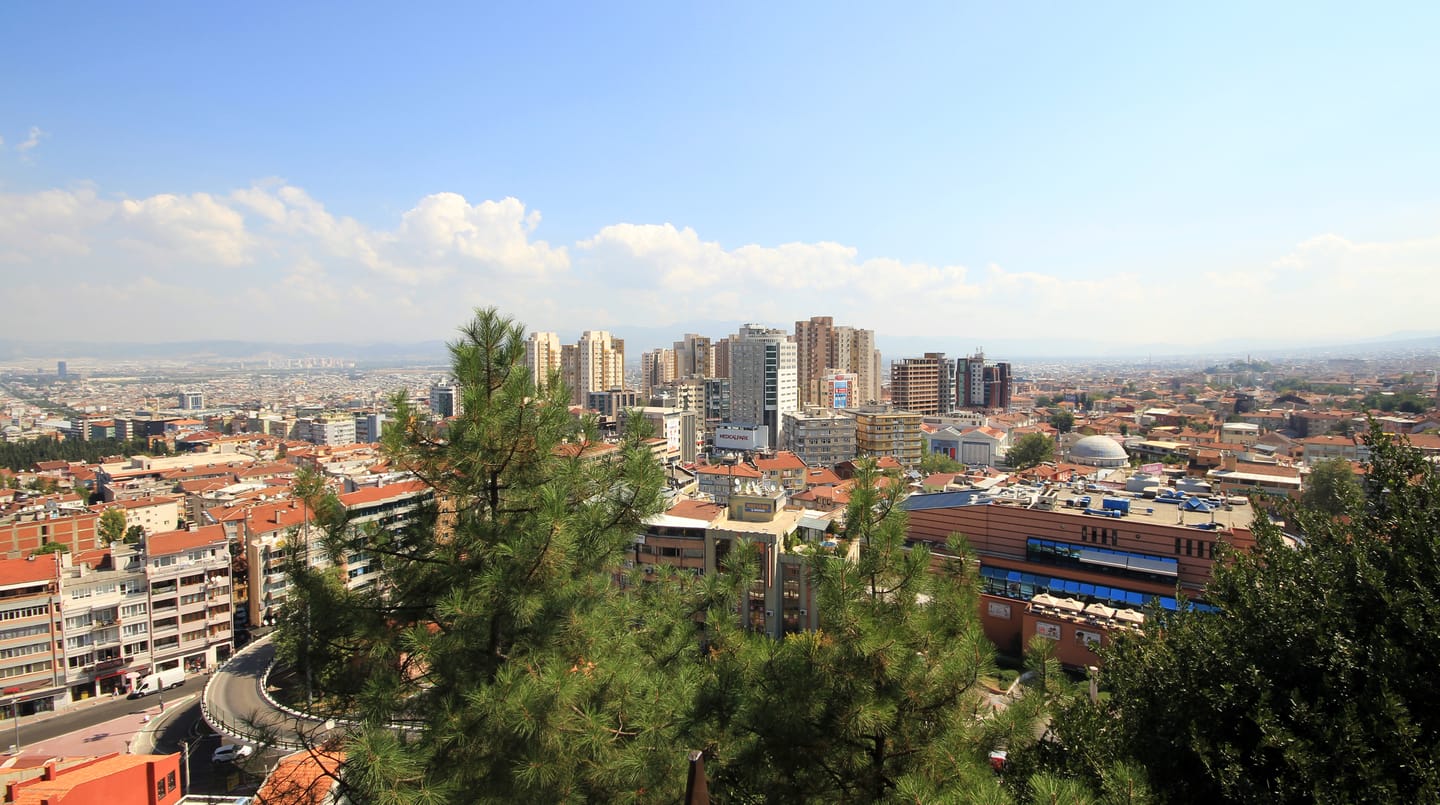
On 6 May 2026, Turkish press reported a police operation in Bursa that had followed a group of suspects for three months before raiding nine addresses at the same time. Seventeen people were detained. Seven of them were foreign nationals who allegedly presented themselves as doctors without being doctors. The other ten allegedly worked as doctors without work permits. The suspects allegedly used fake diplomas.
The reports say the suspects advertised examinations and treatment for a fee on social media, and that the clinics were set up at their residential addresses. Claimed specialities included gynaecology, dentistry, paediatrics and internal medicine. Police seized an ultrasound device, a dental unit, a stretcher and other equipment.
Police were also checking the details of 57 foreign nationals, among them women and children, who had come to these places for treatment. The reports do not give their nationalities, and they do not say that any of the 57 was treated or harmed. The seventeen suspects were referred to court and released under judicial control. No verdict has been reported.
Three points stand out for a patient who is deciding where to go. The clinics were found by social media, not by a register search. They were in homes, which no brochure photograph of a treatment room would reveal. And the people involved were, on the allegation, not who they said they were. A register entry cannot see any of this, which is the reason it is only the first of the checks later on this page.
Which unlicensed dentists have been sealed in Şanlıurfa and Bursa?
Two further 2026 reports concern dentistry. Neither mentions foreign patients, and we include them for what they show about the offence, not about tourists.
On 6 April 2026, police in the Osmangazi district of Bursa acted on a tip-off and detained a man who allegedly had no authorisation to practise dentistry and was treating patients in unsanitary conditions. Police seized a large quantity of medical equipment and sealed the premises. He had three earlier criminal records, and the charge reported is practising medicine without a diploma in order to gain financially. The investigation was continuing when it was reported.
On 10 July 2026, inspectors in the Haliliye district of Şanlıurfa found two dental clinics operating without licences and sealed both. The provincial health directorate coordinated the inspection with municipal enforcement teams and police support. Medical devices, equipment and consumables were seized and administrative proceedings began. The report says nothing about patients.
These are not tourist cases. They matter because the same offence, treating patients without authorisation, was reported in Bursa and Şanlıurfa within a few months of the Istanbul raid. If you are searching for a Turkish dentist and the price looks low, the question to ask is not whether unlicensed dentists exist, but how you would know if yours were one.
How does Turkey punish unlicensed health services and fake doctors?
Press reports of the Basic Health Services Law (No. 3359, additional article 11) describe a prison term of one to three years and a judicial fine for providing health services without a licence, or for letting unauthorised people provide them. A 2018 report on the ministry's enforcement gives a range of one to three years or two to five years depending on the offence. In January 2022, the ministry was reported to have written to its provincial directorates requiring tighter inspection of institutions offering health tourism without an authorisation certificate.
The same 2018 report gives two enforcement figures. The ministry had imposed 328 closure penalties over the previous five years on unlicensed health services and people without authorisation, and about 600 websites had been scanned in 2018 for unauthorised medical advertising. Those figures are old, and they count penalties, not clinics, not patients harmed and not a share of all clinics. They show that closure is an established tool. They do not tell you how common unlicensed clinics are today.
Fake doctors are not only a private-clinic problem. In March 2023 a court in Tekirdağ sentenced a woman who had finished only high school, and who had worked for a year in a state hospital presenting herself as a doctor, to eight years in total. The sentence combined one year for forgery of private documents, three for falsifying official documents and four for breaching the law on unauthorised medical practice, plus a fine. Police had found fake diplomas, identity cards and surgical clothing at her home. The court released her in view of the time already spent in detention. A convincing white coat is not evidence of a degree anywhere.
What do these raids tell UK patients, and what don't they?
They tell you three things. Unlicensed treatment has been alleged in very different places, from a building with three floors of services to residential addresses. It is acted on, sometimes after a patient complains, sometimes after a tip-off and sometimes after months of surveillance. And in the cases above, the way in was a website, a social media page or a title, none of which proves anything.
They do not tell you how many patients were harmed, how many unlicensed places exist, or how likely you are to meet one. They do not tell you that any clinic treating UK or Irish patients was involved. In the cases above, patient nationality is either not mentioned or given only as "foreign". We looked for a report of the ministry closing a clinic that served UK patients and found none. That is a finding about what we read, not proof that it has never happened.
The word "unlicensed" in these reports covers premises or people without the basic permission to operate. Separately, a facility that treats patients who travel for care needs the Ministry of Health's international health tourism authorisation certificate. Both matter, and each fails in a different way. Our guide to what an International Health Tourism Authorisation Certificate is explains the second, and whether any clinic in Turkey can treat international patients explains why not every clinic can. The reports do not say whether any of the premises described here ever appeared on the register.
Why can't a website, reviews or a smart building prove a clinic is authorised?
Because every one of them is something the clinic controls. In Altunizade the patient booked through a website. In Bursa the suspects reached people through social media. In both, the first point of contact looked like any other clinic's.
A website can show any title, any before-and-after photograph and any badge. A review page shows what people chose to post. A reception desk, a lift and a well-lit corridor say nothing about whether the address has permission to treat people. The Altunizade building had three floors of services, and inspectors still found no operating licence.
The things that can be checked sit outside the clinic's marketing: the facility's entry on the Ministry of Health register, the authorisation certificate and its number, the names of the doctors recorded against that facility, and the address where the treatment will take place. None of these is a verdict on quality. Together they let you ask a clinic specific questions that a pretender would struggle to answer.
Already chosen a clinic in Turkey and unsure what its website cannot tell you?
An investigation checks the official registration, the provider details and the claims the clinic has made against documents, before you pay.
Clinic Investigation £29
One clinic. Evidence-based research. Clear findings and limitations.
Investigate my clinicHow can you check a Turkish clinic before you pay?
Six checks, in this order. Each depends on a written answer from the clinic except the first. The step-by-step version is in how to check whether a Turkish clinic is authorised to treat you; this is the short route.
1. Is the facility on the register?
"The register" is the Ministry of Health list of facilities authorised to treat patients who travel to Turkey for care. It currently lists 4,102 facilities. Search for the clinic's legal name with Clinimora's register search. A match shows that the facility is authorised. It does not show quality, and it does not say who will treat you on a given day.
2. Does the authorisation certificate match?
Ask for a copy of the facility's authorisation certificate and compare the name, number and address with the register entry. A facility that treats patients from abroad should be able to produce it. An absence is a question, not a ruling.
3. Do the doctors check out?
Ask for the full name, specialty and registration details of each doctor who will treat you, in writing, and compare the names with the doctors recorded on the register entry. Be wary of titles you cannot trace, such as a specialty announced in conversation but absent from any paperwork.
4. Is the treatment address the one on the paperwork?
Get the street address of the place where you will be treated in writing, and compare it with the register entry and the contract. The Altunizade reports describe practitioners without a licence to practise at that address, and the Bursa reports describe homes. If the address changes after you pay, or is not given until you arrive, stop and ask why.
5. Does the paper trail name one legal entity?
The quote, contract, invoice and payment details should name the same legal entity as the register. Ask who receives your deposit. A different name on the invoice from the one you researched is worth resolving before money moves.
6. Have you kept the evidence?
Save the booking messages, the quote, the names you were given and any photographs of the premises. If something goes wrong, those are what you will rely on, and in the Altunizade case a complaint was what set the inspection in motion.
Copyable checklist
- Register: facility found by legal name; I know what the entry records and what it leaves out
- Certificate: copy received; name, number and address match the register entry
- Doctors: full name, specialty and registration details in writing for each; compared with the register entry
- Address: street address of the treatment site in writing; matches the register and the contract
- Paper trail: quote, contract, invoice and deposit all name the same legal entity
- Evidence: messages, names, quote and photographs saved before I pay
How does Clinimora investigate a clinic?
The register tells you whether a facility is authorised. It does not tell you what the clinic's own paperwork shows, whether the doctors recorded against it are the ones who will treat you, or whether what the website promises holds together. A Clinic Investigation takes one named clinic and builds a dossier on those questions, with the findings and their limits stated. Clinics cannot pay Clinimora for anything.
Not sure what the clinic you are considering would show up as?
An investigation compares the clinic's register entry, certificate, named doctors and claims, and tells you what it found and what it could not establish.
Clinic Investigation £29
One clinic. Evidence-based research. Clear findings and limitations.
Investigate my clinicStart with the Research Pass, and keep the six checks above in hand while you wait for the clinic's answers.
Frequently asked questions
Is my Turkey clinic licensed?
Two different permissions are in play: the premises and practitioners need ordinary permission to practise, and a facility treating patients who travel for care also needs the Ministry of Health's international health tourism authorisation. Search the register for the clinic's legal name, then ask the clinic for its certificate and compare the two. A match shows authorisation, not quality.
How can I tell whether a doctor in Turkey is real?
There is no single public lookup like the UK's registers. Ask the clinic for the doctor's full name, specialty and registration details in writing, then compare them with the doctors recorded on the facility's register entry. A name that is missing is a question to put to the clinic, not proof of wrongdoing. Our guide on checking a doctor in Turkey goes step by step.
Are there illegal hair transplant clinics in Turkey?
Officials found a hair transplant centre among the unlicensed services in the sealed Altunizade building in March 2026. We have found no count of how many illegal hair transplant clinics exist, and we do not offer one. The practical point is the same as for any treatment: confirm the facility and the person doing the work before you pay.
Can an unlicensed dentist treat tourists in Turkey?
The 2026 reports of unlicensed dentists sealed in Bursa and Şanlıurfa do not mention foreign patients, so we cannot say. What they show is that treating patients without authorisation is alleged to occur and is acted on. Ask any dentist for their full name and registration details and compare them with the facility's register entry.
What happens to people who run an unlicensed clinic in Turkey?
Press reports of the Basic Health Services Law describe one to three years in prison and a judicial fine for providing health services without a licence or letting unauthorised people do so. In the 2026 cases reported here, files went to prosecutors or courts and no verdict has been reported. Premises are sealed and equipment seized.
How do I report an unlicensed clinic in Turkey?
In the Altunizade case, the inspection followed a complaint filed through CIMER, the state's complaint channel, and the provincial health directorate carried it out. Keep your booking messages, invoices, photographs and any names. If you are unsure which route fits your case, ask the provincial health directorate for the city where you were treated.
Has the Ministry closed a clinic that treated UK patients?
We found no report of that. The 2026 closures we read name no UK or Irish patients, and a 2018 ministry figure counts closure penalties without saying who was treated. Absence of a report is not proof that it has never happened, so check the clinic you are considering rather than rely on its absence from the news.
What if I was treated at a clinic that turns out to be unlicensed?
See a doctor or dentist near you soon, particularly if there is pain, swelling or fever, and bring every record you have. Write down the date, the place and the names you were given. Keep messages and invoices. Then put your complaint in writing to the clinic and consider the Turkish complaint channels.