
Quick answer
'Turkish hairline' is a pun on Turkish Airlines, used online for hair transplants done in Turkey and for a hairline that looks obviously transplanted: set too low, drawn too straight and packed with grafts instead of designed. The cause is not the country but a process in which a salesperson books you, nobody examines you and the doctor never draws the line. Good hair transplant surgeons work in Turkey, as they do elsewhere. The check is simple: before you pay, find out which named doctor will examine you, design your hairline and decide the graft numbers, and who will actually make the incisions.
Picture the consultation you were promised. A doctor with fifteen years of experience will examine your scalp, draw your hairline and operate. Now picture arriving and meeting a translator and a technician, with the doctor nowhere to be seen. That is the case at the centre of this page, and it is the clearest documented example we found of how a fake-looking hairline comes about: not through a country's surgeons, but through a process in which nobody designed the result. This guide explains the phrase, the signs of a fake-looking hairline, what UK and Turkish surgical associations agreed patients should be given, whether a bad result can be repaired, and what to put in writing before you pay.
What does "Turkish hairline" mean, and where did the joke come from?
"Turkish hairline" (also "Turkish hairlines") is a pun on the name of the national airline, Turkish Airlines. Online it started as a joke about the many men flying to Turkey for hair transplants; coverage we opened describes videos of men with reddened scalps and head bands at Istanbul airport or on flights. The phrase is also used for a hairline that looks obviously transplanted: a front line that sits too low on the forehead, runs too straight across and is filled so densely that it looks like a border drawn around the face. We found no authoritative definition of that second meaning, so treat it as how people use the phrase, and as the fear this page is about.
Exactly where and when the joke began is another matter. We found no reliable documented origin, so we do not claim one. The origin is not what matters to you. The pattern behind the fear is: a hairline put in by volume rather than by design.
Two things follow. First, the joke is about a result, not a nationality. A badly designed hairline can be produced in the UK as easily as in Turkey. Second, the reason it attaches to Turkey is scale. A very large number of people travel there for hair transplants, so the failures there are probably the ones people see and name. That is our reading, not a measured finding. In a trade that big, quality will vary, which is why the 2023 joint statement of UK and Turkish associations sets out minimum standards of care. The rest of this page is about telling the two apart before you commit.
What are the five signs of a Turkish hairline?
None of these is a clinical diagnosis, and a single sign does not prove poor work. Together they describe what people point at when they call a hairline fake. We set them out as plain observations about design, so you can check your own plan against them. A surgeon can tell you which apply to you.
1. Set too low. A hairline drawn far down the forehead can look natural for a teenager and wrong for an adult. It also leaves nowhere to go. If you keep losing hair behind the transplanted line, the new front can end up as an island with a gap behind it.
2. Ruled too straight. Natural hairlines are not straight edges. They are irregular, with a softer, uneven front where fine single hairs come first and thicker hairs sit behind them. A line that looks as if it was drawn with a ruler is the most recognisable sign of all.
3. Wrong angle and direction. Hair grows at an angle and in a direction that changes across the scalp. Grafts placed at the wrong angle stand up or point the wrong way, so the result can look like a row of small stakes instead of hair that lies down naturally. The repair case below describes a hairline resembling "sticks" or "palm trees"; the write-up does not say why it looked that way.
4. Pluggy, overpacked density. When a plan is built around how many grafts can be placed, rather than how many the donor area can spare and the design needs, the front can come out too dense for the hair behind it. Donor hair is limited, and grafts spent at the front are not available later. In the repair case below, the write-up says the patient asked for a subtle improvement at the temples and had about 4,000 grafts placed, almost double what he requested.
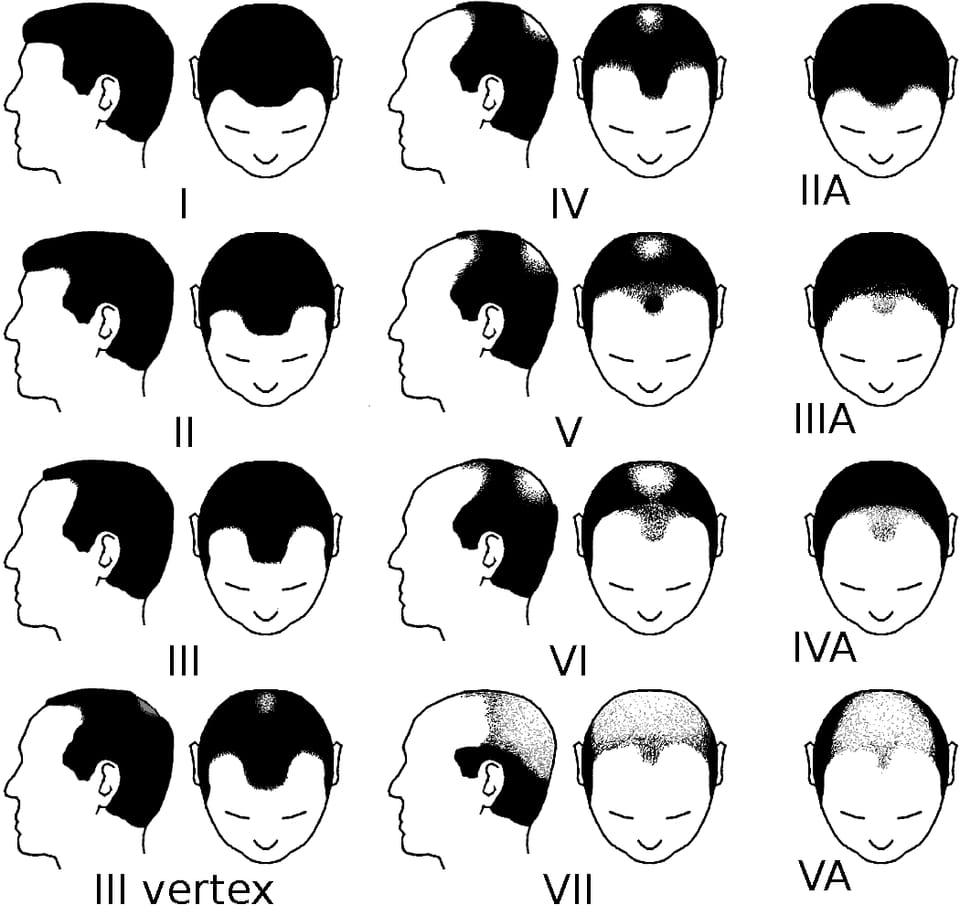
5. No temples, no future. A hairline can be drawn as if the temples did not exist, or as if the person would stop losing hair on the day of surgery. Pattern hair loss is progressive, and the standard way of grading it runs from a slightly receding front to advanced loss. A design should allow for the stages that have not happened yet.
If your plan, a photo of a "result" or the hairline you have been shown has two or more of these, put that to the doctor who will operate. It is a question to ask in writing, not a reason to cancel on the spot.
Is it the country or the process? WhatsApp sales and no design consultation
Good surgeons work in Turkey, as they do in every country where hair transplants are done. We say this plainly because the opposite story, that every Turkish hair transplant is a gamble, is as unsupported as the story that none is. What the documented account and the surgeons' associations describe is narrower and more useful: a particular way of selling and running the operation.
In the case below, it ran like this. The patient dealt with a salesperson on WhatsApp who pushed him to book. Nobody gave him a medical consultation or explained the procedure, and no one designed his hairline. The doctor he had been promised was not there, and the people he met were a translator and a technician. We cannot say how common that pattern is. It is the pattern the joint guidance of December 2023 is written against.
Each step in that chain removes a decision from the doctor. That is how a fake-looking hairline gets made, because a hairline is a decision about one face, and a salesperson cannot make it. The person who decides how many grafts to place is not necessarily the person who places them, and neither of them is necessarily the person who examined you.
There is also the question of who does the surgery. In 2016 an international hair restoration society warned about technicians performing hair transplant surgery, describing a bait-and-switch in which a doctor's credentials attract the patient while the surgery is done by someone without the training to perform it. It also reported that the Turkish Health Ministry had at that time banned hair transplants outside hospitals, and said this led to a black market. That is a ten-year-old warning and we have not verified what the rules are today, so we do not state them. We do pass on what it tells you to ask: who performs each step of your operation, and is everyone involved covered by malpractice insurance.
One thing about the register. The Ministry of Health register lists the facilities authorised for international patients and records the doctors against them. It does not record which procedures a facility performs, who designs a hairline, or who makes the incisions on a given day. A facility being listed tells you it is authorised. It does not tell you how your hairline will be decided. That is why the questions further down are written ones.
What happened in one repair case: "sticks" and "palm trees"?
This is one man's account, published by a hair restoration society as a repair case study. The write-up gives the patient only a first name and does not name the clinic, and we do not know who either is. It is a self-reported case, and it is not a finding about any clinic.
The man, who lives in Poland, was going through a difficult period and hoped that a change in how he looked would lift his confidence. A friend who had travelled for a transplant encouraged him. Local prices seemed too high, so he turned to an overseas clinic described as a Turkish hair transplant clinic. The write-up names no city.
He dealt mainly with a salesperson on WhatsApp, who pushed hard to secure the booking. He hesitated and booked quickly anyway. The write-up says there was no proper medical consultation, no detailed explanation of the procedure and no personalised hairline design. He had been told that a doctor with fifteen years of experience would operate. On arrival, he met a translator and a technician, and the doctor was nowhere to be seen.
The surgery took about five hours. He had asked only for a subtle enhancement at the temples, and about 4,000 grafts were placed, almost double what he wanted, including in areas where he still had hair of his own. The donor area, where the grafts were taken from, suffered severe shock loss and lost much of its remaining hair. The new hairline looked unnatural, and the write-up describes it as resembling sticks or palm trees. It also describes thinning and scarring in the donor area that local doctors could not confidently say would improve, and mentions depression and stress afterwards.
The case is one person's experience, and nothing in it shows how common this is. It cannot prove that a particular check would have prevented it either. What it does show is what a check would have revealed. A written answer to "which doctor will examine me, design my hairline and operate, and may I speak to them before I pay?" would have told him, before the deposit, whether the plan had a doctor in it.
Holding a quote for a hair transplant in Turkey?
An investigation checks the clinic's official registration, the doctors recorded against it and the claims in its offer, including who is said to examine, design and operate, against documents.
Clinic Investigation £29
One clinic. Evidence-based research. Clear findings and limitations.
Investigate my clinicWhat did UK and Turkish surgeons agree patients should be given?
On 13 December 2023 two UK bodies, one for hair restoration surgeons and one for aesthetic plastic surgeons, joined the UK reconstructive plastic surgery association and the Turkish society of plastic, reconstructive and aesthetic surgeons in issuing minimum guidelines for UK patients considering hair transplant surgery in Turkey. The checklist is concrete.
The guidance treats hair transplant surgery for pattern hair loss as care for a medical condition, and in most cases not as cosmetic surgery. It says life-threatening complications are less common than in general plastic surgery but do happen, and that complications affecting appearance are more common and can have a large psychological effect. It also says complications can be reduced if the operating doctor plans the surgery in advance and a doctor, not a technician, performs the surgical steps.
On that basis it urges patients to expect five things.
- A consultation with the operating doctor. You should meet the doctor who will operate. That doctor should recommend how the hair is harvested, how many follicular units or hairs are needed, and the hairline and transplant design.
- Two weeks to think. You should be given two weeks to consider the recommendation and the proposed consent form before paying anything for the surgery.
- Disclosure of non-doctor involvement. If a doctor will not make the incisions to harvest or implant the hair, including where a technician will, you should be told at the first consultation.
- A doctor who reviews the result. The operating doctor should assess progress along the way and the final result. You should be able to raise a grievance, and the clinic should have a clear complaints process.
- A way to handle complications. The clinic should have systems for dealing with complications during and outside working hours. The statement lists skin death, infection, cysts and altered sensation among the examples, and the supply of antibiotics.
Put the repair case beside this list. Several items match places where the write-up says the process failed: no consultation with the operating doctor, no design, a technician where the doctor was expected. None of the five depends on taking the guidance's authors' word on medicine. It is a short list of things a clinic can either give you in writing or not.
Can a bad hairline be fixed? Repair, removal and limits
Sometimes, within limits, and rarely quickly. The repair in the case above was done by a Belgian hair transplant surgeon, a member of the same society, over several sessions spaced months apart. At the first visit the hairline was patchy and unnatural and the donor area heavily damaged.
The steps described were these. Poorly placed grafts were removed, mainly above the ears. The scars were closed carefully to keep them small. Grafts were then taken from the less damaged parts of the donor area and placed gradually. After two removal sessions and 650 grafts transplanted during the repair, the hairline was much improved. About fourteen months later there was a final session involving 200 grafts, which the write-up calls a removal session, with grafts placed to restock the hairline. The surgeon's planning notes recorded a density as low as 30 follicular units per square centimetre in some parts of the donor area.
Three limits come out of that account, and they are worth holding on to beyond one patient.
- Donor hair is finite. Hair taken from the back and sides is not replaced. When too much has been spent, a repair surgeon has less to work with, and a smaller improvement than the patient hoped for may be the realistic plan.
- Removal is its own stage. In this case it took two removal sessions before the hairline was much improved, which added operations to the original one.
- Time matters. This repair was staged over months. If you have a bad result, the first step is an assessment by a surgeon who does repair work, with photographs from before and after and the clinic's records.
If it has already gone wrong, keep every message, invoice and photograph, ask the clinic in writing for your treatment record including the number of grafts placed, and see a surgeon who does repair work for an assessment before you decide what to do. Do not assume that it can all be put right, or that it cannot. We have no data on how often repair works, and a single published case cannot supply it.
Which questions should you ask before anyone draws your hairline?
These are the questions that, between them, separate a process built around a doctor from one built around a booking. Put each one in writing, by message or email, so there is a record. A clinic that is happy to answer them is telling you something. A clinic that dodges them is telling you something too.
1. Who is the operating doctor?
Ask for the full name and registration details of the doctor who will operate. Then compare the name with the doctors recorded against the facility's entry in the Ministry of Health register, using the register search. A name that does not appear is a question for the clinic, not a disqualification: entries can be out of date or spell names differently. See how to check a doctor in Turkey.
2. Will I meet that doctor before I pay?
The joint guidance expects a consultation with the operating doctor, and two weeks with the recommendation and the consent form before you pay. Ask for the consultation by video if you cannot attend in person, and notice whether you are put off.
3. Who designs my hairline, and how will I see it?
Ask who draws it, when, and whether you will see the line on your own head, from the front and the side, before any hair is taken. Ask how the design allows for further hair loss.
4. How was the number of grafts decided?
Ask for the number of grafts in writing and the reason for it, given your donor area. A plan that gives a round number before anyone has examined you was not made for you. The case above shows what the gap between a subtle change at the temples and about 4,000 grafts can look like.
5. Who will make the incisions?
Ask who harvests the hair and who places the grafts: the doctor, a nurse or a technician. The guidance asks for disclosure at the first consultation if the doctor will not make the incisions. Ask also whether everyone involved in your surgery is covered by malpractice insurance.
6. What happens if it goes wrong, and who reviews the result?
Ask who reviews your progress and the final result, whether that is the operating doctor, who you contact from home and how quickly they reply, how complications are handled at night and at weekends, and what the complaints process is. Ask also what is covered if you need a second operation, and who pays for the flights.
7. What will I be given to take home?
Ask for the treatment record: the number of grafts taken and placed, the method, the doctor's name, the date and photographs. A surgeon at home who has to judge or repair the result needs this. See FUE versus DHI for what the method names mean, and hair transplant in Turkey for the wider picture.
Copyable checklist
- Doctor: full name and registration details of the operating doctor; compared with the register entry
- Consultation: I meet that doctor, in person or by video, before paying; two weeks with the recommendation and consent form
- Design: the hairline is drawn by the doctor and shown to me on my own head; allowance for further hair loss explained
- Grafts: number and reason in writing, based on my donor area, not a package
- Incisions: who harvests and who places, in writing; malpractice cover for everyone involved
- If it goes wrong: who reviews the result, out-of-hours contact, complaints process, who pays for a second operation and the flights
- Records: treatment record with graft numbers and photographs in hand before I leave
For choosing between clinics once these are answered, see how to choose a hair transplant clinic in Turkey, and for reading the claims clinics make about themselves, how to read the rankings of hair transplant clinics.
How does a Clinimora investigation help?
The seven questions above are yours to ask. A Clinic Investigation does the part you cannot easily do from your phone. It takes one named clinic and builds a dossier on its official registration, the doctors recorded against it, the company behind it and the claims in its own offer, with the findings and their limits stated. If a clinic says an experienced doctor will operate, the investigation looks at what the documents say about that doctor and that facility.
It does not watch the operating theatre. It cannot tell you who will hold the instrument on your day, and it will not say a clinic is good or bad. What it gives you is evidence to set against the sales message, and a clear list of what is still unproven, so the questions you send are sharper. Clinics cannot pay Clinimora for anything. See the Research Pass.
Already chosen a hair transplant clinic in Turkey?
Before you pay a deposit, an investigation checks the official registration, the provider details and the claims the clinic has made, against documents.
Clinic Investigation £29
One clinic. Evidence-based research. Clear findings and limitations.
Investigate my clinicFrequently asked questions
What is a Turkish hairline?
It is internet slang, a pun on Turkish Airlines, for hair transplants done in Turkey, and it is often used for a hairline that looks obviously transplanted: set too low, too straight and too dense at the front. We found no authoritative definition. A hairline like that can be produced anywhere. The phrase attaches to Turkey because so many people travel there for transplants.
Where did the Turkish hairline joke come from?
It plays on the name of the national airline, Turkish Airlines. Beyond that, we found no reliable account of where it began, so we do not claim a source. What matters for a patient is the pattern the joke points at, which is a hairline that was never designed for the person wearing it.
Why do some hair transplants in Turkey look fake?
A fake look comes from design and execution: a hairline placed too low or ruled straight, grafts angled in the wrong direction, density pushed at the front, and no allowance for later hair loss. The documented warning sign is a process with no medical consultation and no hairline design, where the doctor is not the person making the decisions.
Is a hair transplant in Turkey safe?
Hair transplants are surgery and carry risks anywhere, from infection to poor growth to an unnatural result. Turkey has doctors who do this work, and surgeons' bodies have also warned about technicians doing work that belongs to doctors. The difference lies in who examines you, designs the hairline and operates, so ask those three questions in writing.
Can a Turkish hairline be fixed?
Sometimes, with limits. One published repair case involved removing badly placed grafts, careful closure and several smaller sessions spaced months apart, and the hairline was much improved afterwards. Donor hair is finite and damaged areas may not recover fully, so ask a surgeon who does repair work to assess you before you assume a result.
Who should design my hairline?
The doctor who will operate. Joint UK and Turkish guidance issued in December 2023 says that doctor should recommend the harvesting method, the number of grafts and the hairline and transplant design, and that you should meet them before paying. A salesperson, a translator or a coordinator is not a substitute.
Do technicians do hair transplants in Turkey?
A 2016 warning from an international hair restoration society said technicians were performing hair transplant surgery in the Turkish trade. UK and Turkish associations now ask that you are told at the first consultation whether a doctor or a technician will make the incisions. Ask, and get the answer in writing. We have not verified the present-day rule, so do not assume either way.
How do I check a hair transplant clinic in Turkey?
Look the facility up in the Ministry of Health register, ask for the full name of the doctor who will operate, and compare it with the doctors recorded against the facility. A missing name is a question for the clinic, not a verdict. Then ask who designs the hairline, who makes the incisions and how complications are handled out of hours.