
Quick answer
An overharvested donor area is the back and sides of the scalp after too many follicles have been taken from it. Extracted follicles do not grow back, so thinning from overharvesting is permanent, not a delay. Repair is camouflage, grafts from the beard or body, or scalp micropigmentation, and it is limited by how much donor hair is left. Surgeons' guidelines give no universal graft count; they say the operating doctor should measure your density and plan the number. So agree the graft count with that doctor, in writing, before you pay.
Your hair transplant is only as good as the hair that was taken to make it, and that hair does not come back. An overharvested donor area is the back and sides of the scalp after too many follicles have been removed from it: thin, uneven, sometimes patchy, and visible whenever the hair is cut short. The front of the head can look fine in photographs while the back is the part that cannot be undone.
This page explains what overharvesting is, how it comes about when grafts are sold as a number, what one patient described when it happened to him, how to recognise it, what repair involves and where it stops. Then it sets out how to get the graft count in writing before you pay.
What is an overharvested donor area, and why does it not grow back?
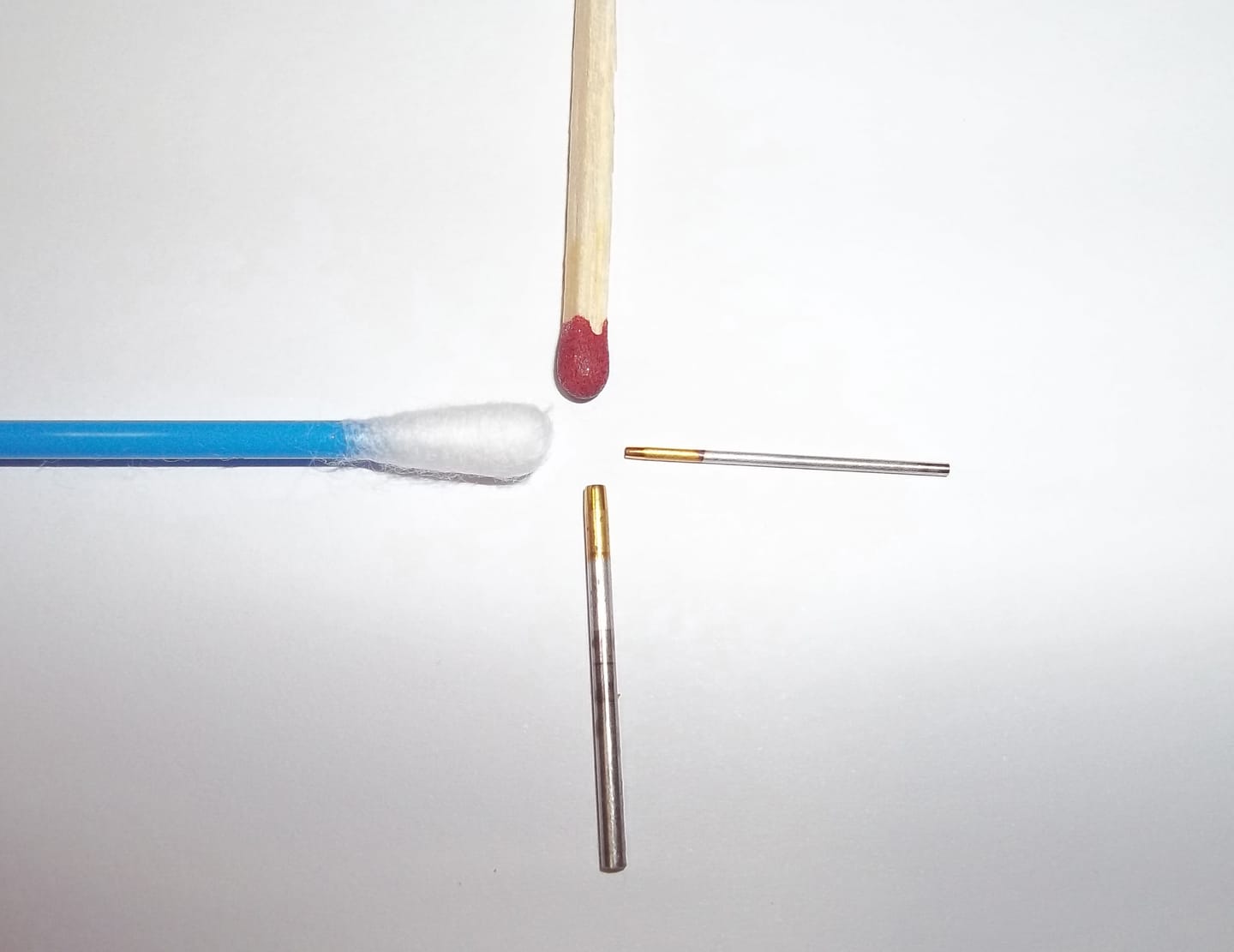
A hair transplant moves hair; it does not make any. Follicles are taken from the donor zone, the band of scalp at the back and sides where hair is usually permanent, and placed where hair has been lost. In follicular unit extraction (FUE), a common method, each follicle is cut out one by one with a small punch, leaving a tiny wound that heals as a pinpoint scar. Our guide to FUE and DHI explains the technique.
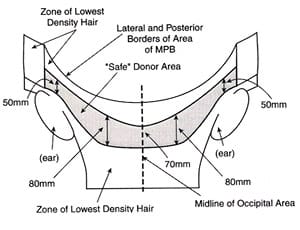
The donor zone is finite. Surgeons' clinical guidelines describe it as a limited region of hair presumed to be permanent, and they warn that a narrow zone combined with a request for a very large number of grafts can lead to depletion. They also make a point that patients rarely hear in a sales call: it is hard to say where the permanent zone ends, especially in younger men, because the hair loss you have not had yet is not visible. A man who looks mildly receded at 25 may be heading for far more loss, and the hair taken from the sides today may be hair he needed to cover a larger area later.
Overharvesting means taking more than the donor area can spare: too many follicles from one patch, or follicles from outside the permanent zone, or both. The follicles that were taken do not regrow. What is left is what you have. When too many are removed from one place, the remaining hair stops covering the gaps, and the donor area can look thin or moth-eaten. Hair taken from outside the permanent zone may be lost again over the years, which can leave the transplant and the donor area both thinner than planned.
That is why this is a different kind of fear from a poor-looking hairline. A badly designed hairline can sometimes be adjusted. A donor area that has been drawn down too far has lost something that cannot be put back.
How does an overharvested donor area happen? Graft counts sold as value
Quotes for hair transplants are commonly framed around a graft count: a package for a certain number of grafts, or a price that rises with the number. A large number reads as value. To someone comparing quotes it can also read as generosity.
For the donor area, a large number is a cost. Every graft has to come from somewhere. Surgeons' guidelines say the right number depends on measuring your hair density in the donor zone with a handheld device and then working out how many grafts the area can give up without visible depletion. As an approximation, they put it that taking 40 to 50 per cent of the follicles in a given area should not produce visible depletion, and they add a caution: the figure changes with the density of the follicular units, hair thickness, length, curl, colour and the angle the hair leaves the skin. It is not a number you can read off a price list. It is a number a doctor works out for one head.
The same guidelines tell the surgeon to compare the number of grafts the recipient area needs (its size multiplied by the density planned) with the number the donor area can give, and to plan from that comparison. They also say that in very large sessions surgeons may cross the limits of the permanent zone, and that if this is going to happen the patient should be told, including the likely long-term cost. And they suggest splitting the work into several sessions where heavy extraction could affect scarring or the look of the donor area.
A sales process that agrees a graft count first and examines your head afterwards, or at no point, turns that order upside down. Three points explain where the risk sits.
- The number is the product. A package priced by count can reward a larger count rather than the right one.
- The person who plans may not be the person who operates. Joint guidance agreed in December 2023 between UK and Turkish surgical associations says you should have a consultation with the doctor who will do the surgery, and that doctor should recommend the extraction method, the number of follicular units or hairs and the hairline design. A plan made by a sales adviser is not that.
- Extraction can be delegated. The surgeons' guidelines say FUE should be carried out by a trained, qualified doctor, or by appropriately trained and qualified nurse practitioners and physician assistants working under the law of that place, and they call it unsound for people without a healthcare qualification to do it, even where it is legal. The joint UK and Turkish guidance says that if a doctor will not be making the incisions or implanting the hair, you should be told at the first consultation, including whether a technician will do it.
None of this shows that any given clinic overharvests. It shows where the risk sits: in who decides the number, and who holds the punch.
What did one patient describe when a Turkey hair transplant went wrong?
One patient's account is published by a surgeons' patient-safety campaign in two parts: the story he wrote before repair, and an update after it. The two pages are about the same person, even though they read like separate cases. They are his own account, they have not been independently verified, and the clinic is not named. Treat them as one person's experience, not as a finding about any clinic.
He went for a hair transplant in Turkey on a friend's suggestion, to build up a receding hairline. He says he picked a clinic partly on price, and that it was located in a hospital. He was told a doctor with years of experience would operate. He asked, in his words, for no more than 2,500 grafts, to fill in his temples, and for single follicles at the front of the hairline.
On the day, he says, the work went beyond what he asked for: the crown and mid-scalp were treated as well, and when he asked how many grafts had been used, staff gave him three different figures, 4,000, 4,200 and 4,500. He says the doctor was not present when the bandage was taken off the next day, and he later concluded no doctor had been involved in the surgery at all. The update says that on arrival he met only a translator and a technician.
The donor area is where his account becomes a warning. At five months, he says, photographs showed it overharvested on both sides, worse on the right. At six months, the right side had not regrown and he describes large holes. A year after the operation he describes gaps in the hairline, hairs at the wrong angle and low density. He says the clinic reassured him for months, and then blocked him on messaging and social media after he commented that the work did not look like a doctor's.
He describes severe depression, a loss of 12 kilograms, and doctors at home who could offer him no solution. The update records a repair surgeon's account of the original operation: roughly 4,000 grafts implanted, which the update calls almost double the number he requested, and between 4,000 and 4,500 taken from the donor area. (The two pages do not give the same requested figure; the update's wording implies a lower one than 2,500.) The repair involved removing poorly placed grafts, restocking the hairline from less damaged donor hair, and two removal sessions with 650 grafts transplanted over time, followed by a further removal of 200 grafts about 14 months later. At the time of the update a third surgery was still possible. The hairline was described as significantly improved and more natural.
Two things stand out. First, the requested number and the number done differed by a large margin, and nobody could give him a single count. Second, a number agreed with the operating doctor in writing, with the extracted and implanted counts recorded on the day, would have made that gap visible at once. It would not have undone anything, and a clinic that records its counts can still overharvest. But he would have known the figure. We have not found a press or official record of a UK patient in this position, so this page uses no other case.
What are the signs of an overharvested donor area?
Look at the back and sides of your head, not the front, in bright light, with a second person or a phone photograph taken from behind. Signs that patients describe, and that surgeons' guidelines warn about, include:
- Patches where the scalp shows through at the back or sides, especially when the hair is cut short.
- A donor area that looks thinner than the rest of the head, rather than evenly the same as before.
- Visible pinpoint scars, small pale dots where follicles came out, more noticeable on a short cut.
- Uneven thinning, worse on one side than the other.
- Thinning that has not changed over many months, when you expected it to fill in.
None of these is proof on its own, and the first weeks prove nothing either way: the area is healing and some hair sheds temporarily. What matters is the trend: photographs at the same angle every few weeks. If the donor area looks no better, or looks worse, after many months, ask for an assessment from a hair restoration surgeon who did not do the operation. Our guide to who handles aftercare when you get home covers how to arrange that in the UK or Ireland.
Shock loss versus permanent depletion: how do you tell them apart?
They can look alike in the first weeks and are not the same thing.
Shock loss is a temporary shedding of hair that was already there, not transplanted hair. It most often affects the recipient area, but it can also involve the donor area, and it should resolve over time. A thin, patchy donor area in the weeks after surgery may be shock loss.
Permanent depletion is the loss of follicles that were extracted. Nothing resolves, because the follicles are gone. The practical difference is direction: shed hair comes back, and extracted hair does not. Dated photographs from the same angle are the way to tell them apart, along with a conversation with the operating doctor about how many follicles were taken from each part of the donor area.
One more point matters here. If visible thinning has already appeared in the donor area, surgeons' guidelines say further scalp extraction should not be done. Anyone suggesting a second FUE session from the same donor hair should explain why that case is an exception.
Can an overharvested donor area be fixed? What repair surgeons can and cannot do
Hair that was extracted cannot be put back, so repair is about working with what remains. The options described in surgeons' guidelines and in the repair account above are these.
- Removing and relocating misplaced grafts. FUE can be used as a corrective procedure for grafts that were put in the wrong place. The patient above had poorly placed grafts removed and moved.
- Restocking from less damaged donor hair. Where an undamaged part of the donor zone remains, a repair surgeon can take from it carefully. This is limited by how much of it there is.
- Beard and body hair. Surgeons' guidelines say the beard and moustache areas should be examined first as a donor source, and chest hair can be considered when a measured index shows it is suitable. Body hair can be used in advanced hair loss, but it does not behave like scalp hair, and the guidelines say patients who need a large number of grafts should be told how limited the supply is.
- Scalp micropigmentation (SMP). Tattooing small dots on the scalp can reduce the visibility of scarring and thin areas. It is camouflage: it changes how the scalp looks, not how much hair there is.
- Cutting the hair differently. Many people with a thin donor area keep the hair a little longer to cover it. That is a choice about appearance, not a repair.
The limits are as important as the options. A release from the surgeons' society describes overharvested donor areas as very difficult to correct, and says that where damage can be fixed patients often need more than one corrective procedure. The campaign page that carries the patient's story says repair can take two to three years and cost up to five times the original operation. That is an advocacy claim, not a price list, and we have no verified figures. Where the supply of donor hair is gone, there may be nothing left to restock from.
That is why prevention matters more than any repair.
Holding a hair transplant quote from a clinic in Turkey?
An investigation checks the official registration, the provider details and the claims the clinic has made, including who it says will operate, against documents.
Clinic Investigation £29
One clinic. Evidence-based research. Clear findings and limitations.
Investigate my clinicHow can you protect your donor area before you book?
Six checks, in this order. Each answer should be in writing, from the clinic.
1. Who is the operating doctor, and will you speak to them before paying?
Ask for the full name of the doctor who will carry out the procedure, and ask for a consultation with that doctor, not a sales adviser, before you commit. Joint UK and Turkish guidance says that doctor should recommend the donor harvesting method, the number of follicular units or hairs and the hairline design. Ask for the doctor's full name and registration details, then compare the name with the doctors the facility's register entry records. An absence is a question to ask, not a verdict: entries can be out of date. Our guide on how to choose a hair transplant clinic in Turkey covers the wider choice.
2. Who makes the incisions and who implants?
Ask directly whether the doctor will do the extraction and the placement, or whether technicians will. Joint guidance says you should be told at the first consultation if a doctor will not be doing either. If the answer is "the team", ask for the names of the people and what each does.
3. How was your donor area measured, and what is the planned graft count?
Ask whether your donor density was measured, how, and what number of grafts that implies for you. The count should be set by the operating doctor after that measurement, and should appear on the consent form as a plan, with the technique and the hairline design. If you are young or your hair loss is still moving, ask how the doctor accounts for loss you have not had yet. A very large count in one day is not a fault in itself, but it deserves an explanation tied to your measurements.
4. Can you have the consent form and two weeks to decide?
Joint guidance says you should have two weeks to consider the doctor's recommendation and the proposed consent form before making any payment. A request for a deposit before you have seen either does not match that guidance, and is worth raising. The questions to ask before paying a deposit go through the rest.
5. What will be recorded on the day?
Ask for the extracted and implanted counts to be written down and given to you, and for photographs of the donor area straight after surgery and at set intervals. If the count you are told changes, that is a record in itself. Ask also who will review your progress and the final outcome: joint guidance says it should be the operating doctor.
6. What happens if something goes wrong?
Ask who deals with complications outside working hours, how to reach them from home, what the clinic's complaints process is, and what it offers if the donor area is a problem. Joint guidance says patients should be able to raise grievances through a clear complaints process. Read what a medical treatment quote should include for the other lines a quote should carry.
Copyable checklist
- Doctor: full name of the operating doctor; consultation with that doctor before payment; name compared with the register entry
- Who does what: who extracts, who implants, named in writing; technician involvement disclosed
- Count: donor density measured; planned graft count on the consent form, set by the operating doctor
- Time: consent form in hand and two weeks to decide before any payment
- Records: extracted and implanted counts, donor photographs after surgery and at set intervals
- If it goes wrong: complaints route, out-of-hours contact, who reviews the result, what is offered for a donor-area problem
What can the register tell you, and what can it not?
The register is the Ministry of Health list of facilities authorised to treat international patients, with the doctors recorded against each. Search it with Clinimora's register search. A match tells you the facility is authorised. It does not tell you who makes the incisions on your day, how many grafts will be taken, how your donor density was measured or what the clinic has promised you in messages. Those are the questions this page is about, and they are answered by documents from the clinic, not by the register. For the review side of the question, see how to check hair transplant reviews and claims.
How does Clinimora investigate a clinic?
A Clinic Investigation takes one named clinic and builds a dossier on it: its registration, the provider details, the doctors recorded against it and the claims it makes in its own marketing and quote, including what it says about who operates. The findings and their limits are stated. It cannot examine your scalp or predict how your donor area will respond, and it does not tell you whether to go. It tells you what the documents show before you pay. Clinics cannot pay Clinimora for anything. See the Research Pass.
Frequently asked questions
Can an overharvested donor area be fixed?
Partly, and never by growing the removed hair back. Repair surgeons describe taking misplaced grafts out, restocking from less damaged hair, using beard or body hair and covering thin or scarred areas with scalp micropigmentation. Many cases need more than one operation, and the amount of donor hair left sets the limit. An independent assessment tells you what is realistic.
Does the donor area grow back after a hair transplant?
Follicles that are extracted do not regrow, so a donor area is never refilled. What can come back is hair that was only shed temporarily after the operation, which is a different thing. If thin patches are still there many months on, treat them as a question for a hair restoration surgeon rather than waiting.
How many grafts is too many in one session?
There is no single figure. The limit depends on your donor density, the size of your donor zone and your age. As an approximation, surgeons' guidelines say taking 40 to 50 per cent of the follicles in an area should not leave it visibly depleted, with caution because it varies by person. A large one-day count is a reason to ask for the donor calculation, not proof of a problem.
What is shock loss, and is it the same as overharvesting?
Shock loss is temporary shedding of existing, non-transplanted hairs, and it can affect the donor area, though it is more common around the transplanted area. It should resolve over time. Overharvesting is the permanent removal of too many follicles. They can look alike at first, so ask the operating doctor to compare photos at set intervals.
How do I get the graft count in writing?
Ask the operating doctor to put the planned number of grafts, the technique and the hairline design on the consent form before you pay, then to record the extracted and implanted counts on the day. Ask for photographs of the donor area straight after surgery. If staff give different numbers when you ask, write down who said what.
What should I do if I think my donor area was overharvested?
Photograph the donor area and the transplanted area, keep every message, invoice and consent form, and ask the clinic in writing for the graft counts and the name of the person who took the grafts. Then see an independent hair restoration surgeon before any further procedure. Surgeons' guidelines advise against more scalp extraction if it would cause visible thinning.
Does a clinic being on the Turkish register mean my donor area is protected?
No. The register lists facilities authorised for international patients and the doctors recorded against them. It does not say who makes the incisions on your day, how many grafts will be taken or how your donor density was measured. Those are written answers to get from the clinic.
Why are hair transplants sold by graft count?
A number is easy to compare and easy to advertise, which is one reason quotes lean on it. The number that matters for your head is the one the operating doctor sets after measuring your donor area and your hair loss. If the count is chosen before anyone has examined you, ask what it was based on.