
Quick answer
To avoid Turkey teeth, avoid the thing UK and Irish dentists say they see most: overtreatment, meaning crowns on teeth that did not need them. Before you pay, get a written plan made after an examination, a stated reason for every tooth, veneers or crowns named in writing, the dentist's full name and registration details, proof the facility is authorised by the Ministry of Health, clear deposit terms and a credit card payment. The register shows authorisation, not which treatments a clinic performs.
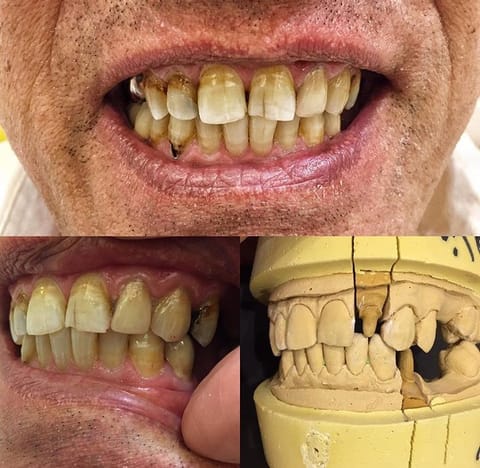
If you are searching for how to avoid Turkey teeth, you have probably seen the before-and-after photographs: a worn, uneven smile on one side, a bright and perfectly even one on the other. The phrase has become shorthand for something more specific than a trip abroad. It means a whole mouth of crowns or veneers sold as a package, often to people whose teeth were healthy to begin with, and the appointment at a UK or Irish dental surgery years later when the work has to be dealt with. This guide sets out what dentists say they keep seeing, why a low package price can turn into a high total, and nine checks you can make before a deposit leaves your account.
What are Turkey teeth, and what do UK dentists mean by the term?
"Turkey teeth" is a label, not a clinical term. In the cases dentists describe, it stands for a full set of crowns or veneers, usually fitted over a few days, on a patient who travelled abroad for the work. The country is not the diagnosis. The complaint is a pattern: more teeth treated than the mouth needed, decided quickly, with little room afterwards to change course.
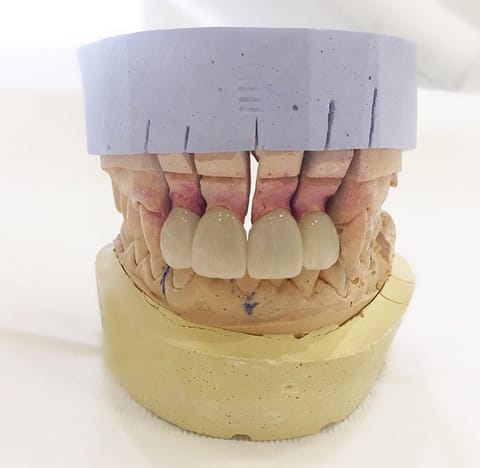
The difference between a veneer and a crown explains why that pattern matters. Press reports describe a veneer as a thin shell placed over a tooth that has been shaved slightly, and a crown as a cap glued on to a natural tooth that has been filed down to a stub. The same reports say some patients were promised veneers and were given crowns instead. Our guide to veneers or crowns shows how much is removed in each case.
How common is it? Nobody can say with a precise figure, and we are wary of anyone who does. What exists is evidence of what dentists see. In a 2022 survey of 1,000 UK dentists run by the British Dental Association (BDA), almost all had examined patients who had been abroad for treatment, and most of those had treated people with poor outcomes. Crowns were the treatment that most often needed follow-up, ahead of implants. Two limits matter. The survey covers treatment abroad in general, with Turkey cited as a popular destination, not Turkey alone. And it counts dentists who have seen such patients, not how often treatment fails: the many people whose work holds up never appear in a dental surgery or a newspaper story. The BDA's chair used the occasion to tell patients to give informed consent to any treatment and to be wary of a hard sell.
So the question for a patient is not whether Turkey is a risk. It is whether the particular plan in front of you can explain itself.
Three crowns needed, twenty fitted: what is the Irish Dental Association seeing?
In May 2025 the Irish national press carried an account from a reconstructive dentist and former president of the Irish Dental Association (IDA) of what reaches Irish surgeries after dental work in Turkey. His answer was blunt: the most common issue is overtreatment.
The details are concrete. Patients typically arrive with ten crowns on the upper teeth and ten on the lower. In one case a patient who needed three crowns and whitening came back from abroad with twenty crowns. The crowns are often joined to one another, which means the patient cannot floss between them, and that can lead to gum infection and pain. He said he sees on average six people a month with these problems, and that removal, treatment and replacement can cost up to a five-figure sum in euros.
Read that with the right weight. It is one specialist's caseload in one country, told to a newspaper, not a measured rate. It does not prove that any particular clinic overtreated, and it does not show that a check would have prevented any particular case. What it does show is the shape of the failure Irish dentists say is most common, and it is not a surgical accident. It is a decision, made before anyone picks up a drill, about how many teeth to treat.
Others describe the same decision from different seats. In a 2022 news-agency report on Turkey's dental boom, the head of an Istanbul clinic said publicly that some clinics put veneers on teeth that only need lightening, and sometimes full crowns. The same report followed a 42-year-old engineer from Manchester who was quoted for five implants and, as treatment was about to start, was told the dentists would have to remove all of her teeth. She now wears veneers. That is one patient's account as reported, with no way for us to know what the examination showed. The point it illustrates is smaller and sharper: a plan can change completely between the quote and the chair.
Overtreatment is also not the only worry in the headlines. The UK government's travel advice for Turkey says it is aware of seven British nationals who died in Turkey in 2025 following medical procedures. That figure covers medical procedures of every kind. Nothing in it says the cases were dental, and we do not suggest they were. It is a reason the same advice tells patients to research the provider themselves.
Why can a cheap full set of teeth done in Turkey cost more than one honest crown?
Because the price on the quote is the start of the cost, not the total. Four things sit behind that.
A price per unit rewards units. A package that counts twenty crowns, rather than explaining each tooth, makes it impossible to tell which crowns the mouth needed. If three teeth needed crowns and seventeen did not, the package still looks like a bargain on the day it is bought.
Reduction is permanent. A tooth that has been filed down for a crown cannot be put back as it was. Press guidance for patients suggests asking your dentist about options such as professional whitening before agreeing to crowns, which is why a plan should say whether a smaller option was considered.
Crowns need replacing. Even well-made crowns wear and eventually need redoing. The more teeth carry them, the more there is to redo, and each replacement is paid for in the place where you live, at local rates.
Remedial work is a separate bill. The Irish specialist above puts the cost of removal, treatment and replacement at up to a five-figure sum in euros. In the UK survey, the dentists who had treated such patients estimated remedial costs of £500 or more, many put it above £1,000, and some above £5,000. Those are dentists' estimates, not audited bills, but they show the direction of travel: the saving on the package can be smaller than the repair.
That is the logic behind Turkey teeth regret. It is rarely the discovery that the crowns look wrong. More often it is the discovery, some time later, that a tooth was lost or damaged for something that was never needed. Good dentistry is practised in Turkey as it is elsewhere; the concern is mass, uniform treatment sold on price. The nine checks below are designed to make the number of teeth and the reason for each one visible while you can still say no.
How do you avoid Turkey teeth in practice?
You cannot remove all risk from any dental treatment, in Turkey or anywhere. What you can do is make overtreatment visible before it is irreversible. The nine checks fall into three groups. The first three are about the treatment plan, the next three about who is behind it, and the last three about the sales process and the money. Each check is a written answer you should be able to get from the clinic, apart from the register lookup, which you can do yourself. A clinic that will not put an answer in writing has given you information too.
Checks 1 to 3: does the plan say what each tooth gets, and why?
1. A written plan made after an examination, with a tooth count
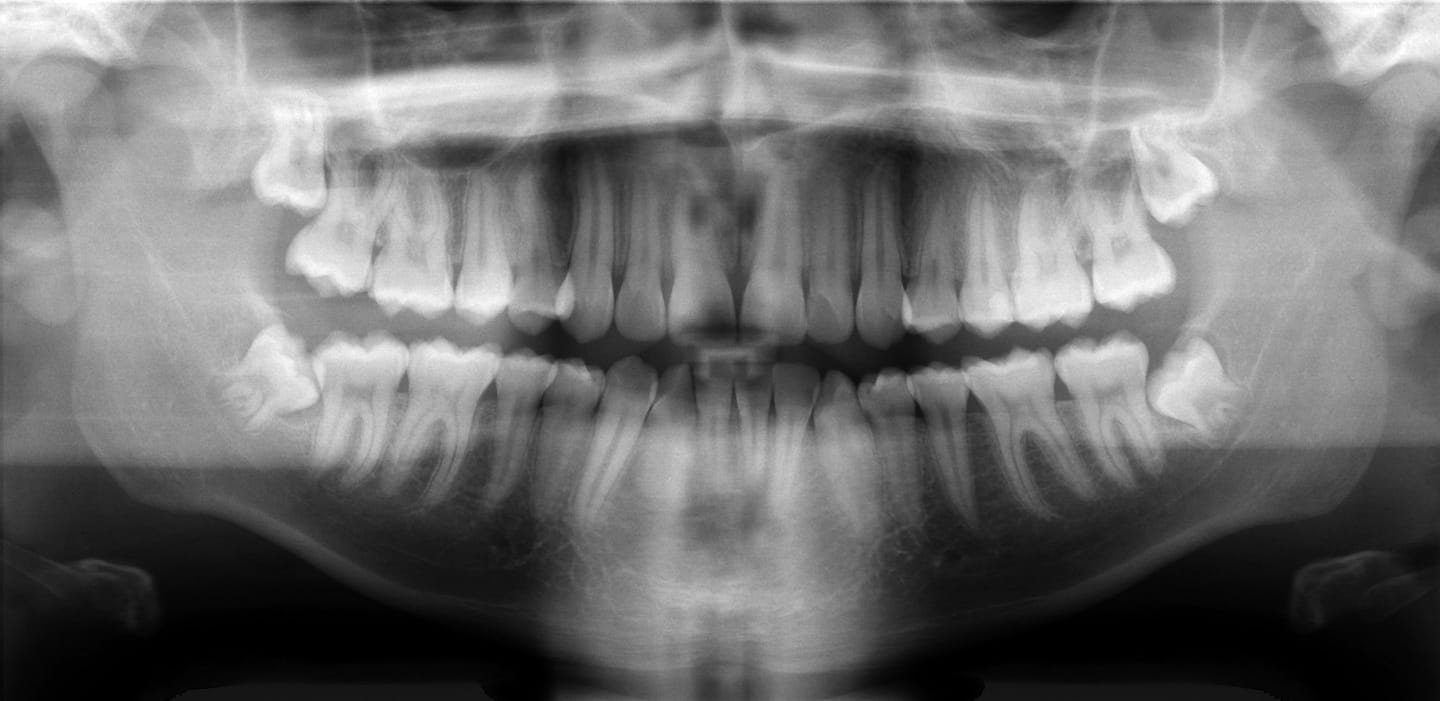
A dentist should assess you before you are given a plan and a price, including your medical history, whether you smoke and any earlier surgery. A quote built from selfies describes a smile, not your mouth. Ask for the plan in writing, tooth by tooth: which teeth, how many in all, which type of restoration for each, and the price. A line such as "full smile design" with nothing underneath has not told you what the clinic means to do. If the plan grows after you arrive, with more teeth or a sinus lift or a graft added, treat it as a new offer, in writing, with time to think. What a medical treatment quote from Turkey should include lists the lines a quote must carry.
2. A reason for every crown, tied to your own X-rays
This is the check that goes to the heart of overtreatment. For each tooth that is to be crowned, ask the dentist what is wrong with it that a crown fixes, and to show you on the X-ray or scan of your own mouth. Ask what a smaller option, such as whitening or bonding, would give instead and why it was ruled out. "For the shape" or "so the smile matches" is an answer about appearance, and appearance can often be handled with far less loss of tooth. If the clinic has not taken images of your mouth before the plan, it cannot give you a tooth-specific reason, and the plan is a template. Take the plan and the images to your own dentist for a second opinion before you pay anything. The General Dental Council advises telling your own dentist about treatment abroad in advance in any case.
3. Veneers or crowns, named in writing
The cleanest way to avoid a surprise in the chair is to have the restoration named for each tooth before you travel: veneer or crown, with how much of the tooth is expected to be removed. Press reports describe patients who were promised veneers and received crowns. If the plan on the day differs from the plan you accepted, you are free to stop and ask for the difference in writing. Keep the messages in which the clinic described what you would have, as well as the formal plan. If the finished work differs from what was promised, those messages are the evidence. The veneers or crowns guide has the detail.
Checks 4 to 6: who is the dentist, is the clinic authorised and is it listed?
4. The treating dentist's full name and registration details
"Our expert team" is not an answer. Ask for the full name of the dentist who will prepare your teeth and their registration details, then compare the name with the doctors recorded on the facility's register entry. A name that is missing from the entry is a question to put to the clinic, not a disqualification: entries can be out of date or spell a name differently. Also ask whether that dentist will be in the chair for the preparation throughout, or whether someone else carries out part of it. Our guide on how to check a doctor in Turkey explains the steps.
There is a UK-side version of the same question. In August 2026 it was reported that clinics based in Turkey were holding consultation events in Scottish towns including Aberdeen, Dumfries, Edinburgh, Elgin and Inverness. The General Dental Council's position, as reported, is that such events may be illegal, because it is illegal for anyone who is not registered with the Council to provide dental treatment in the UK, and the Council counts assessing patients for treatment abroad as part of that. If someone assessed your mouth at an event near you, ask who they were and whether they are a dentist registered in the UK, and do not treat that assessment as the examination in check 1.
5. The facility's authorisation from the Ministry of Health
"The register" is the Ministry of Health list of facilities authorised to treat patients who travel to Turkey for care. Search it with Clinimora's register search. An entry records the facility's official name, authorisation number, type, address, the doctors recorded against it and a website where one is on file. The name on the entry should be the name on your contract and your invoice. If a trading name differs, ask the clinic to explain.
Be exact about what a match means. It means the facility is authorised. It does not record which treatments the facility performs, who performs them on a given day, prices or complaints, and it is not a rating. A website that says it is authorised, or shows an image of a certificate, proves nothing until the number is looked up. Our guide on how to verify a Turkish clinic's licence walks through reading a number.
6. The HealthTürkiye listing the UK government points to
The UK government's Turkey travel advice tells patients to do their own research, notes that companies arranging treatment have a financial interest in you booking, and points to the HealthTürkiye site, where the Turkish Ministry of Health lists its approved providers. The same advice says it endorses no practitioner or facility. Treat that as a second look-up, not a substitute for the first: check that the provider named in your contract is listed, and that the listing and the register entry describe the same business. If you are dealing with an agency or coordinator rather than a clinic, ask which facility will treat you and whose name goes on the invoice.
Already chosen a dental clinic in Turkey?
An investigation checks the official registration, the provider details and the claims the clinic has made, against documents.
Clinic Investigation £29
One clinic. Evidence-based research. Clear findings and limitations.
Investigate my clinicChecks 7 to 9: what do hard-sell signs, deposits and card payments tell you?
7. Hard-sell signs
The BDA's chair has told patients to be wary of a hard sell, and the pattern is easy to describe even though nobody can put a number on it. These are the signs we would treat as a reason to slow down. They are Clinimora's own observations from reading patient accounts and press reports, not a measured list.
- A quote arrives from photographs or a questionnaire, before anyone has examined your mouth.
- The person telling you how many teeth you need is a coordinator or salesperson, not the dentist.
- The offer expires today, or the discount disappears if you wait for a second opinion.
- The plan is a number of units, such as a full set, with no tooth-by-tooth reasoning.
- Every question is answered within minutes while the deposit is outstanding, and the plan itself stays vague.
- A request to show the plan to your own dentist is met with irritation or delay.
Any one of these can have an innocent explanation. Together they describe a sale, not a clinical decision, and a clinic that is confident in its plan can stand a second opinion.
8. Deposit terms
A deposit should hold a date, not commit you to a plan you have not seen. Before paying, have the examination-based plan and the itemised quote in writing, and know whether the money goes to the clinic or to a booking company. Ask what portion is refundable and until when, and what happens to the deposit if the examination on arrival changes the plan or you decide not to go ahead. Put the answers where you can find them later. The questions to ask before paying a deposit go through the full list.
9. How you pay
If you can, pay by UK credit card. For an item costing over £100 and up to £30,000, Section 75 of the Consumer Credit Act can make the card provider jointly liable with the seller if there is a breach of contract or misrepresentation. It can apply to purchases made abroad and where only part of the price went on the card. It does not apply to debit cards, where a chargeback can be tried instead, and it may not apply where the payee is an agent for the supplier rather than the supplier itself, so ask your card issuer before you pay whether your booking qualifies. In Ireland the route is a chargeback through your card provider, on a credit or debit card, which your card provider may be able to pursue but which is not guaranteed, and the window to dispute is in most cases up to 90 to 120 days. A deposit paid months before you fly can fall outside it. Neither route is automatic, so tell your card provider early.
What can you not check from home, and what does an independent report check?
The nine checks put the clinic's answers in your hands. What they cannot do is test whether those answers are true. From your kitchen table, with a phone and a translation app, it is hard to establish:
- whether the company named on your contract is the company that holds the Ministry of Health authorisation;
- whether the doctors recorded against the facility are the ones who will treat you, and whether their registration details hold up;
- whether the claims in the clinic's own marketing, such as accreditation badges, years in practice or numbers of patients, can be found in any document;
- whether the clinic's promises on guarantees, aftercare and complications are consistent across its website, its quote and its contract.
A Clinic Investigation takes one named clinic and builds a dossier on exactly those questions, with the findings and their limits stated: the official registration, the provider details and the documented claims. It cannot tell you whether the dental work will be good, and it does not rank clinics. Clinics cannot pay Clinimora for anything. What it gives you is the checkable half of the decision, done before the deposit instead of after. The Research Pass explains what is covered and what you receive.
Copyable checklist: the nine checks on one page
Ticks stay on this page only; nothing is saved or sent.
Not sure the clinic behind your quote holds up?
An investigation checks the company, the Ministry of Health authorisation, the doctors recorded against the facility and the promises in the quote, before you pay.
Clinic Investigation £29
One clinic. Evidence-based research. Clear findings and limitations.
Investigate my clinicFrequently asked questions
How do you avoid Turkey teeth?
Do not accept a plan that counts teeth instead of explaining them. Ask for a written plan made after an examination with X-rays of your own mouth, a reason for every crown, veneers or crowns stated tooth by tooth, the treating dentist's full name, and proof the facility is authorised. Show the plan to your own dentist before you pay a deposit, and pay by credit card.
What are Turkey teeth?
It is a label, not a clinical term. It usually means a whole set of crowns or veneers fitted on a short trip abroad, and in the cases UK and Irish dentists describe, often on teeth that were healthy. The common complaint is overtreatment: more teeth reduced than the mouth needed, with crowns that later have to be removed or replaced.
Is it safe to get teeth done in Turkey?
Risk depends on the clinic, the dentist and the plan more than on the country. Dentistry is practised well and badly everywhere. The recurring problem reported by UK and Irish dentists is heavy, irreversible tooth reduction that was never clearly explained, which the nine checks on this page are built to bring out before you pay.
Where is the best place to get teeth done in Turkey?
No city or clinic can be named on the evidence we hold, and Clinimora does not rank clinics. The Ministry of Health register lists authorised facilities, and an authorisation is not a quality ranking. A better question is whether a particular dentist will examine you, put a reason for each tooth in writing, and answer for the work after you fly home.
How can I tell whether I need all the crowns I am quoted?
Ask the dentist to point to the reason for each tooth on your own X-rays or scan, and to say what a smaller option such as whitening or bonding would give instead. Then take the plan to your own dentist for a second opinion. A quote that gives only a number of units, with no tooth-by-tooth reasons, has not answered the question.
What if I already have Turkey teeth regret?
See a dentist near you soon, ideally your own, and take every record you have: the plan, X-rays, invoice and messages. If you have pain, swelling or a fever, get urgent dental care first and complain afterwards. Put the problem to the clinic in writing with dates, and ask early what your dentist at home is willing to do.
Should my own dentist see the plan before I travel?
Yes. Your dentist knows your history, can say whether each proposed crown looks necessary, and will be the person you turn to if something goes wrong. The General Dental Council advises telling your own dentist your plans for treatment abroad. Ask for the plan and the X-rays in a form you can hand over.
How should I pay a deposit for dental work in Turkey?
If you can, by UK credit card. For items costing over £100 and up to £30,000, the card provider can be jointly liable with the seller under Section 75, though it may not apply where the payee is an agent, and not to debit cards. In Ireland the route is a chargeback through your card provider, with time limits. Ask your card issuer before paying.