
Quick answer
A hair transplant is four stages, not one act: anaesthesia, harvesting grafts, opening the recipient channels and placing the grafts. Turkish rules, as amended in September 2025, reserve opening the channels to certified doctors and specialists, but let certified health professionals such as nurses and technicians harvest and place grafts under a doctor's supervision. So a non-doctor doing part of your operation can be lawful in Turkey. What you control is whether you are told, in writing and before you pay, who does which stage. UK and Turkish surgeons' joint guidance asks for exactly that.
You chose the surgeon first. A name, a face on Instagram, a clinic profile that says he does the work. You paid a deposit because of him. On the day, a technician you were never introduced to opens the channels in your scalp, and the surgeon you chose looks in for part of the time. That is the fear behind the search for a hair transplant in Turkey, technician or doctor, and it is not invented: a Turkish Health Ministry director said in 2018 that the doctor does about two hours of an eight-hour operation. This page sets out what Turkish rules now allow, what is documented, which scary numbers are not evidence, and the questions that make a clinic put the answer in writing.
Who actually does a hair transplant in Turkey, a technician or a doctor?
Often both, and Turkish law allows it. The harder question is which stage each person does, and whether you were told.
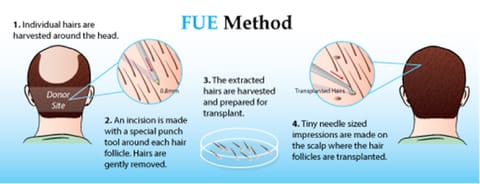
A hair transplant is not one act. The Turkish regulation divides the procedure into stages: anaesthesia, harvesting the follicles from the back of the head, opening the small channels in the recipient area, and placing the follicles into those channels. Harvesting and channel opening are the cutting stages.
That is why the technician question has two answers, depending on the stage. Opening the channels is the stage Turkish rules keep for doctors. Harvesting and placing can, since a change in September 2025, be done by certified health professionals under a doctor's supervision. So "a technician touched my scalp" does not by itself mean something illegal happened, and "the doctor is responsible" does not mean the doctor did the work.
What turns this into a real risk is the third element: disclosure. Many clinic profiles lead with a named doctor, and patients choose on that name. If the operation is then divided among a team in ways the marketing does not describe, the patient has paid for one thing and received another. The sections below show where that gap has been documented, and how to close it before you pay.
What do the Turkish rules say about who may perform a hair transplant?
The Hair Transplant Units Regulation was published in the Official Gazette on 6 May 2023. Four provisions matter to a patient.
A permit to open. A hair transplant unit inside a health facility may open only after the provincial health directorate has issued an operating permit, and operating without one is prohibited. Performing hair transplants without the required certificate is also a prohibited act under the regulation.
Two certificates. Only personnel whose certificates are registered with the Ministry may work in a unit. Doctors hold a hair transplant practitioner certificate. Health professionals, a group that includes nurses and various health technicians, hold an assistant practitioner certificate. A transitional period that let staff without that certificate keep working under a doctor's supervision ran until 6 May 2026, so it has now ended.
Who does which stage. Opening the recipient channels may be done only by physicians who hold the practitioner certificate, plastic, reconstructive and aesthetic surgery specialists, dermatology specialists, and physicians with a medical aesthetics certificate. Harvesting the follicles and placing them may be done by those physicians or by health professionals with the assistant certificate. Harvesting is the recent change: when the regulation was first published, and again when it was amended in November 2023, harvesting was reserved to doctors, and an amendment published in the Official Gazette on 12 September 2025 moved it to the stages certified assistants may perform. Assistants work under the supervision and responsibility of the doctors.
Rooms and responsibility. One certified physician may be responsible for up to five procedure rooms, and each room must have at least two assistant-certified health professionals. If sedation or general anaesthesia is used, an anaesthesiologist must be present. In the provisions we read, the regulation sets a ceiling on how many rooms one doctor answers for. It does not say how long that doctor must stand in each room, which is why the question belongs in your written list below.
The regulation also requires each procedure to be entered on a patient information form kept in the Ministry's system, with photographs taken before and within 72 hours after the operation. As first published, the form recorded the technique, the number and area of grafts and the names of the team. A later amendment changed that paragraph, so ask to see your own form rather than assuming what it contains.
Read together, the rules draw a line, but not at the place most patients imagine. They do not say a doctor does everything. They say a doctor opens the channels, certified staff may do the rest under supervision, and uncertified people may do none of it.
What did Turkey's own Health Ministry admit about who does the work?
In June 2018, the Ministry of Health's Director General of Health Services spoke to the press about hair transplants, and what he said is the most direct official description of the problem we have found.
He said an average hair transplant takes about eight hours, and that in Turkey the doctor does about two of them and hands the rest to support staff. He contrasted this with other countries, where he said plastic surgeons perform the entire operation, which is why it costs more there. He also said nurses, technicians and health officers had learned the work very well. Whether or not you agree with him, that is a Ministry director describing a division of labour in which most of the hours are not the doctor's.
The same press report described illegal hair transplants carried out in hotel rooms, unauthorised polyclinics, private practices and office buildings, and said action had followed a citizen's complaint. At that time the rules did not require an operating theatre; the procedure could take place in an independent room that met a size and hygiene standard. The 2023 regulation replaced that framework with the permit, the certificates and the supervision rules described above.
Two points follow. First, a Ministry director described the doctor doing a minority of the hours as the way the work is done in Turkey. Second, the same report described the unauthorised end of the market. The checks later in this page are meant to tell the two apart.
What is the 'bait and switch' that hair transplant surgeons warn about?
In May 2016 the International Society of Hair Restoration Surgery, ISHRS, published a warning for people travelling for hair transplants. It argued that Turkish rules at the time, which restricted hair transplant surgery to hospital settings, had driven a black market of technicians into private hospitals and clinics, pulling prices down and drawing medical tourists. An ISHRS executive committee member, Dr Sharon Keene, described what she called a classic bait-and-switch model: patients are drawn in by a doctor's credentials, and the surgery is carried out by an unlicensed technician. An Istanbul surgeon quoted in the same release said there were reports of clinics in Germany, the Netherlands and Belgium where illegal Turkish technician groups perform surgery under the names of licensed Turkish doctors. The release was written seven years before the current Turkish rules, and by 2018 the Ministry was describing a different set of requirements, so read it as a warning about a pattern, not as a description of today's market.
One patient's account. The society also publishes patient stories on its own campaign site. One patient there describes being told that a doctor with 15 years of experience would operate. He later concluded that technicians had done the work, that they were not licensed, and that no qualified doctor had overseen it. He says the doctor was not at the hospital when he returned the day after surgery, and that months afterwards the clinic blocked him on messaging apps and social media after he asked for the doctor's telephone number and commented that the work did not look like a doctor's. He describes an over-harvested donor area, patchy areas and a poorly angled, low-density hairline, and a serious effect on his mental health. This is one person's unverified account, and we cannot say what in fact happened in that operating room. It is included because it shows the shape of the fear: a name sold, a different team delivering, and a clinic that stops answering when you ask who it was.
A raid in Istanbul. In March 2026 a Turkish newspaper reported that Provincial Health Directorate teams and police raided a three-storey building in Altunizade, in Istanbul's Üsküdar district. The building had no operating licence and no tax registration, and contained a dental office, a hair transplant centre and rooms for medical aesthetic procedures. It was sealed. The case began with a complaint, filed through the presidential complaints system by a patient who had booked online, saying that the person who performed the procedures introduced herself as a brain surgeon. The file went to the Istanbul prosecutor, who was asked to bring a case for providing unlicensed health services and presenting as specialist doctors, with a prison sentence of one to three years requested. We found no verdict, so those are allegations and a request, not findings.
Neither story proves anything about any clinic you are considering. They show what a failure of the basic arrangement looks like: someone other than the person you were promised, and no easy way to find out who.
What do UK and Turkish surgeons say you must be told in writing?
In December 2023 four professional bodies issued joint minimum guidance for UK residents considering hair transplant surgery in Turkey: the British Association of Hair Restoration Surgery, the British Association of Aesthetic Plastic Surgeons, the British Association of Plastic, Reconstructive and Aesthetic Surgeons and the Turkish Society of Plastic, Reconstructive and Aesthetic Surgeons. Their statement says complications can be reduced when the surgical steps are done by a doctor rather than a technician. Its minimum points are these:
- You consult the doctor who will operate. That doctor should advise on how the hair is harvested, how many follicular units or hairs are needed, and the hairline and design.
- You get two weeks to decide. You should have two weeks to consider the doctor's advice and the consent form before making any payment.
- You are told about non-doctor work. At the first consultation you should be told explicitly if anyone other than a doctor will make the skin incisions to harvest or implant the hair, including whether a technician will.
- The operating doctor follows up. The doctor should assess interim progress and the final result, and there should be a clear complaints process.
- Complications are covered out of hours. The clinic should have systems for complications during and outside working hours, and be able to supply antibiotics. The statement lists skin death, infection, cysts and altered sensation.
The guidance was issued in December 2023, before the September 2025 change that moved harvesting to certified assistants. It does not ban non-doctors. It asks that you be told. That is the practical standard to hold a clinic to, because it fits what Turkish rules now allow: the work may be divided, so the division has to be disclosed.
Is it true that half of Istanbul's hair transplant centres work without a doctor?
You will see three kinds of figure. None is a measurement of how often a non-doctor does something unlawful.
The Ministry's two hours of eight (2018). An official's description of the division of work in the market at that time, given as an average. It describes how the hours are split in normal practice, not how many clinics break the rules.
'About half' (September 2021). The president of a Turkish health tourism association said that he was hearing that about 50% of Istanbul's hair transplant centres sometimes carry out procedures without a doctor. He gave no data, and framed it as something that had reached him; he also said he had heard that many underground places existed. The newspaper's headline dropped his word "sometimes" and said half of centres operate without a doctor. We treat this as hearsay from a trade-body leader, not as a finding.
'Six in ten' (2016). A law firm's article of November 2016 said figures showed as many as six out of every ten clinics in Istanbul operated illegally, without naming a source. We found no ministry or inspection data behind that figure, and it predates the 2023 regulation.
A Turkish newspaper's report on the September 2025 amendment added a further number: in an eight-hour operation, about the first hour under the doctor's responsibility and about seven hours with auxiliary staff. That is the paper's arithmetic about the rule's effect, and critics quoted in it argued that the change could encourage unlicensed clinics and conflicts with the law reserving diagnosis and treatment to physicians. These are arguments, not evidence of what happens in practice.
We found no study or inspection series that measures how many hair transplants in Turkey are done wholly or partly by people without the right certificate. Anyone who gives you a percentage in either direction, whether to frighten you or to reassure you, is giving you something they cannot show.
Already chosen a hair transplant clinic in Turkey?
An investigation checks the official registration, the provider details and the claims the clinic has made, including who it says will operate, against the register and the documents.
Clinic Investigation £29
One clinic. Evidence-based research. Clear findings and limitations.
Investigate my clinicWhat are the seven questions to ask before you pay?
Send these in writing, to every clinic, and keep the replies. A clinic that answers properly will not mind. A clinic that avoids a plain question has told you something.
- Who opens the channels, and what is their certificate? Ask for the full name, the specialty or certificate that entitles them to do it, and whether they will do it themselves on your day. This is the stage the regulation reserves to doctors.
- Who harvests the grafts, and who places them? Names and roles for each, including whether any of them is a nurse or technician, and whether each holds the assistant practitioner certificate. The joint surgeons' guidance asks for this disclosure at the first consultation.
- Will the doctor named in your quote be in the room throughout, and how many rooms is that doctor responsible for that day? The regulation allows up to five. An honest answer might be "I design your hairline and open the channels; certified staff harvest and place under my supervision". That is a clear answer.
- Is the doctor who consults you the doctor who operates? If the consultation is with a coordinator, ask for the same advice, on harvesting method, number of grafts and hairline design, from the doctor who will treat you, before paying.
- Do I get two weeks with the consent form before I pay anything? The guidance says you should. A deposit demanded the same day, with the consent form promised "on arrival", points the other way.
- What is the facility, and what is its permit? Ask for the legal name of the company, the authorisation number, the address where the operation will take place, and a copy of the unit's operating permit. The operation should take place at the address on the paperwork, not at "a partner clinic" revealed after you land.
- What is written down about my operation, and what if the plan changes? Ask for a copy of your patient information form with the names of the team, how the clinic handles complications at night and at weekends, and what it will do in writing if the named doctor is replaced. Ask what happens to your deposit if that happens.
Our guides on documents to ask a Turkish clinic for and how to choose a hair transplant clinic in Turkey go further on the paperwork and on selection.
How do you verify the doctor and the facility?
Start with the register. "The register" is the Ministry of Health list of facilities authorised to treat patients who travel to Turkey for care. Search it with Clinimora's register search. An entry records the facility's official name, authorisation number, type, address, the doctors recorded against it and a website where one is on file. It is a list of facilities, not of individual professionals. It does not record which treatments a facility performs, who operates on a given day, or the hair transplant unit permit. A match means authorised, not good.
Then compare. Take the name of the doctor you were promised and the name of the company on your contract, and compare them with the entry. If the doctor's name is not among those recorded, that is a question to put to the clinic, not a disqualification: entries can be out of date or spell a name differently. If the name is recorded, that shows a doctor is linked to the facility, not that the doctor will perform your operation.
Then ask for the certificate behind the name: the practitioner certificate, or the specialist title in plastic surgery or dermatology, or the medical aesthetics certificate. Our guide on how to check a doctor in Turkey sets out each public source and what it cannot show, and the guide on choosing a hair transplant provider in Turkey covers the rest of the selection.
What you cannot check from home is who is in the room on your day. That is why the written answers in the section above matter: they turn a promise made in marketing into a statement the clinic has signed.
Copyable checklist
- Channels: full name and certificate of the person who opens them; confirmed they will do it themselves on my day
- Harvesting and placing: names and roles of each person, nurse or technician disclosed, assistant certificates asked for
- Doctor present: named doctor in the room throughout; number of rooms they are responsible for that day
- Consultation: same doctor who consults me operates; advice on method, grafts and hairline from that doctor in writing
- Time to decide: two weeks with the consent form before any payment; no same-day deposit pressure
- Facility and permit: company legal name, authorisation number, address, copy of the unit permit; names compared with the register entry; any gap put to the clinic
- Records and changes: copy of the patient information form with team names; out-of-hours complication route; what happens in writing if the doctor is replaced, and to my deposit
How does Clinimora investigate a hair transplant clinic?
The register tells you whether a facility is authorised. It does not tell you what the clinic's own paperwork shows, whether the doctors recorded against the facility are the ones in its marketing, or whether "our surgeon performs your operation" is a claim the documents support. A Clinic Investigation takes one named clinic and builds a dossier on those questions: the operator company, the register entry and the doctors recorded against it, the claims on the clinic's website and in its quote about who treats you, and what the clinic produces when asked for its permit. The findings and their limits are stated. It cannot see into the operating room on your day and does not assess surgical skill. It tells you what is established, what is not, and what to ask next, before you pay. Clinics cannot pay Clinimora for anything. See the Research Pass.
Frequently asked questions
Is a technician allowed to do a hair transplant in Turkey?
Not the whole operation. Under the hair transplant units regulation as amended in September 2025, only certified doctors and the listed specialists may open the recipient channels. Health professionals such as nurses and technicians who hold an assistant practitioner certificate may harvest and place grafts under a doctor's supervision and responsibility. Someone without that certificate may not perform a stage at all.
Who is allowed to open the channels in a hair transplant in Turkey?
Physicians holding a hair transplant practitioner certificate, plastic, reconstructive and aesthetic surgery specialists, dermatology specialists and physicians with a medical aesthetics certificate. That is the stage the regulation keeps for doctors. Ask for the name and certificate of the person who will do it on your day, not of the clinic's most prominent surgeon.
How do I find out whether a technician will operate on me?
Ask in writing, at the first consultation, who will harvest the grafts, who will open the channels and who will place them, with names and roles. Joint guidance from UK and Turkish surgeons' associations says you should be told explicitly if anyone other than a doctor will make incisions to harvest or implant. A vague answer such as 'our medical team' is not an answer.
Is the surgeon I see on Instagram the person who will operate?
Not necessarily. A profile shows who a clinic wants you to associate with its work, not who is in the room. The doctor may consult you, design the hairline and carry legal responsibility while certified staff do other stages. Ask whether the named doctor will be present throughout, and how many procedure rooms they will be responsible for that day.
Is a hair transplant 'coordinator' a medical professional?
The regulation's certificates are for doctors (practitioner) and for health professionals such as nurses and technicians (assistant practitioner). 'Coordinator' is neither, and the head of a Turkish health tourism association has said people without medical training use the title. Ask for the person's role, and be wary if they will do anything beyond arranging your visit.
What if I find out afterwards that a technician operated on me?
Ask the clinic in writing for your patient information form and the names of the team, keep your photographs and messages, and have a doctor at home assess the result. Whether the arrangement broke the Turkish rules depends on the certificates held and the supervision given, which you cannot judge from home; that is a question for the clinic and the Turkish health authorities.
Can I see a hair transplant unit's permit?
You can ask for a copy. A hair transplant unit needs an operating permit from the provincial health directorate before it opens, and operating without one is prohibited. Check that the facility name and address on the permit match your contract and invoice, and keep a copy.
Will a Clinic Investigation tell me who will operate on me?
No investigation can see into the operating room on your day. It compares the doctor and the claims the clinic gives you with the facility's register entry and the documents it produces, and reports what is established and what is not. It does not assess surgical skill or promise an outcome.