
What it is
Implant removal, sometimes called explantation, takes a dental implant out of the jaw. It may be needed when the implant has not joined with the bone, has become diseased or loose, has fractured, or sits in a position that cannot be restored. In the Ministry of Health register the treatment appears as "Titanium Implant Removal" (Titanyum İmplant Çıkartılması). Related pages are dental implant surgery and ceramic and zirconia implants.
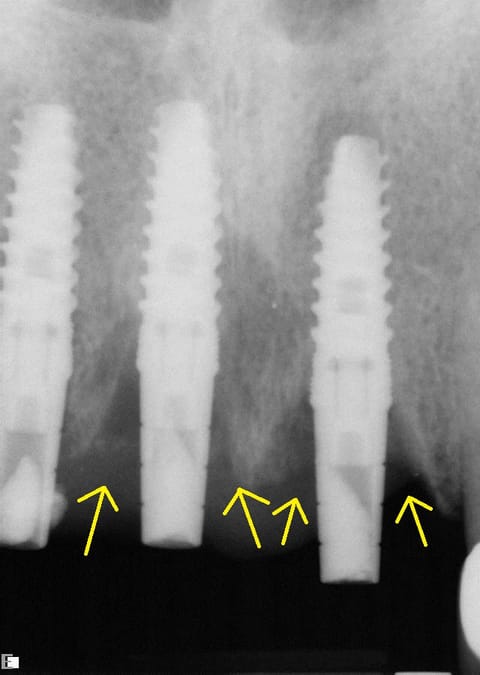
A systematic review of removals found that peri-implantitis, inflammation and infection of the tissue around the implant, was the most common reason. Bone loss, fracture and malpositioning followed. The European Federation of Periodontology guideline describes peri-implantitis as particularly challenging to manage, with significant morbidity.
Who it is for, and who it is not for
It is for an implant that your dentist judges cannot be kept or restored. It is not always the first step: the EFP guideline says that when peri-implant mucositis or peri-implantitis is detected, appropriate treatment must be given. Whether the implant should stay or go is a clinical decision made after examination and imaging. If you are told it must come out, ask what the alternatives are and why they do not apply.
If your implant was placed abroad and is now causing trouble, see a dentist near you early. Our article on Turkey teeth gone wrong covers what to do and what records to gather.
How it is done in Türkiye
Reviews list reverse torque (unscrewing the implant), trephines, burs, piezosurgery and laser-assisted methods. Reverse torque was the most commonly reported and was described as the most conservative; trephine and bur removals were reported in smaller series. The authors noted the research is mainly case series. We have not found a source on how implant removals are usually organised in Türkiye, so we do not describe a typical visit.
Türkiye's regulation on private oral and dental health facilities (Resmî Gazete, 6 October 2022, no. 31975, amended since) distinguishes between a practice, polyclinic, centre and hospital. As we read the consolidated text, sedation and general anaesthesia are not permitted in a practice or polyclinic, though they can be arranged at another facility, and centres and hospitals must have a general-anaesthesia unit. We read this through secondary reproductions, so ask where any sedation would take place.
We have not been able to confirm a rule that reserves implant removal to a specialty. Ask who will do it and for the document that shows their title.
What to check before you book
- Why removal. Ask for the imaging and the reason in writing, and for the alternatives that were considered.
- Implant identity. Bring your records. If the manufacturer, model and lot number are not recorded, say so; reviews note that an unknown system can hinder treatment. Ask for the identification to be noted after removal.
- Method and risk. Ask which technique is planned. Reviews report that trephine removal caused perforation of the sinus floor in one case, and that reverse torque fractured some implants in one series; ask how those risks apply to the site.
- What happens to the site. A 2024 review found site management after removal poorly reported. Ask if grafting or waiting is planned, and when a new implant could be placed. See sinus lift if the upper back jaw is involved.
- Responsibility for the bill. If the original clinic placed the implant, ask whether the warranty covers removal.
- Facility. Look it up on the register; see what the register can and cannot tell you and search the register.
What a package must state
- Which implants are to be removed, by tooth position.
- Technique, anaesthesia type and facility type.
- Whether imaging, grafting, medicines and check-ups are included.
- What happens at the site afterwards and when a replacement could be placed, and whether it is included.
- Who performs it, with title.
- Records you receive: imaging, operation note, details of the removed implant.
- Warranty or complaint route for the original implant.
- Cancellation and refund terms for deposits.
Risks, complications and aftercare
Removal is a surgical procedure, so the general risks of oral surgery apply, including infection and bleeding. The reviews we read also report implant fracture during unscrewing and sinus-floor perforation with a trephine in the upper jaw. Reviews state that current techniques are very effective with low complication rates, but are based largely on case series.
Follow the written instructions for the site. Seek urgent dental or medical help for bleeding that will not stop, severe or worsening pain or swelling, fever, or fluid passing between the nose and mouth. Keep all records.
Questions to ask in writing
- Why does this implant need to come out, and what alternatives were considered?
- Which technique will you use, and what are the risks for my case?
- Who will do it, and with what title?
- What anaesthesia, and in what type of facility?
- What happens to the site afterwards, and when could a replacement implant be placed?
- Will you record the identity of the removed implant for me?
- Does any warranty cover this removal, and who pays?
- Which records and imaging will I receive?
Frequently asked questions
Why would an implant need to be removed?
A systematic review found infection and bone loss around the implant (peri-implantitis) to be the most common reason, followed by loss of bone, fracture and malpositioning.
How is an implant removed?
Reviews describe several techniques, including reverse torque (unscrewing), trephines (a hollow cutting drill), burs and piezosurgery. Reverse torque was the most commonly reported. The method depends on the implant and the bone.
Can the implant be replaced straight away?
That is a clinical decision for your dentist. A 2024 review noted that management of the site after removal was poorly reported, so ask the clinic what it plans for the site and why.
My implant was placed in another clinic. Does that matter?
Yes. Dentists may be unable to resolve an implant problem if the implant system is unknown, so bring every record you have and ask for the manufacturer, model and lot number if they are not recorded.
Who pays if an implant I had abroad needs removing?
It depends on the warranty wording and the clinic. Read the document, and put your claim to the clinic in writing with dates and records.
This page is an information service, not medical advice. Clinimora is an independent, patient-funded research service. It does not sell treatment, does not diagnose and does not recommend any clinic.