
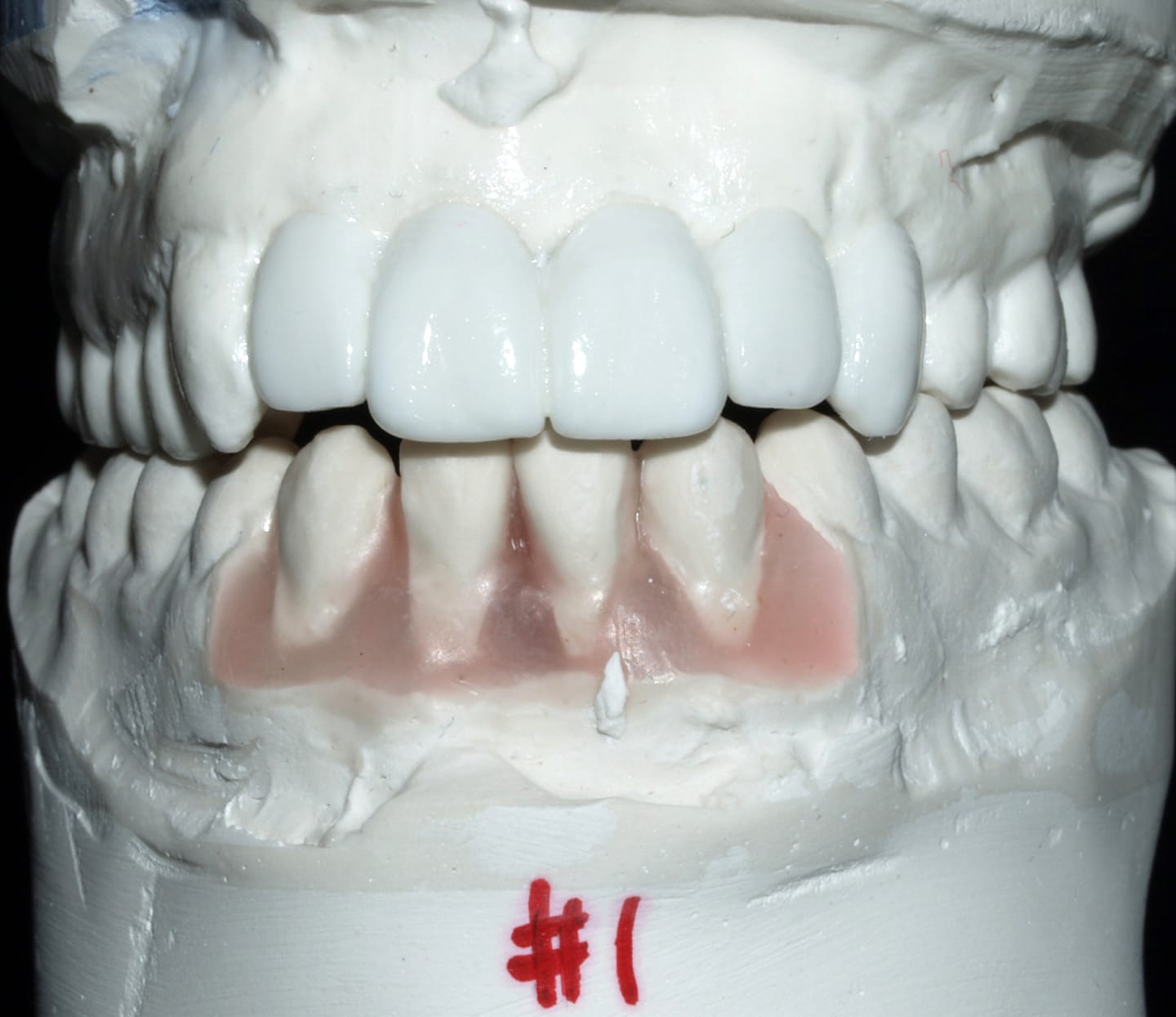
What it is
On the Turkish register the heading "Prosthetic Teeth Treatment" (in Turkish, protetik diş tedavisi) is where fixed restorations sit: crowns, veneers and bridges. In everyday terms, prosthetic work means replacing or rebuilding part of the visible tooth with something made outside the mouth in a dental laboratory and then fixed in place.
A crown is a cap that completely covers a real tooth. It is usually made from metal, ceramic or porcelain fused to metal, and it is fixed in the mouth. To fit one, the tooth has to be shaped so the crown can sit over it.
A bridge replaces one or more missing teeth. It is usually made from metal and porcelain and is fixed in the mouth, which separates it from a denture that you can take out. A conventional bridge involves reshaping the teeth on either side of the gap. An adhesive bridge instead attaches a small metal wing to the back of a neighbouring tooth and needs little or no drilling.
A veneer is a new facing for a tooth. It is used to disguise a discoloured or chipped tooth, and a thin layer of porcelain or tooth-coloured material is fitted over the front. To fit some veneers the front of the tooth is drilled away a little, but not all veneers need this.
Who it is for, and who it is not for
Crowns are used to rebuild a tooth that is badly broken or weakened, for example by decay or a large filling, and often after root canal treatment. Bridges are for people missing teeth who want a fixed solution rather than a removable one. Veneers are mainly for appearance.
It is not a decision to take lightly for healthy teeth. Reducing a tooth cannot be undone, because enamel does not grow back, and a tooth that has been prepared for a crown needs a crown, and later a replacement, for the rest of its life. Dentists writing about "Turkey teeth" have questioned destroying healthy tooth tissue for a very white, even smile when less destructive options, such as bleaching or direct bonding, may give a satisfactory result. Whether those options suit you is a question for a dentist who has examined your mouth.
The commonest complaint reported in the UK is a patient who was offered veneers and ended up with crowns. That is why this page asks you to settle crown or veneer, tooth by tooth, before you pay; see Turkey teeth gone wrong.
How it is done in Türkiye
Typically the work is split into stages, as it is elsewhere. In the UK, a crown or veneer is usually made over two visits: at the first the tooth is shaped, an impression is taken and sent to the laboratory, and a temporary crown protects the tooth; at the second, roughly two weeks later in a UK hospital leaflet's description, the permanent crown replaces the temporary and is cemented. How your own plan is staged in Türkiye, and how long you will be on site, is something the clinic must state in writing; we cannot give a general figure.
Who may do what is set by the Ministry of Health's regulation on private oral and dental health facilities. Three points matter to a patient:
- Intra-oral work must be done by a dentist. The regulation says staff other than dentists may not carry out interventions inside the mouth.
- Dental technicians work in laboratories. A polyclinic or centre can run its own laboratory and employ a technician; a facility without a laboratory may not employ one. If the laboratory is bought in, the regulation makes the facility and the laboratory jointly responsible for the work and its results, and it forbids sending the patient to the laboratory or the laboratory contacting the patient.
- Facility types differ. The regulation names the private surgery (muayenehane), polyclinic, centre (merkez) and hospital. A polyclinic or surgery may not carry out treatment under sedation or general anaesthesia; centres and hospitals must have a general anaesthesia unit. This matters if you are offered sedation for crown or bridge work.
"Prosthodontics" is also a specialty. In the UK, a dentist may use the title "specialist" only if on the General Dental Council's specialist list, and dentists do not have to join a list to practise in the field. The Ministry of Health in Türkiye publishes a specialty curriculum for prosthetic dentistry (protetik diş tedavisi) and issues specialty certificates; the facility regulation also bars dentists from announcing themselves as specialists beyond what their diploma or specialty certificate allows. We have not found a rule that reserves crowns, veneers or bridges to specialists, so if the title matters to you, ask the clinic to state in writing whether your dentist holds a specialty certificate and in which branch.
What to check before you book
- Facility. Look the facility up on the register at register search and note its type (surgery, polyclinic, centre, hospital) and authorisation number. The register records authorisation, not which treatments are carried out.
- Plan, tooth by tooth. For each tooth: crown, veneer or bridge abutment; the expected amount of preparation; the alternatives that were considered, including whitening and bonding. A list of units without reasons is not a plan.
- Materials and laboratory. The material of each restoration (for example porcelain fused to metal, all-ceramic, metal alloy) and the laboratory that makes it, with its country, in writing.
- Examination first. The GDC advises being assessed by a qualified dentist before a plan and cost are given, covering your medical history, smoking and earlier surgery. A quote from photographs is not that.
- Visits and temporaries. How many visits, how many days between them, what temporary crowns or veneers you will wear in between, and what happens if a temporary comes off.
- Records. A copy of X-rays, the treatment record with tooth numbers, the materials and laboratory, and the consent form, before you leave.
What a package must state
- the number of teeth and, for each, the restoration type (crown, veneer, bridge unit);
- the material of each restoration and the laboratory;
- whether the plan includes examination, X-rays or a scan, anaesthetic, temporaries, and any root canal treatment or extractions that could become necessary, and what happens if they are;
- the number of visits and the days of the stay the plan assumes;
- what is excluded: for example gum treatment, bite splints, repairs and replacement of lost temporaries;
- the guarantee: what it covers, how long it lasts, what voids it, and who pays for travel and accommodation if a remake is needed;
- the invoice or receipt: Turkish rules require a sales receipt or invoice for every patient treated, with a breakdown of services and the amount for each, so ask for one in that form;
- what the deposit holds and whether it is refundable, in writing.
Risks, complications and aftercare
Preparing a living tooth can injure the nerve inside it. Dentists describe teeth that die after crown preparation, abscesses, and the need for root canal treatment or extraction afterwards; how often this happens is not something we can state, and no number is given here. A crown or veneer that does not fit the tooth cleanly can leave a gap at the edge where decay can start unseen. Because the preparation cannot be reversed, a restoration that fails has to be replaced rather than removed.
Aftercare is ordinary dental care: cleaning carefully around the restoration, regular check-ups at home, and telling your own dentist promptly about pain, swelling, a loose restoration or a rough edge. Pain, swelling or fever mean seeing a dentist or urgent care without waiting for any complaint process.
Questions to ask in writing
- Which treatment do you propose for each tooth, crown or veneer, and why?
- How much of each tooth will be removed, and what alternatives were considered?
- Who is the dentist who will prepare my teeth, and do they hold a specialty certificate? In which branch?
- Which material will be used for each restoration, and which laboratory makes it, in which country?
- How many visits are needed, what temporaries will I wear, and what happens if one breaks or comes off?
- What is the guarantee, in writing, and who pays for travel and accommodation if work must be redone?
- Which records will I receive on leaving: X-rays, tooth-numbered treatment record, materials and laboratory, consent forms?
- Who do I contact from home, and how quickly do you reply?
Frequently asked questions
Is a crown the same as a veneer?
No. A crown covers the whole tooth and the tooth has to be shaped all round to take it. A veneer is a facing on the front of the tooth, and some veneers need the front of the tooth to be drilled away a little while others do not.
Where do bridges fit in?
A bridge replaces one or more missing teeth and is fixed in the mouth, unlike a denture that can be taken out. It is anchored to neighbouring teeth, so the plan should say what is done to those teeth.
Can I ask for the tooth reduction to be explained tooth by tooth?
Yes, and you should. A plan that says only 'smile design' or counts units does not tell you what will be done to each tooth. Ask for the restoration, the expected preparation and the alternatives, in writing.
Who may make the crown or bridge in Türkiye?
The work in your mouth must be done by a dentist: under the dental facility regulation, staff other than dentists may not carry out intra-oral procedures. Dental technicians make the restoration in a laboratory. Ask who the dentist and which laboratory are.
What should I take home?
The treatment record with tooth numbers, X-rays, the materials used, the laboratory's name and the guarantee in writing. Your next dentist will need them.
This page is an information service, not medical advice. Clinimora is an independent, patient-funded research service. It does not sell treatment, does not diagnose and does not recommend any clinic.