
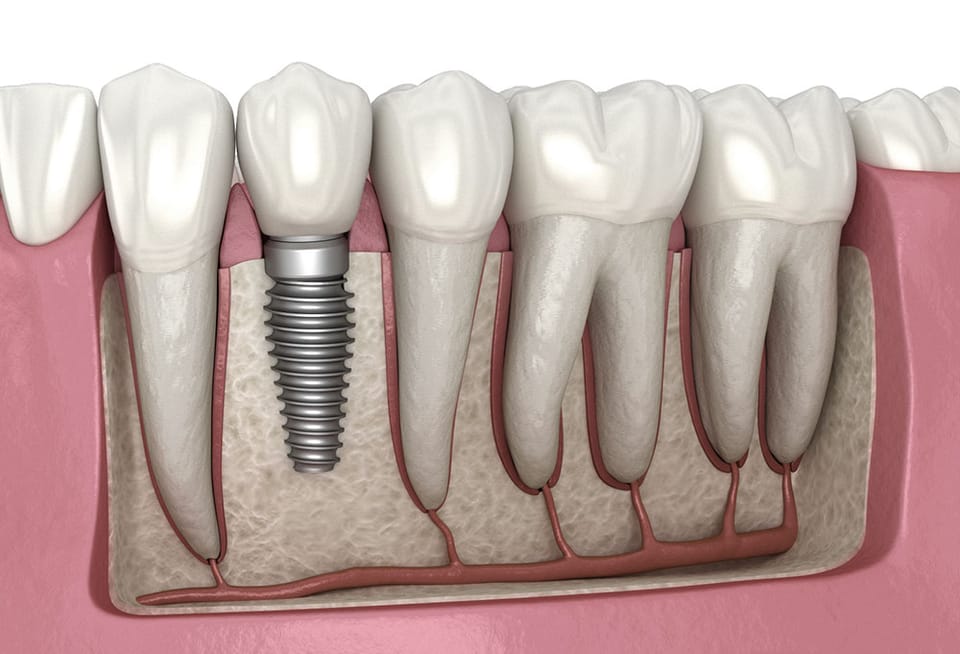
What it is
A dental implant replaces the root of a missing tooth. It is a small post that a surgeon places in the jawbone. Once it has joined with the bone, it can hold a single crown, a bridge or a denture. Dentists use implants when they do not want to cut down healthy neighbouring teeth for a bridge, or when there are no suitable teeth or gums left to support a denture.
Implants are not a single event. NHS hospital information describes three or four stages: an assessment beforehand, bone grafting if the jaw needs it, placing the implant, and then fitting the crown, bridge or denture. Each stage may take several visits, and the whole process can run to many months. That matters when the surgery is abroad, because the stages may not fit into one trip.
In the Ministry of Health register, this treatment appears under the name "Dental Implant Surgery" within the oral, dental and maxillofacial surgery branch. A related page covers ceramic and zirconia implants, and another covers dental and zygomatic implants.
Who it is for, and who it is not for
Implants are an option for adults who have lost one or more teeth and want a fixed or firmly anchored replacement. Whether you are a suitable candidate depends on the bone you have, the health of your gums, your general health and your habits, and only a dentist who has examined you and seen your imaging can say.
Some points are worth knowing before you ask:
- Smoking. NHS hospital guidance strongly encourages stopping, because smoking raises the risk of some complications and of the implant not joining properly with the bone.
- Not enough bone. Some people need bone grafting first. Not everyone does. If the clinic says you need it, ask for the reason to be shown on your scan, and see our page on sinus lift if the upper back jaw is involved.
- Gum disease. The European Federation of Periodontology guideline says prevention of problems around implants should start when implants are planned. If you have had gum disease, expect that to be part of the conversation.
How it is done in Türkiye
Clinics differ in what they ask for beforehand and how they stage the work, so get the plan in writing. NHS hospital information says you may have sedation or a general anaesthetic and that the dental team explains which applies; ask what is planned for you and where it will be done.
That question has a regulatory reason behind it. Türkiye's regulation on private oral and dental health facilities (Resmî Gazete, 6 October 2022, no. 31975, amended since) distinguishes between a practice (muayenehane), a polyclinic (poliklinik), a centre (merkez) and a hospital (hastane). The 2024 amendment makes a general-anaesthesia unit compulsory in centres. As we read the consolidated text, sedation and general anaesthesia are not permitted in a practice or polyclinic; a dentist there may arrange them at another facility, with both facilities keeping the records. We could only read the regulation through secondary reproductions, so ask the clinic to state in writing the facility type and where any sedation would take place.
On who performs the surgery: oral, dental and maxillofacial surgery is a recognised dental specialty with its own training programme. We have not been able to confirm a rule that reserves implant placement to that specialty, so do not treat either title as a guarantee. The regulation does say that a dentist may not practise as a specialist on the strength of a certificate, master's or doctorate outside what the diploma or specialty certificate allows. Ask who will place your implants, what their title is and for the document that shows it.
What to check before you book
- Facility and authorisation. Look the facility up on the Ministry register and write down its type and authorisation number. Our guide on what the register can and cannot tell you explains the limits.
- Who places, who restores. The surgeon who places the implant and the dentist who builds the tooth on it may be different people, in different countries. Ask who is responsible for each stage and who coordinates.
- Implant identity. Ask for the manufacturer, product name, size and lot or serial number of each implant, in writing and on the day of surgery. A dentist at home who does not know the system may be unable to resolve a problem with it.
- Imaging and plan. Ask for the scan, the written plan, and how the position of each implant was decided. The European Association for Osseointegration favours three-dimensional imaging for extensive grafting and more complex surgery.
- Medical history. Check that the clinic has recorded your medicines, conditions and smoking, and that consent was explained to you before any anaesthetic.
- Warranty wording. A guarantee is only as useful as its conditions. See below, and read the document, not the summary.
If something has already gone wrong elsewhere, our article on Turkey teeth gone wrong sets out what to do. You can also search the register for facilities listing this treatment, which is a list of authorised facilities, not a ranking.
What a package must state
- The number of implants, and which tooth positions they are for.
- Whether grafting, a sinus lift, extractions or a temporary tooth are included or extra.
- The implant manufacturer and model, or the commitment to name them before surgery.
- Whether the final crowns, bridge or denture are included, and when they are fitted.
- Which stages need which trip, and the minimum time on site.
- Who performs each stage, and their title.
- Which records you receive: scan, X-rays, operation note, implant details.
- The warranty: what is covered, for how long, what you must do to keep it (check-ups, hygiene visits) and who pays for travel.
- What happens if an implant does not join with the bone: replacement, repeat surgery, refund, or none.
- Cancellation and refund terms for deposits.
Risks, complications and aftercare
The implant may fail to join properly with the jawbone and then cannot be used; NHS hospital information says this risk is higher for some people, including smokers. Parts can loosen or wear with time, and the information adds that an implant can stop working if this is not dealt with quickly. A bone graft can cause swelling, bruising and pain. Infection and nerve injury are recognised risks of oral surgery generally, which is why the surgeon's experience and the pre-operative imaging matter.
Over the longer term, the gum and bone around an implant can become inflamed. The European Federation of Periodontology guideline calls for a structured supportive care programme, with periodic checks of the tissues around each implant, once implants are in use, and notes that peri-implantitis is hard to manage. In practice that means ongoing visits to a dentist, and you are responsible for them; NHS hospital information says long-term care is the patient's responsibility and that a local dentist can do it at your own expense.
After surgery, follow the written instructions you were given. Seek urgent dental or medical help for bleeding that will not stop, severe or worsening pain or swelling, fever or a bad taste with pain. Keep every document from the trip in one place.
Questions to ask in writing
- Who will place my implants, what is their title, and where can I see the document showing it?
- What type of facility is this, and where would sedation or general anaesthetic take place if I want it?
- What scan will my plan be based on, and may I have the files?
- Which implant manufacturer, model, size and lot number will be used, and will I get them in writing on the day?
- Who will make and fit the final tooth, when, and where?
- What does the warranty cover, for how long, and what must I do to keep it valid?
- If an implant does not join with the bone, what happens and who pays?
- Which stages require me to be in Türkiye, and how many days?
- Who do I contact after I fly home, and in which language?
Frequently asked questions
Can I have the whole implant treatment in one short trip?
Treatment is normally staged: assessment, optional bone grafting, placing the implant, then fitting the tooth, bridge or denture. Each stage can need several visits, so ask the clinic exactly which stages happen on which trip and who handles the rest at home.
Does the Ministry of Health register say who is allowed to place implants?
The register records a facility's authorisation and the doctors attached to it. It does not tell you which treatments a particular dentist performs, so ask for the surgeon's name and qualification in writing.
Who deals with a problem after I am back home?
Agree this before you pay. Ask what the clinic will do, what it will not cover, and which records and implant details it will give you so that a dentist near you can treat the implant.
Do I need a scan before I travel?
The European Association for Osseointegration favours three-dimensional imaging for extensive grafting and other more complex surgery. Ask whether the clinic wants a scan before you travel and who will read it.
Is smoking a problem for implants?
NHS hospital guidance says smoking raises the risk of complications and of the implant not joining properly with the bone. Tell the clinic honestly how much you smoke.
This page is an information service, not medical advice. Clinimora is an independent, patient-funded research service. It does not sell treatment, does not diagnose and does not recommend any clinic.