
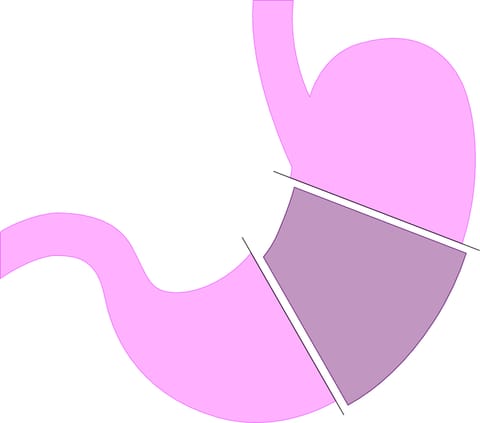
What it is
Sleeve gastrectomy, called tube stomach surgery (tüp mide) in Türkiye, is a weight loss operation. The NHS describes it as keyhole surgery under general anaesthetic: about five small cuts are made, the abdomen is filled with air, and around four-fifths of the stomach is removed to leave a narrow sleeve. The operation usually takes one to three hours. Because part of the stomach is removed, it cannot be undone. The NHS contrasts it with an endoscopic procedure that removes none of the stomach and may be reversible.
On the Ministry of Health register the treatment appears as Tüp Mide Ameliyatı under general surgery. A related balloon procedure is covered on our page on the stomach balloon.
Who it is for, and who it is not for
In the UK the NHS says weight loss surgery may be available if your BMI is 40 or more, or between 35 and 40 with a condition that could improve if you lost weight, such as high blood pressure or diabetes, and if you agree to make lifestyle changes and attend regular check-ups. Surgery may be considered at a lower BMI for people with a South Asian, Chinese, other Asian, Middle Eastern, Black African or African-Caribbean family background.
A 2022 guideline from the American and international bariatric societies (ASMBS and IFSO) goes further. It supports surgery for people with a BMI above 35 whatever their other conditions, says it should be considered at a BMI of 30 to 34.9 with metabolic disease, and says people in Asian populations with a BMI above 27.5 should be offered surgery. The guideline also says a multidisciplinary team can help assess risk factors you can change, and that the surgeon decides primarily whether you are ready.
Reflux deserves a direct question. A small long-term study found new reflux and Barrett's changes in some people more than ten years after a sleeve, and its authors suggested treating existing large hiatal hernia, reflux and Barrett's oesophagus as relative reasons against a sleeve. Reflux is also the most common reason, besides weight regain, for later conversion to a gastric bypass. Whether a sleeve suits you is a question for a specialist who has examined you.
How it is done in Türkiye
A Ministry of Health regulation on obesity units and obesity surgery units was published in the Official Gazette on 12 November 2025 and repeals the 2023 regulation. As we read it:
- Obesity surgery may be performed only by general surgery specialists who hold the Ministry's obesity surgery certificate.
- A surgery unit must have, beyond the obesity unit, a level-3 adult intensive care service, an endoscopy unit and an operating theatre suited to obesity surgery.
- The assessment must involve specialists such as endocrinology, cardiology and mental health, and an anaesthesia and reanimation specialist works in the surgery unit.
- Before surgery a board issues an electronic report confirming that the patient may have obesity surgery. Selection follows a clinical protocol that the Ministry publishes on its website. We found no BMI figure in the regulation itself.
- Each patient has a file with the assessments, consent forms and follow-up results. Responsibility for managing complications and referral to another facility is shared between the surgeon and the facility.
We found no separate provision for foreign patients in the text, so ask whether the same board report and protocol were applied to you. The register records authorisation and facility type, not which operations a facility performs, so the rule above is something to ask the hospital to show, not something the register proves.
What to check before you book
- Assessment before travel. Ask who assesses you, which specialties are involved and whether the board report exists before you pay. The UK surgical societies BAAPS and BOMSS list lack of adequate expert pre-operative assessment and counselling among their concerns about surgery abroad.
- The surgeon. Ask for the name and title of the surgeon and the surgeon's obesity surgery certificate.
- The hospital. Ask for the facility's type and authorisation number, and confirm level-3 adult intensive care, endoscopy and an anaesthesia specialist on site.
- The procedure. Ask to have the planned operation named in writing. The same societies list a different procedure from the one expected, and several procedures combined in one sitting, as concerns.
- Leak plan. The NHS notes a small chance of a stomach leak after a sleeve, causing serious infection that needs antibiotics. Ask who is on call, how a leak is detected and treated, and what happens if you are already home.
- Follow-up at home. Ask which centre near you will take you on. See aftercare abroad and our bariatric surgery guide.
What a package must state
- The operation, the surgeon's name and certificate, and the facility.
- The assessments done before surgery and the board report.
- The length of stay and who is responsible during it.
- Anaesthesia, intensive care availability and what happens if you need to stay longer.
- Medication and vitamin supply for the first period.
- Follow-up: the schedule, who provides it, whether remote or in person, and which tests.
- What happens, and who pays, if a complication needs treatment in Türkiye or at home.
- The records you receive, including the operation note.
Risks, complications and aftercare
The NHS lists blood clots, a stomach leak after a sleeve or bypass, wound infection, a blocked gut, gallstones when weight is lost quickly and excess skin. Seek urgent help for severe tummy pain, difficulty swallowing, regular vomiting, a high temperature, a fast heartbeat, or pain and swelling in a leg.
After the operation you eat less and the sleeve changes how you take in nutrients. The British Obesity and Metabolic Surgery Society (BOMSS) advises that follow-up stays with the bariatric centre for the first two years, followed by lifelong nutritional monitoring at least once a year as shared care. It advises a complete multivitamin and mineral supplement daily after all bariatric procedures, additional iron after a sleeve, and routine vitamin B12 injections. Make sure your GP or a local service has agreed to this before you go.
BAAPS and BOMSS warn that surgery abroad can mean poor or no routine follow-up, no direct access to expert care for a complication, and that most GPs are not trained in the care of bariatric patients.
Questions to ask in writing
- Who assessed me, which specialties took part, and where is the board report?
- What are the surgeon's name, title and obesity surgery certificate?
- Which facility, which level of intensive care, and who is the anaesthesia specialist?
- Which exact operation is planned, and is anything combined with it?
- What is the leak protocol, and who do I call from home at night?
- What follow-up, tests and vitamins are included, and for how long?
- When is it acceptable for me to fly home, and what do you advise for the journey?
- Which records will I receive, including the operation note and discharge summary?
Frequently asked questions
Is a sleeve gastrectomy reversible?
No. Part of the stomach is removed. The NHS contrasts it with endoscopic procedures that remove none of the stomach and may be reversible.
What BMI do I need?
The NHS says surgery may be available if your BMI is 40 or more, or between 35 and 40 with a condition that could improve with weight loss. A 2022 international guideline supports surgery above BMI 35 whatever your other conditions, and suggests considering it from BMI 30 with metabolic disease. Lower thresholds apply for some family backgrounds. Only a specialist assessment decides your case.
Who may perform obesity surgery in Türkiye?
A Ministry of Health regulation published on 12 November 2025 allows obesity surgery only by general surgery specialists who hold the Ministry's obesity surgery certificate, in a unit with level-3 adult intensive care, an endoscopy unit and a suitable operating theatre.
Do I need follow-up after I get home?
Yes. UK guidance on nutrition after bariatric surgery advises follow-up with the bariatric centre for the first two years and lifelong monitoring at least once a year. Plan who will do this before you travel.
Can I fly home straight away?
UK surgical societies list the clot risk of long-distance travel immediately after surgery among their concerns about surgery abroad. Ask the surgical team in writing when travel is acceptable for you.
This page is an information service, not medical advice. Clinimora is an independent, patient-funded research service. It does not sell treatment, does not diagnose and does not recommend any clinic.