
What it is
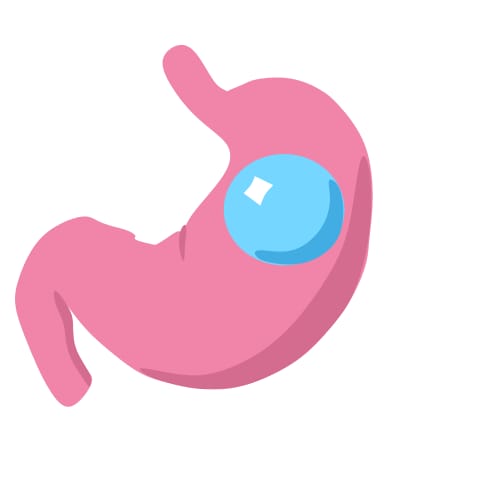
An intragastric balloon is a soft silicone balloon that sits in the stomach and takes up space, so that you feel full sooner and eat less. For one widely used liquid-filled type, the manufacturer's patient booklet says it is placed through the mouth with an endoscope, filled with salt water to roughly the size of a grapefruit, and taken out in the same way. The NHS describes the placement as a thin camera first checking the stomach for things like an ulcer or a large hiatus hernia, then the balloon being swallowed empty on a thin tube and filled, which usually takes around 20 minutes.
It is not permanent. An NHS hospital leaflet says the balloon is not designed to be a permanent treatment for obesity. Swallowable versions exist that need no endoscopy to place; NICE has said that for people aiming for long-term weight loss the evidence on the swallowable capsule is not adequate, so it should be used only in research, while for short-term medical need the evidence was adequate with special arrangements for governance, consent and audit.
On the register the treatment appears as Mide Balonu under gastroenterology. A second entry, Mide Balonu Uygulaması, is listed under general surgery: see stomach balloon applications. For an operation that removes part of the stomach, see sleeve gastrectomy.
Who it is for, and who it is not for
The manufacturer's booklet describes the liquid-filled balloon as for adults with obesity who have not been able to lose weight and keep it off, and who are willing to follow a 12-month programme: six months with the balloon and a diet and exercise plan, then six more months of the plan without it. An NHS hospital leaflet says a weight management and bariatric team assesses eligibility, and that a balloon may be used to achieve weight loss before another procedure.
The booklet lists reasons not to have the balloon, including severe liver damage, daily use of prescription aspirin, anti-inflammatory medicines, anticoagulants or other stomach irritants, and pregnancy or breastfeeding. Stomach problems found at the first endoscopy, such as irritation or ulcers, rule it out. Your medical history decides the rest, and only a clinician who has examined you can say whether it suits you.
How it is done in Türkiye
We found no Turkish regulation that sets out who may place a stomach balloon or where. The Ministry of Health's 2025 regulation on obesity units and obesity surgery units covers surgery units, and we did not find balloons mentioned in it; endoscopy appears there as a facility requirement for surgery. We therefore cannot tell you which specialty or facility type the rules require, and the register records authorisation and facility type, not which treatments a facility performs.
What the manufacturer and NHS documents describe is placement and removal by endoscopy, with sedation or general anaesthesia, taking around 20 to 30 minutes. One NHS programme starts acid-reducing medicine two weeks before placement and gives anti-sickness medicine on the day, because the stomach reacts to the balloon. Expect an endoscopy before placement and a second one for removal, so ask who does each and where.
Ask for the name and specialty of the doctor who places and removes the balloon, the facility and its anaesthesia cover, and the balloon's make, model, lot number and planned removal date.
What to check before you book
- Endoscopy first. A camera check of the stomach before placement is part of the NHS description. Ask for it to be done and the findings given to you.
- Which balloon. Ask for the name, type, filling (liquid or gas), lot number and the maximum time in the stomach.
- Removal. Ask for the date, who removes it, and where. The manufacturer warns that a balloon left in too long can deflate and block the bowel. If removal depends on a second trip, ask what happens if you cannot make it.
- Medicines. Ask which acid-reducing, anti-sickness and vitamin medicines you need and for how long.
- Programme. Ask what diet, exercise and review plan is included for the whole period, with a dietitian.
- Patient card. Ask for a card or letter that names the device, so a clinician at home knows what you have.
- Facility. Check its type and authorisation number on the register, and ask about anaesthesia and emergency care. See medical records before treatment abroad.
What a package must state
- The balloon's make, type and the planned time in the stomach.
- The doctor, specialty and facility for placement and for removal.
- Pre-placement endoscopy and the anaesthesia or sedation.
- Medicines and supplements, and who provides them.
- Dietitian and review appointments, remote or in person, with dates.
- The removal, whether included, when, and where.
- What happens and who pays if the balloon must come out early or a complication needs treatment.
- The documents you receive: endoscopy report, device card, consent form and discharge letter.
Risks, complications and aftercare
Nausea, vomiting and pain are common in the first days. In the manufacturer's US study of one liquid-filled balloon, most of the 160 participants reported nausea, pain and vomiting at some point, and 30 had the balloon removed early; for 8 of them serious intolerance meant a hospital stay. An NHS hospital leaflet describes the first few days as uncomfortable, with nausea, vomiting, bloating and cramping, and says most people feel much better after a week.
Less common problems listed by the manufacturer include a balloon that deflates and moves on, over-inflation, inflammation of the pancreas, ulcers, a hole through the stomach and obstruction of the bowel; some can be fatal if untreated. The US Food and Drug Administration warned in 2017 about over-inflation and acute pancreatitis with liquid-filled balloons, with pancreatitis reported as early as three days after placement.
For one swallowable balloon, the UK regulator MHRA issued a device safety notice on 27 May 2026 after reports of gastric outlet obstruction, bowel obstruction and perforation. It advises that patients seek medical help at once for severe or persistent abdominal pain, vomiting, nausea, a swollen abdomen or breathing difficulty, carry the patient information card and show it to any clinician, and that the manufacturer's updated instructions recommend at least one follow-up appointment after placement.
In the manufacturer's US study the average weight loss was smaller six months after removal than at removal, which is why its programme runs for six months after the balloon comes out. Contact a clinician at once for severe or persistent pain, vomiting you cannot control, or a swollen abdomen, and tell them you have a balloon.
Questions to ask in writing
- Who places and who removes the balloon, and what is their specialty?
- Which balloon is it (make, type, filling), and what is the maximum time it may stay in?
- When and where is it removed, and is the removal included?
- What happens if I cannot return for removal, or the balloon must come out early?
- What endoscopy and anaesthesia are used, and who monitors me?
- Which medicines and vitamins do I need, and for how long?
- Who sees me during the months the balloon is in, and how do I reach them?
- Will I receive a device card, an endoscopy report and a discharge letter?
Frequently asked questions
How long does a stomach balloon stay in?
It depends on the device, so ask for it in writing. For one widely used liquid-filled balloon the manufacturer's patient booklet says it must not stay in for more than six months, because it is more likely to deflate and block the bowel after that.
Is a stomach balloon permanent?
No. An NHS hospital leaflet says the balloon is not designed to be a permanent treatment for obesity. The balloon comes out, and the diet and exercise programme is meant to continue afterwards.
What are the side effects?
Nausea, vomiting and pain are the most common, mostly in the first days. In the manufacturer's US study of one balloon, most participants reported them at some point, and some balloons were taken out early because of serious intolerance.
Are there rare but serious problems?
Yes. These include a balloon that deflates and moves into the bowel, over-inflation, inflammation of the pancreas, ulcers and a hole in the stomach. In May 2026 the UK regulator issued a safety notice about obstruction and perforation with one swallowable balloon.
Do I need follow-up at home?
Yes, and you need a plan for removal. Ask who will see you during the months the balloon is in, who removes it, where, and what you do if symptoms start after you return.
This page is an information service, not medical advice. Clinimora is an independent, patient-funded research service. It does not sell treatment, does not diagnose and does not recommend any clinic.