
What it is
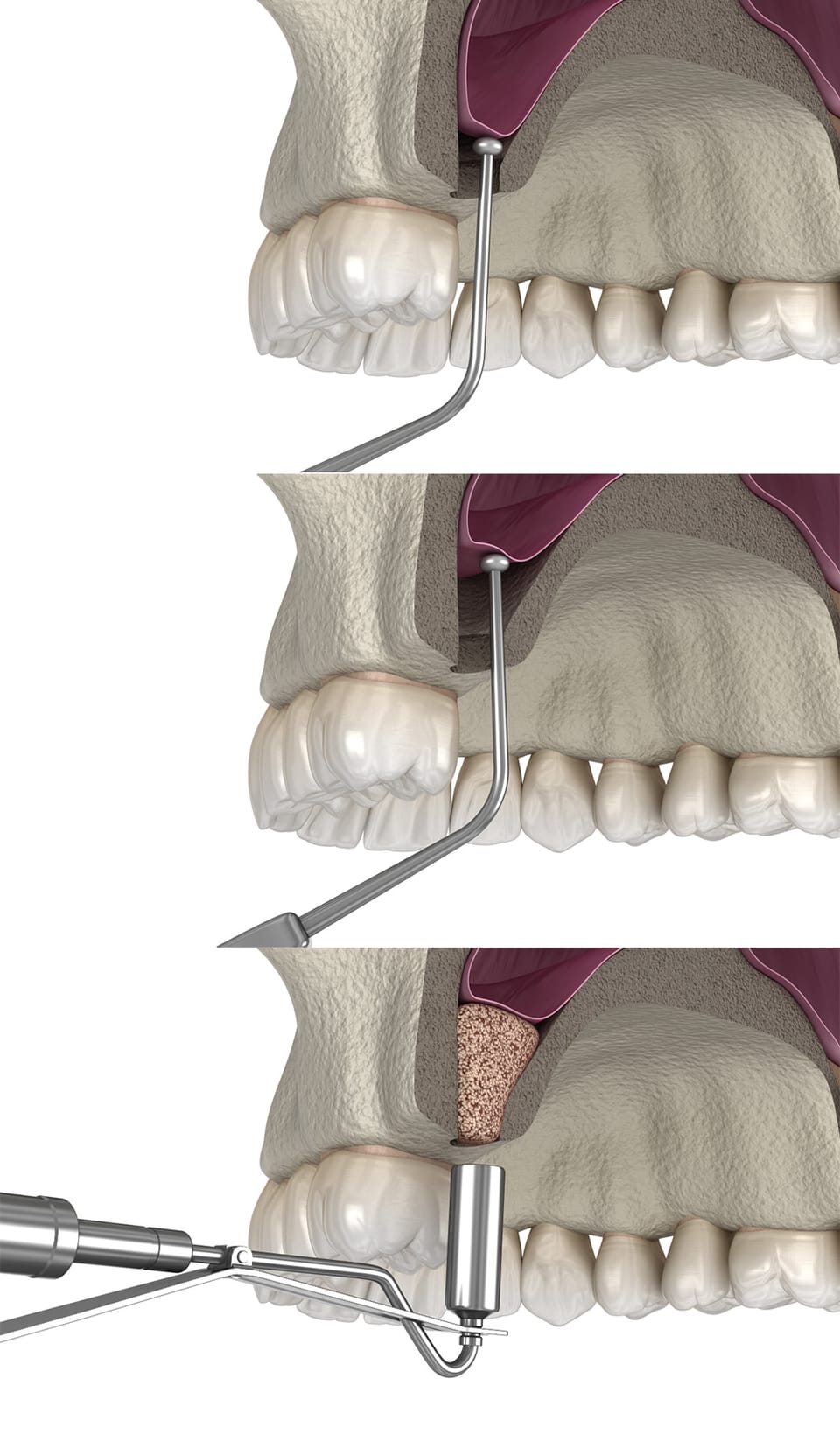
The maxillary sinus is an air space above the upper back teeth. When teeth have been lost there, the bone between the mouth and the sinus can be too thin to hold an implant. A sinus lift, also called sinus floor elevation or maxillary sinus augmentation, lifts the membrane that lines the sinus and adds bone material underneath it, so that there is enough bone height for an implant.
There are two main routes. In the lateral approach, the surgeon makes a small window in the side wall of the sinus bone and lifts the membrane through it. In the transcrestal (osteotome) approach, the sinus floor is lifted through the hole prepared for the implant. Both are described in the research; the second is described as less invasive but done without direct sight of the membrane.
In the Ministry of Health register this treatment appears as "Sinus Lift" (Sinus Tabanı Yükseltme İşlemi) within the oral, dental and maxillofacial surgery branch. See dental implant surgery for the implant itself.
Who it is for, and who it is not for
It is considered for people who want implants in the upper back jaw but have too little bone height under the sinus. It is not needed by everyone who wants an upper implant, and only a dentist or surgeon who has examined you and read the imaging can say if it applies to you.
A Cochrane review of sinus augmentation could not conclude whether lifting the sinus or using shorter implants is more successful where bone height is moderately reduced, and noted more complications at one year in sites that had a lift. That does not mean a sinus lift is wrong for you. It means "you need a sinus lift" is a judgement, so ask for the reasoning and the alternatives, including shorter implants, in writing.
Tell the clinic about previous sinus problems, nasal surgery, allergies and smoking. Sinus anatomy, including bony partitions inside the sinus, is reported to make membrane tearing more likely.
How it is done in Türkiye
Ask whether the lift is planned at the same visit as the implant or as a separate earlier stage, and how long the healing gap is, as that decides how many trips you need. We have not found a source for typical timings in Türkiye, so none are given here.
Türkiye's regulation on private oral and dental health facilities (Resmî Gazete, 6 October 2022, no. 31975, amended since) distinguishes between a practice, polyclinic, centre and hospital. The 2024 amendment makes a general-anaesthesia unit compulsory in centres. As we read the consolidated text, sedation and general anaesthesia are not permitted in a practice or polyclinic, though they can be arranged at another facility. We read this through secondary reproductions, so ask for the facility type and where any sedation would take place.
We have not been able to confirm a rule that reserves sinus augmentation to one specialty. Oral, dental and maxillofacial surgery is a recognised specialty, and a dentist may not practise as a specialist beyond what a diploma or specialty certificate allows. Ask who performs the lift, their title, and the document that shows it.
What to check before you book
- Why a lift. Ask for the scan to show the bone height and why a lift, rather than shorter implants, is proposed.
- Technique. Ask whether it is lateral or crestal and what graft material will be used (your own bone, donor bone, animal-derived or synthetic), and its product name and lot number.
- Imaging. Ask for a three-dimensional scan, including the sinus, before surgery, and to have the files afterwards.
- Experience. Ask who performs it and how often they do it.
- Facility. Look it up on the register and note its type and authorisation number. See what the register can and cannot tell you and search the register.
- Your own history. Check that sinus problems, medicines and smoking were recorded, and that you were told the risks before consenting.
- Warranty wording. A guarantee for the implant may or may not cover failure of the graft; ask for the wording.
What a package must state
- Whether the lift is one-sided or both sides, and whether it is done with the implant or beforehand.
- The technique and the graft material and product.
- Whether the implants, extractions, temporary teeth and final crowns are included.
- Anaesthesia type and facility type.
- How many trips, and the healing interval between stages.
- Medicines and follow-up checks included.
- Records you receive: scan, operation note, graft and implant details.
- What is covered if the graft fails or sinus problems follow, and for how long.
- Cancellation and refund terms for deposits.
Risks, complications and aftercare
Reviews of the lateral technique report tearing (perforation) of the sinus membrane and bleeding from blood vessels as the main complications during surgery. The membrane tear is reported at a wide range of frequencies in different studies. After surgery, reported complications include infection of the graft, sinus infection or sinusitis, wound opening, and an abnormal connection between the sinus and the mouth (oroantral fistula). The crestal route cannot be seen directly, so a tear may go unnoticed, and one review noted a greater chance of infection if the membrane is torn.
Aftercare is determined by the surgeon, so get the instructions in writing before you leave, including what to avoid; we have not verified specific instructions and do not give them here. Contact a dentist or doctor promptly for fever, severe or worsening pain or swelling, bleeding that will not stop, nasal discharge that changes, or fluid passing between the nose and mouth. Keep all records.
Questions to ask in writing
- Why do I need a lift, and what are the alternatives, including shorter implants?
- Which technique will you use, and why for my case?
- What graft material, product and lot number?
- Who performs it, with what title, and how many have they done?
- Is the lift done at the same time as the implants, and how many trips do I need?
- What type of facility is this, and what anaesthesia would be used?
- What happens if the sinus membrane tears or the graft fails, and who pays?
- Who treats sinus problems if they appear after I am home?
Frequently asked questions
Is a sinus lift always needed for upper back implants?
No. It is considered when there is too little bone height under the sinus. A Cochrane review could not say from the evidence whether a sinus lift or shorter implants is the better choice in moderately reduced bone, so ask why the clinic proposes it for you.
What is the most common problem during a sinus lift?
Reviews of the side-window technique report tearing of the sinus lining and bleeding as the main complications during surgery. Infection and sinusitis can follow.
Is the 'osteotome' or 'crestal' approach better than the 'lateral window'?
Reviews describe different trade-offs; the crestal route is less invasive but is done blind. Ask the surgeon which technique they plan and why it suits your bone.
Do I need a scan before agreeing to it?
Yes, ask for one. Sinus anatomy, including bony partitions, affects the risk, and the European Association for Osseointegration favours three-dimensional imaging for augmentation procedures.
What should I do if I get sinus symptoms after I am back home?
Contact a dentist or doctor promptly, tell them a sinus lift was done, and give them your records. Contact the clinic in writing as well.
This page is an information service, not medical advice. Clinimora is an independent, patient-funded research service. It does not sell treatment, does not diagnose and does not recommend any clinic.