
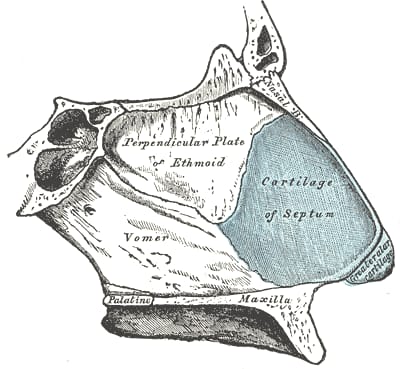
What it is
The septum is a thin wall of cartilage and bone down the middle of the nose, about 7 cm long in an adult. If it is bent, it can block the nose, whether from an injury or simply the way it developed. Septoplasty is the operation that straightens it. The surgeon works through the nostrils, so there is normally no visible cut on the outside.
It is not rhinoplasty. Rhinoplasty changes the bones and cartilage that give the nose its outside shape (see rhinoplasty). When the two are done together the operation is called septorhinoplasty. A package that says "nose operation" without saying which of the three is included cannot be compared with another.
Who it is for, and who it is not for
Septoplasty is for people whose blocked nose is caused by a bent septum, and for people whose septum has to be straightened to make room for other surgery, such as sinus surgery. It is a functional operation, not a cosmetic one.
Nasal sprays and drops can help with swelling but cannot correct a bent septum; only surgery does. Because the aim is breathing, the reason for the operation should be a documented finding: ask for the examination notes or scan reports that show the bend and explain why surgery is planned, rather than accepting "everyone needs it".
How it is done in Türkiye
In the UK, septoplasty alone usually takes about 30 to 45 minutes, and septorhinoplasty about an hour to an hour and a half. It is usually done under general anaesthetic, though some cases can be done with only the nose numbed. Most people go home the same day. Dissolvable stitches inside the nose fall out by themselves. Nasal packs are used only if bleeding needs them, and after septorhinoplasty a splint stays on the nose for about a week and is removed in clinic.
Who operates: ear, nose and throat (ENT) surgeons, which is how the register's own scheme files this treatment. Ask for the surgeon's specialty and certificate in writing.
On facility type, the Ministry's rules for outpatient facilities let a medical centre operate only under a surgical permit limited to the specialties named on it; patients graded ASA 3 or above (a standard anaesthetic risk grade) cannot be operated on there, and observation is limited to 24 hours. A polyclinic may not run around the clock or have an emergency unit. A hospital can admit you overnight. A short nasal operation can fit a day-case facility, but we found no rule on which type must be used, so ask for the place in writing.
The register records that a facility is authorised to treat international patients; each facility enters its own treatment list, and the authorisation does not certify the procedure.
What to check before you book
- The diagnosis: who examined your nose, what they found, and whether a scan or endoscopy was used. A functional operation should rest on that.
- The surgeon, by name, specialty, and that they will operate themselves: how to check a doctor.
- The place, type and authorisation number: how to read one.
- What is included: septoplasty alone, or with turbinate, sinus or cosmetic nose work. Anything cosmetic is rhinoplasty and should be priced and consented as such.
- The anaesthesia plan and the anaesthetist's name.
- Your flight: UK travel guidance for patients having surgery abroad is written around cosmetic and body-contouring operations and gives no figure for septoplasty. Ask the surgeon in writing when you may fly, and why.
- Follow-up: the 4 to 8 week review that a UK clinic would arrange is the one most likely to be lost if you operate abroad. Ask who will do it and how.
- Records: operation note, anaesthetic record, discharge summary, your file: what to ask for.
What a package must state
- The operation: septoplasty, rhinoplasty or both, and any turbinate or sinus work.
- Local or general anaesthetic, and the anaesthetist's name.
- Facility name, type, address and authorisation number; surgeon's name and specialty.
- Whether it is a day case or how many nights.
- Packing or splints, medicines, nasal sprays: included or charged separately.
- Consultation, scans, the date of surgery, review dates, minimum stay.
- Follow-up after you return, for how long, in which language.
- Who treats a complication, in which country, and who pays.
- Documents you will be given.
Risks, complications and aftercare
Nosebleeds are the commonest problem: they can occur within 6 to 8 hours of surgery, or up to 5 to 10 days later, and may need packing. Infection is rare but can be serious: see a doctor if the nose becomes increasingly blocked or painful. A hole in the septum (perforation) is rare; it can cause whistling when breathing, crusting with blockage or nosebleeds, though most cause no problems and need no treatment, and repair is possible. A slight change in nose shape with a dip in the bridge is very rare and can be corrected with surgery.
In the first two weeks: breathe gently through the nose, do not blow or sniff, sneeze with your mouth open, and avoid heavy lifting and strenuous exercise, which raise swelling and bleeding risk. Expect the nose to be blocked on both sides like a heavy cold, and a blood-tinged watery discharge for about two weeks. Painkillers such as paracetamol or ibuprofen should be enough.
See a doctor urgently for heavy bleeding. See aftercare abroad.
Questions to ask in writing
- What is my diagnosis, and what findings support the operation?
- Who will operate, with what specialty? Please send the certificate.
- Is anything cosmetic included? If so, please itemise it as rhinoplasty.
- Where will the operation take place, and where will I spend the first night?
- Who is the anaesthetist, and are they present throughout?
- How many days must I stay, and when will you confirm I may fly?
- Who will review me at 4 to 8 weeks, and how?
- If I have a nosebleed or infection at home, whom do I contact, in which language, and who pays?
- Will you release my full file to my own doctor?
- Can I see the contract and cancellation terms before paying any deposit?
Frequently asked questions
What is the difference between septoplasty and rhinoplasty?
Septoplasty straightens the septum inside the nose, mostly for breathing. Rhinoplasty changes the shape of the nose from outside. Septorhinoplasty combines both in one operation.
Can nose sprays fix a bent septum?
Sprays and drops can help swelling, but not a structural blockage. Only surgery can correct a bent septum.
Is it a day-case operation?
Usually, in the UK: most people go home the same day. Ask whether your Turkish facility plans a day case or a night in hospital.
How long is recovery?
Take at least one week off work. Pain lasts about a week, a blood-tinged watery discharge for about two weeks is normal, and heavy lifting and strenuous exercise are avoided for the first two weeks.
When is the follow-up?
In a UK ENT clinic it is usually 4 to 8 weeks after surgery, to check symptoms and results. Ask who will see you at that point if you are at home.
This page is an information service, not medical advice. Clinimora is an independent, patient-funded research service. It does not sell treatment, does not diagnose and does not recommend any clinic.