
What it is
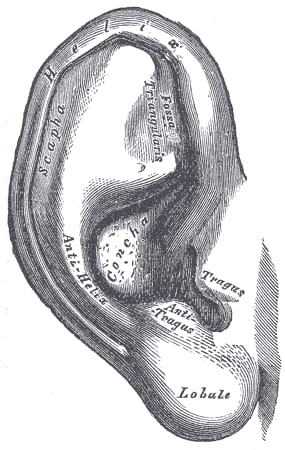
Ear correction surgery changes the size or shape of the ears, or pins back ears that stick out; pinning is called otoplasty or pinnaplasty.
There are two approaches. In incisionless otoplasty there are no skin cuts: a needle goes into the surface of the cartilage to make it more flexible, and stitches hold the new shape or fix the cartilage to the bone behind the ear. In otoplasty with a cut, the surgeon makes a small cut behind the ear to expose the cartilage, may remove small pieces of cartilage, and uses stitches at the back to reshape the ear or bring it closer to the head. Ask which is planned.
Who it is for, and who it is not for
It is usually done on children and young teenagers, but adults can have it. UK health-service advice is that ear pinning is not suitable for children younger than 5, because their ears are still growing and the cartilage is too soft to hold stitches. In babies, splints can reshape ears before 6 months; if a baby has prominent ears at birth, a GP can advise.
In the UK the health service may provide ear pinning, particularly for children who need it, and rarely for adults when the ears cause significant distress. Otherwise it is paid for privately.
For a minor, the Turkish patient-rights regulation says that permission is taken from the parent or guardian. That is the legal minimum; ask how the clinic will speak to your child and what happens if the child says no on the day.
How it is done in Türkiye
Otoplasty usually takes 1 to 2 hours. With local anaesthetic you normally go home the same day. Afterwards a head bandage may be used to help the ears heal in their new position and protect them from infection; keep it clean and dry, and do not wash hair until it is removed. A headband may be worn at night for several weeks.
Who operates: the register's own scheme files otoplasty under ear, nose and throat (ENT) surgery; plastic surgeons also perform it. We could not verify from Turkish rules which specialties may perform it, so ask for the specialty and certificate in writing, and ask whether the surgeon regularly operates on children, if your child is the patient.
On facility type, the Ministry's rules for outpatient facilities let a medical centre operate only under a surgical permit limited to the specialties named on it; patients graded ASA 3 or above (a standard anaesthetic risk grade) cannot be operated on there, and observation is limited to 24 hours. A polyclinic may not run around the clock or have an emergency unit. A hospital can admit you overnight. A short ear operation may fit a day-case facility, but we found no rule on which type must be used, so ask for the place in writing.
The register records that a facility is authorised to treat international patients; each facility enters its own treatment list, and the authorisation does not certify the procedure.
What to check before you book
- The surgeon, by name, specialty, experience with the age group, and that they will operate themselves: how to check a doctor.
- The place, type and authorisation number: how to read one.
- The anaesthesia plan: local or general, who gives it, and what monitoring and paediatric experience there is for a child.
- Two consultations with a cooling-off period, the first in person, as UK guidance advises for surgery abroad. A child's decision should not be rushed.
- Your flight: UK public-health guidance on flying after surgery names facial procedures (7 to 10 days) and breast surgery, liposuction and tummy tucks (5 to 7 days); ear surgery is not named. Ask the surgeon for a date in writing.
- Aftercare: who removes the bandage and stitches (5 to 10 days if not dissolvable), where, and who is available by phone in your language.
- Records: operation note, anaesthetic record, discharge summary, and the file: what to ask for.
See also our guide on ear surgery in Türkiye.
What a package must state
- The technique: incisionless or with a cut, one ear or both, and any cartilage removal.
- Local or general anaesthetic, and the anaesthetist's name.
- Facility name, type, address and authorisation number; surgeon's name and specialty.
- Day case or number of nights.
- Bandages, headbands, medicines: included or charged separately.
- Consultation, date of surgery, bandage and stitch removal, minimum stay.
- Follow-up after you return, for how long, in which language.
- Who treats and who pays for a complication or a revision, and in which country.
- Documents you will be given.
Risks, complications and aftercare
Expected: a small scar behind each ear that fades; sore, tender ears for several weeks; numbness or tingling for several weeks; slight bruising for about two weeks. Specific risks: inflammation of the cartilage, a blood clot in the ear skin, stiff ears (possibly for several months), asymmetry, and the ears protruding again. General risks: excessive bleeding, infection at the cut and a reaction to the anaesthetic.
Pain can be treated with paracetamol or ibuprofen. Most children are back at school after 1 to 2 weeks, swimming is usually fine after 4 to 6 weeks, and contact sports after about 8 weeks. Contact the clinic quickly for severe pain or anything unexpected. See aftercare abroad.
Questions to ask in writing
- Who will operate, with what specialty, and how often do they operate on children?
- Which technique, and what is the plan if one ear needs more correction?
- Local or general anaesthetic, and who gives it?
- Where will the operation take place, and where will we stay that night?
- How will you involve my child, and what happens if my child decides against it?
- When may we fly, and will you confirm in writing?
- Who removes the bandage and stitches, and who do we contact from home?
- If a revision is needed, who does it, where, and who pays?
- What documents will we be given?
- Can we see the contract and cancellation terms before paying any deposit?
Frequently asked questions
What is the youngest age for ear pinning?
UK health-service advice is that ear pinning is not suitable for children younger than 5, because the ears are still growing and the cartilage is too soft to hold stitches. Babies' ears can sometimes be reshaped with splints before 6 months.
Who gives consent for a child in Türkiye?
Under the Turkish patient-rights regulation, if the patient is a minor, permission is taken from the parent or guardian. Ask how the clinic will also involve and listen to the child.
Is it done under local or general anaesthetic?
An older child or an adult can have it under local anaesthetic; incisionless otoplasty is usually under general anaesthetic but can be local. Ask which is planned and why.
When can a child return to school?
Most children return to school after 1 to 2 weeks. Swimming is usually fine after 4 to 6 weeks and contact sports after about 8 weeks.
Can the result be lost?
Yes. Possible problems include asymmetry and the ears protruding again.
This page is an information service, not medical advice. Clinimora is an independent, patient-funded research service. It does not sell treatment, does not diagnose and does not recommend any clinic.