
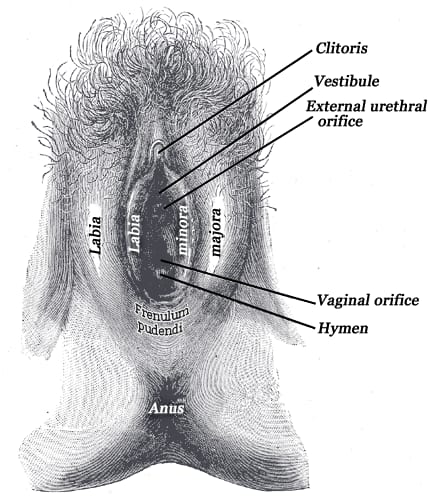
What it is
Labiaplasty is surgery to reduce the size of the labia minora, the skin flaps either side of the vaginal opening. The surgeon shortens or reshapes the labia: unwanted tissue is cut away with a scalpel or a laser, and the loose edge may be closed with fine dissolvable stitches. Our register uses the spelling labiaplasty; clinics also write labioplasty, and the two mean the same operation.
Who it is for, and who it is not for
People choose labiaplasty for physical discomfort or for how the area looks. UK health-service advice is that it is completely normal to have noticeable skin folds in this area. The operation should not be done on anyone under 18, because the labia keep developing into early adulthood. In the UK it is rarely funded by the health service, and then for abnormal vaginal lips, to repair tears after childbirth, or to remove cancerous tissue in vulval cancer.
Because it is a private and personal decision, take time. Be wary of any package that treats it as an add-on to other surgery without a separate consultation, or that asks you to decide on the day. A consultation should include an examination by the surgeon, and you should be able to see the consent form and the plan before you travel.
How it is done in Türkiye
The operation takes about 1 to 2 hours under a general anaesthetic, or under a local anaesthetic with sedation, and you may be able to go home the same day. Expect soreness, bruising and swelling for up to two weeks, with discomfort when passing urine or sitting, painkillers provided, up to two weeks off work, and a couple of months for the skin to heal fully. Keep the area clean and free from infection, and wear loose underwear and clothing to avoid rubbing.
The register's own scheme files labiaplasty under plastic, reconstructive and aesthetic surgery; Turkish plastic surgery is a five-year specialty. We could not verify from Turkish rules whether gynaecologists are also authorised to perform it, so ask for the surgeon's specialty and certificate in writing.
For anyone under 18, the Turkish patient-rights regulation requires permission from a parent or guardian for medical interventions on a minor. UK advice on age is stricter; ask the clinic for its own written policy on age and consent.
On facility type, the Ministry's rules for outpatient facilities let a medical centre operate only under a surgical permit limited to the specialties named on it; patients graded ASA 3 or above (a standard anaesthetic risk grade) cannot be operated on there, and observation is limited to 24 hours. A polyclinic may not run around the clock or have an emergency unit. A hospital can admit you overnight. We found no rule that ties labiaplasty to one facility type, so ask for the place in writing.
The register records that a facility is authorised to treat international patients; each facility enters its own treatment list, and the authorisation does not certify the procedure.
What to check before you book
- The surgeon, by name, specialty, and that they will operate themselves: how to check a doctor.
- The place, type and authorisation number: how to read one.
- Your consent: a clear, written explanation of the technique, what will be removed, and the scar.
- The anaesthesia plan: local with sedation or general, and who gives and monitors it.
- Privacy and chaperone arrangements during examination, which you can ask for.
- Two consultations with a cooling-off period, the first in person, as UK guidance advises for surgery abroad.
- Your flight: UK public-health guidance on flying after surgery names breast surgery, liposuction, tummy tucks and facial procedures; this operation is not named, so ask the surgeon for a date in writing. UK surgeons' guidance suggests 1 to 2 weeks in the destination for general-anaesthetic operations of up to three hours.
- Aftercare: who you contact at home, in your language, about bleeding, infection or pain.
- Records: operation note, anaesthetic record, discharge summary, and your file: what to ask for.
What a package must state
- The technique (scalpel or laser) and what is removed.
- Local with sedation or general anaesthetic; the anaesthetist's name.
- Surgeon's name and specialty; facility name, type, address and authorisation number.
- Day case or number of nights.
- Dressings, medicines and aftercare supplies: included or charged separately.
- Consultation, date of surgery, review dates, minimum stay.
- Follow-up after you return, for how long, in which language.
- Who treats and who pays for a complication or revision, and in which country.
- Documents you will be given.
Risks, complications and aftercare
Risks include bleeding, infection, scarring of the tissue, and reduced sensitivity of the genitals. Any operation carries a small risk of a blood clot in a vein and an allergic reaction to the anaesthetic. The surgeon should explain how likely each risk is and how it would be treated.
Skin can take a couple of months to heal fully. Avoid sex for at least four weeks and physical activity for 4 to 6 weeks. Contact the surgeon if you have complications or are unhappy with the result. See aftercare abroad and how to complain.
Questions to ask in writing
- Who will operate, with what specialty? Please send the certificate.
- Which technique, and what exactly will be removed?
- Local with sedation or general anaesthetic, and who gives it?
- Where will the operation take place, and where will I spend that night?
- What is your policy on age and consent?
- How many days must I stay, and when will you confirm I may fly?
- Whom do I contact from home about bleeding or infection, in which language?
- If a revision is needed, who does it, where, and who pays?
- What documents will I receive?
- Can I see the contract and cancellation terms before paying any deposit?
Frequently asked questions
Is it normal to have visible labia?
Yes. UK health-service advice notes that it is completely normal to have noticeable skin folds around the vaginal opening.
What is the minimum age?
UK health-service advice is that the operation should not be done on anyone under 18, because the labia keep developing into early adulthood.
Can I have sex or exercise after labiaplasty?
Avoid sex for at least four weeks and physical activity for 4 to 6 weeks, and follow any more specific advice from your surgeon.
Is labiaplasty available on the UK health service?
Rarely. It may be offered for abnormal vaginal lips, to repair tears after childbirth, or to remove cancerous tissue in vulval cancer.
Are there risks to sensation?
Yes. Risks include bleeding, infection, scarring of tissue and reduced sensitivity of the genitals.
This page is an information service, not medical advice. Clinimora is an independent, patient-funded research service. It does not sell treatment, does not diagnose and does not recommend any clinic.