
What it is
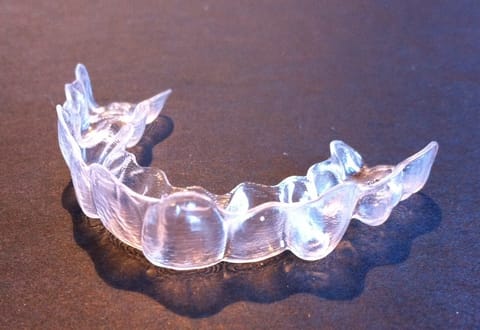
Clear aligners are a type of orthodontic treatment. NHS information describes braces as treatment that straightens or moves teeth to improve their appearance and how they work, and says braces can be removable or fixed, with a clear plastic option. A clear aligner is a removable clear plastic tray that fits closely over the teeth. A series of trays is worn in turn, each shaped slightly differently, and the trays are taken out to eat and to clean.
Invisalign is a brand name of Align Technology, a medical-device company that describes Invisalign as its clear aligner system. This page uses the register's heading, but what it says applies to clear aligners in general, whoever makes them. The register lists the treatment in Turkish as "Şeffaf Plak Tedavisi", clear plate treatment.
Who it is for, and who it is not for
Aligners are for people who want their teeth moved and prefer a removable, less visible appliance to fixed braces. Whether your teeth suit aligners is for a dentist or orthodontist to judge after examining your mouth and taking X-rays or scans.
Reviews of the research report that aligners can perform about as well as fixed braces for some small movements, but that other movements are harder to control with aligners, in particular rotating teeth and moving them vertically. Fixed appliances were found more accurate for larger rotations. Most of the evidence is from small studies, so these are cautions rather than rules, and your case may be different.
Aligners also depend on you. They are worn nearly all the time, apart from eating and cleaning, so they suit people who will wear them as instructed.
How it is done in Türkiye
A typical course starts with an examination, records and a treatment plan. Aligner trays are then made to the plan and delivered in sets over the treatment, with check-ups along the way. In Türkiye the details depend on the clinic, and we cannot give a standard number of visits or months.
For the Ministry of Health's rules on who may do what:
- Intra-oral work, including taking records, fitting attachments and any enamel reduction, must be done by a dentist; staff who are not dentists may not carry out intra-oral procedures.
- Dental technicians may be employed only where the facility has a dental laboratory, and if laboratory work is bought in, the facility and the laboratory are jointly responsible for it.
- The four facility types (surgery, polyclinic, centre and hospital) differ in sedation and anaesthesia rules, which seldom matter for aligners.
- Dentists may not announce themselves as specialists beyond what their diploma or specialty certificate allows.
We have not found a rule in the facility regulation that reserves aligner treatment to orthodontic specialists. In the UK, the General Dental Council treats direct-to-consumer orthodontics as dentistry, to be done only by a registered dental professional, with a full assessment of oral health and a clinical examination in person; that is a UK position, but it describes what a proper assessment looks like. Align Technology states that orthodontists and general dentists must complete an Invisalign training course before providing the system. Whether a given Turkish dentist has done so is a question you can put to the clinic.
What to check before you book
- Who plans the treatment. Ask for the planning dentist's full name and title, and whether they are an orthodontist, in writing. Check the name against the doctors recorded for the facility on register search.
- Assessment first. Ask for an examination with X-rays or scans of your own teeth before the plan. Ask what the plan says about movements of the harder kinds, such as rotations, and what the alternative of fixed braces would involve.
- The plan itself. Ask to see the planned end position, the number of trays and whether attachments (small tooth-coloured bumps bonded to teeth) or enamel reduction between teeth are planned.
- Supervision at home. This is the central question. Ask who checks your progress, how often, whether visits are in person, and what happens if a tray is lost or does not fit.
- Who makes the trays, and where. Ask whether they are from the brand named, or another manufacturer, and where they are made.
- Retainers. Ask what retainer you will get at the end, who fits it and whether it is in the package.
- Records. Ask for the treatment plan, the scans or impressions, X-rays and photographs, to keep.
What a package must state
- the brand or system of the aligners, and the manufacturer;
- the number of trays or stages, and whether refinements (extra sets of trays) are included;
- the examination, X-rays or scans, attachments and any enamel reduction between teeth;
- how many check-ups are included, where they take place and who carries them out;
- the retainer: type, number, and whether replacements are included;
- what is excluded, such as lost or broken trays, extra refinements and fixed braces if the plan changes;
- the guarantee and what happens if treatment cannot be completed;
- an invoice or receipt with an itemised breakdown, which Turkish rules require for every patient treated;
- the deposit: what it holds and whether it is refundable.
Risks, complications and aftercare
Aligners may not achieve the planned result, particularly for movements that reviews describe as harder to control. Teeth need to be healthy at the start, and cleaning around attachments and trays needs care. Teeth can drift after treatment, which is why retainers are worn: UK NHS leaflets describe wearing a retainer every night for the first year after a brace is removed, and a lower frequency long term if the retainer is not tight and the teeth are not moving. Exact schedules vary, and your orthodontist's instructions come first.
If a tray stops fitting, treatment can stall. Ask in advance how that is handled. Pain, swelling or a loose attachment after you return mean seeing a dentist.
Questions to ask in writing
- Who plans and supervises my treatment, and what is their title?
- What is the planned end position, and how many trays are included?
- Are attachments or enamel reduction planned, and where?
- How often will I be seen, where, and by whom, over the whole course?
- What happens if a tray is lost, does not fit or the plan needs revision?
- Who manufactures the aligners, and where?
- What retainer do I receive, and who fits and replaces it?
- Which records and scans will I be given to take home?
Frequently asked questions
Is Invisalign the same as clear aligners?
Invisalign is a brand name of Align Technology. Clear aligners are the general type of treatment, and other companies make them as well. The Turkish register lists this heading as 'Şeffaf Plak Tedavisi', clear plate treatment, under the name Invisalign.
Do I need to be in Türkiye for the whole treatment?
Aligner treatment runs over a series of trays with check-ups, so the short stay many patients plan does not cover it. Ask in writing who supervises the treatment once you are home and how often you will be seen.
Are aligners available on the NHS?
NHS braces are available for children and, occasionally, for adults, depending on clinical need. Clear aligners are generally offered privately. Ask your own dentist what applies to you.
Do I need a retainer afterwards?
Orthodontic retainers are routinely worn after braces are removed; UK NHS leaflets describe wearing them every night for the first year and less often afterwards. Ask what retainer you will get and whether it is included.
Can any dentist plan aligners?
We have not found a Turkish rule that reserves aligner treatment to orthodontic specialists. Ask who plans and supervises yours, and what their title is.
This page is an information service, not medical advice. Clinimora is an independent, patient-funded research service. It does not sell treatment, does not diagnose and does not recommend any clinic.