
What it is
Laser vision correction uses a laser to change the curvature of the cornea, the clear front surface of the eye,. It is used for short sight, long sight and astigmatism. The Royal College of Ophthalmologists describes three families commonly used in the UK: LASIK, surface laser treatments (PRK, LASEK and TransPRK), and lenticule extraction (SMILE and similar). The risks and benefits are similar, and the difference is mainly in how the eye heals.
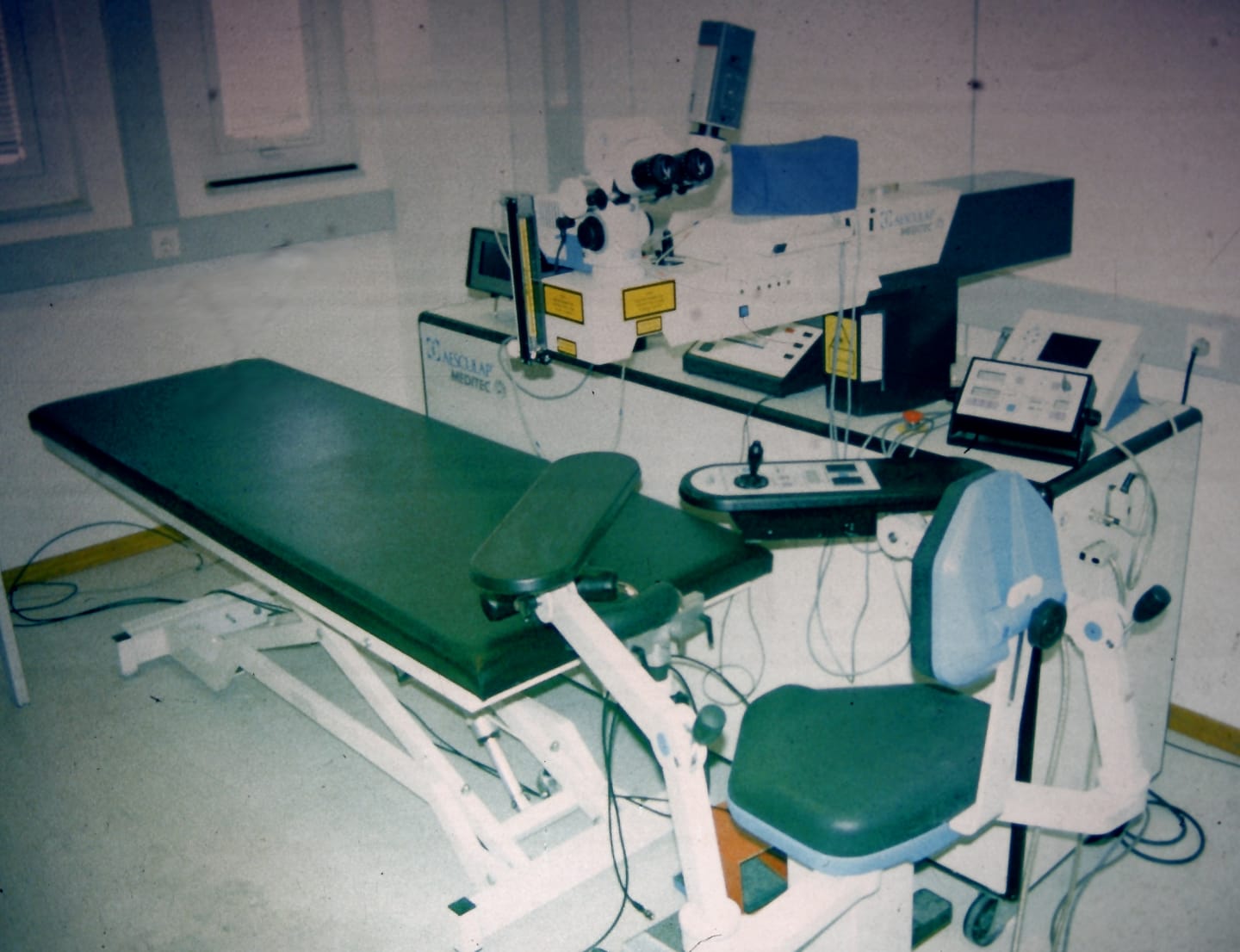
iLASIK is a brand name. Johnson & Johnson Vision uses it for its form of LASIK, in which wavefront eye mapping guides the treatment. The company describes a detailed map of the eye made with its wavefront system, an ultra-fast laser that creates a thin flap, and a second laser that reshapes the cornea. Everything below about LASIK applies. On the register the entry is iLasik Tedavisi under eye diseases.
In LASIK the flap is smoothed back and stays in place without stitches. In surface treatments the thin skin layer of the cornea is removed and regrows over about a week, and the eye is normally very sore meanwhile. In lenticule extraction a femtosecond laser shapes a small disc of tissue that is removed through a small opening.
Who it is for, and who it is not for
The College says you must be over 18 and have a stable glasses prescription, normally no change greater than 0.5 dioptres in the last two years. You are most likely to be suitable with a prescription up to minus 10 for short sight, up to plus 4 for long sight and up to plus or minus 6 for astigmatism. Laser can work at higher prescriptions in some people, and some people with lower prescriptions suit a lens implant better.
You may not be suitable with cataracts or eye surface problems. The College adds that many contact lens wearers are wrongly told they have dry eyes and cannot have laser, because surface discomfort in lens wearers is often treatable. After surgery, tell future eye doctors you had it: it can make eye pressure readings for glaucoma under-read and affect lens calculations for cataract surgery. Keep your last pre-laser prescription.
How it is done in Türkiye
We found no Turkish rule text we could verify on who may operate a refractive laser or which pre-operative tests are mandatory, so we cannot say what the rules require. The register records authorisation and facility type, not which treatments a facility performs. What the College describes as the usual pattern in the UK is useful as a yardstick.
- Eye-drop anaesthetic, a spring clip to keep the lids open, lying down throughout.
- Usually both eyes in one session, about half an hour, home the same day.
- After LASIK, many people can return to work the next day. After surface treatments, a week or longer may pass before vision reaches the driving standard.
- Drops afterwards, and review appointments even if the eye feels good.
UK professional standards for refractive surgery, which do not bind a Turkish clinic but show what careful practice looks like, expect that the operating surgeon holds the recommendation consultation face to face and not on the day of surgery, and that consent is a two-stage process with a cooling-off period, with a minimum of one week suggested. They say there should be no time-limited discounts and any deposit should be refundable if you decide not to proceed.
What to check before you book
- The surgeon. Ask for the name and title of the ophthalmologist who will operate and who did your tests. UK standards expect a specialist ophthalmologist with a refractive surgery qualification; ask in writing for the equivalent here: specialist title and diploma number.
- The measurements. Ask which tests are taken and given to you, including a scan of corneal curvature (topography), and what they show about your suitability. See medical records before treatment abroad.
- Contact lenses and prescription stability. Ask how long to stay out of lenses before testing and which previous prescriptions they want.
- The technique. Ask whether it is LASIK, a surface treatment or lenticule extraction, which lasers are used, and why it suits your eyes.
- The time to decide. Ask for the written consent form to take home and for the cooling-off time before surgery.
- Aftercare. Ask exactly who reviews you, when, and where, and what happens if there is a problem when you are home.
What a package must state
- The technique, the lasers, and whether one or both eyes are treated.
- The surgeon's name and title, and who performs the tests.
- The tests included before surgery, with copies given to you.
- Medicines and drops included.
- Review appointments: when, where and by whom, in person or remote.
- Whether re-treatment to fine-tune the result is included, and for how long. The College says additional laser treatment is normally included for up to two years and that most clinics do not accept open-ended liability afterwards.
- The deposit terms and refund conditions.
- The records you receive: measurements, treatment details (laser settings), consent form and a discharge letter.
Risks, complications and aftercare
The College lists permanent serious loss of vision as rare, with fewer than 1 in 5000 needing a corneal transplant, and up to 1 in 10 needing some further surgery to reach a good result. Common side effects are glare, halos, starbursts, floaters, blurred or variable vision and dry eye, which usually improve over a few months. Red blotches on the white of the eye can take up to 6 weeks to clear.
Most surgeons advise no swimming for a week and, after LASIK, no contact sports for a month. Use drops as directed, attend all reviews, and contact your surgeon without delay for increasing pain, light sensitivity, redness, blurring, or an injury to the eye followed by pain or watering. Do not drive on the day, as the NHS advises. UK standards say review appointments are always required and that patients should not be discharged from follow-up until the result is stable.
Questions to ask in writing
- Who will operate, and what is their specialty and diploma?
- Which tests were done, who did them, and may I have the results?
- Which technique and lasers are planned, and why for my eyes?
- What makes me unsuitable, and have these been checked?
- How long before I can travel, and what do you advise for the journey?
- Who reviews me, when, and how, once I am home?
- Is re-treatment included, and for how long?
- What are the deposit and refund terms if I decide not to go ahead?
Frequently asked questions
Is iLASIK different from LASIK?
iLASIK is the brand name Johnson & Johnson Vision uses for its LASIK technique, which combines wavefront eye mapping, a laser that creates the flap and a laser that reshapes the cornea. It is LASIK. Ask what the clinic's laser does in your case, not just the name.
Who is suitable for laser vision correction?
The Royal College of Ophthalmologists says you must be over 18 with a stable prescription, normally no change greater than 0.5 dioptres in two years. You may be unsuitable if you have cataracts or eye surface problems. Your surgeon decides after reviewing your measurements and eye health.
What can go wrong?
Glare, halos and dry eye are common and usually improve over a few months. Up to 1 in 10 patients need some further surgery to reach a good result, and permanent serious loss of vision is rare. Fewer than 1 in 5000 need a corneal transplant.
How soon can I fly home?
We have no source for a number of days. The College says most surgeons advise no swimming for a week and, after LASIK, no contact sports for a month, and that review appointments are required, so ask the clinic in writing how soon you can travel and who reviews you.
Is laser vision correction covered by the NHS or insurance?
The Royal College of Ophthalmologists says surgery to correct the need for glasses or contact lenses is not available on the NHS and is not covered by private health insurance schemes.
This page is an information service, not medical advice. Clinimora is an independent, patient-funded research service. It does not sell treatment, does not diagnose and does not recommend any clinic.