
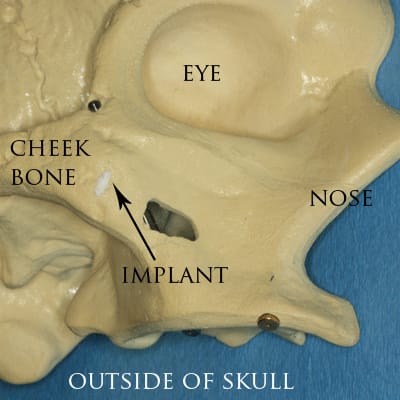
What it is
A conventional dental implant is anchored in the jawbone. When the upper jaw has lost a lot of bone, there may be too little left for that. A zygomatic implant is a long implant anchored in the cheekbone (the zygoma). In published reviews, zygomatic implants are described as an alternative when conventional implants or formal bone grafting are not feasible because of the shape of the remaining upper jaw.
In the Ministry of Health register, the treatment appears as "Dental and Zygomatic Implants" (Dental ve zigomatik implant uygulamaları) within the oral, dental and maxillofacial surgery branch. This page also covers dental implants in that context; for the general stages of any implant, see dental implant surgery, and for grafting in the upper jaw see sinus lift.
Who it is for, and who it is not for
Zygomatic implants are for a narrow group: adults with a severely resorbed upper jaw, often with no upper teeth, for whom a dentist judges that standard implants or grafting will not work. They are not a faster route for someone with enough bone for conventional implants. Whether you are in that narrow group is a decision for a dentist or surgeon who has examined you and read your imaging.
Reviews report lower survival in jaws that have had part of the bone surgically removed (resected) than in the atrophic jaw. If that applies to you, ask the surgeon specifically about experience with that situation.
If you have sinus disease or have had sinus surgery, say so. Sinusitis is the complication most often reported after zygomatic implant placement, and your history matters to the plan.
How it is done in Türkiye
The operation is carried out on the upper jaw by a surgeon. We have not found a source that states how it is usually organised in Türkiye, including the type of anaesthesia, so ask what is planned for you and what you will wear while the implants heal.
On the facility side, Türkiye's regulation on private oral and dental health facilities (Resmî Gazete, 6 October 2022, no. 31975, amended since) distinguishes between a practice, polyclinic, centre and hospital. The 2024 amendment makes a general-anaesthesia unit compulsory in centres. As we read the consolidated text, sedation and general anaesthesia are not permitted in a practice or polyclinic, though they can be arranged elsewhere. We read this through secondary reproductions, so ask in writing for the facility type and where sedation or anaesthesia would take place. For an operation of this size, also ask where you would stay overnight if needed and who would be on call.
We have not been able to confirm a rule that reserves zygomatic implant surgery to a particular specialty. Oral, dental and maxillofacial surgery is a recognised specialty, and a dentist may not practise as a specialist beyond what a diploma or specialty certificate allows. Ask who will operate, their title, the document that shows it, and how many zygomatic implants they have placed.
What to check before you book
- Surgeon's experience. An umbrella review of the systematic reviews concluded that complications were rare and usually manageable, but that treatment should be done by appropriately trained clinicians with noticeable surgical experience. Ask for the number of zygomatic cases and the technique the surgeon uses.
- Why this operation. Ask the clinic to show on your scan why conventional implants or grafting will not work, and what the alternatives are.
- Imaging. The European Association for Osseointegration favours cross-sectional imaging for zygomatic surgery; ask for the scan and the written plan.
- Facility. Look the facility up on the register; note its type, authorisation number and whether it has an anaesthesia unit. See what the register can and cannot tell you and search the register.
- Implant identity. Ask in writing for manufacturer, product, length and lot number of each implant.
- Who restores, and where. Zygomatic restorations are specialised. Ask who will build the teeth and whether a dentist at home would take on follow-up.
- Warranty wording. Ask what happens if an implant fails or sinus problems develop, and who pays.
What a package must state
- Number and type of implants (conventional and zygomatic) and their positions.
- Whether bone grafting, extractions or a sinus procedure are included.
- Manufacturer and model, or the commitment to name them before surgery.
- Type of anaesthesia, facility type, and any overnight stay.
- Temporary teeth and final teeth: included or not, and when they are fitted.
- Which stages need you in Türkiye and for how long.
- Records you receive: scan, X-rays, operation note, implant details.
- Warranty terms and conditions, and who pays for travel for repairs.
- Cancellation and refund terms for deposits.
Risks, complications and aftercare
Reviews of zygomatic implants report high survival of the implants themselves, but small studies and few randomised trials; the authors describe the evidence as limited. Sinusitis is the complication most often reported; soft-tissue infection around the implant is another. As with any implant, the implant can fail to join with the bone, parts can loosen, and inflammation can develop around the implant over time; the European Federation of Periodontology guideline calls for structured supportive care with periodic checks once implants are in use.
Aftercare after an operation of this size should be written down in detail. Seek urgent help for bleeding that will not stop, severe or worsening pain or swelling, fever, or new problems with the nose or sinuses, including discharge into the mouth. Tell any dentist or doctor at home exactly what was done.
Questions to ask in writing
- Who will operate, what is their title, and how many zygomatic implants have they placed?
- Why can't conventional implants or grafting work for me?
- Which technique and which implant product will be used, and what are the lot numbers?
- What anaesthesia, in which type of facility, and where would I stay afterwards?
- What temporary teeth will I have, and when will the final teeth be fitted?
- What are the sinus risks in my case, and who treats them if they arise?
- What does the warranty cover and for how long?
- Who will follow me up at home, and what records will they receive?
Frequently asked questions
What is a zygomatic implant?
It is a long implant that is anchored in the cheekbone (zygoma) instead of, or in addition to, the upper jawbone. It is generally presented as an alternative when the upper jaw is too resorbed for conventional implants or for grafting.
Is it more risky than a normal implant?
It is a more complex operation, and sinusitis is the complication most often reported in reviews. Reviews also stress that it should be done by appropriately trained clinicians with substantial surgical experience.
Do I need a scan?
The European Association for Osseointegration favours three-dimensional imaging for zygomatic implant surgery. Ask who will read your scan and whether you may have the files.
How many zygomatic implants has the surgeon placed?
Ask in writing. The register does not record it, and reviews say experience matters. A clinic that cannot or will not say is giving you information too.
Can the whole treatment be done in one trip?
Ask the clinic to set out in writing which stages happen on which trip, what temporary teeth you would have in between, and who handles follow-up at home.
This page is an information service, not medical advice. Clinimora is an independent, patient-funded research service. It does not sell treatment, does not diagnose and does not recommend any clinic.