
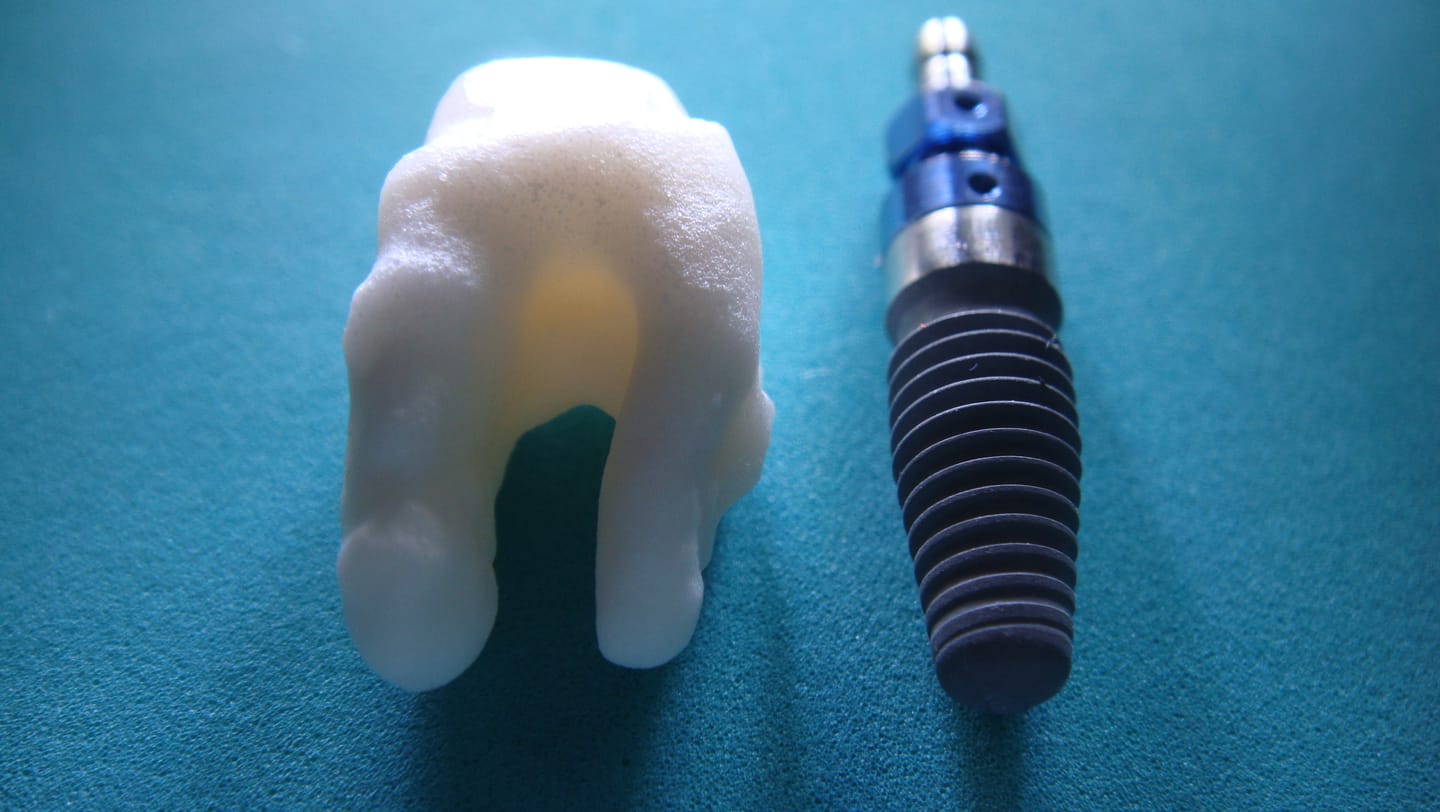
What it is
Most dental implants are made of titanium. A ceramic implant, usually made of zirconium dioxide ("zirconia"), does the same job as a titanium one: it replaces the root of a missing tooth, is placed in the jawbone, and after healing holds a crown, bridge or denture. People ask for it mainly because of its tooth-coloured appearance.
The important question is not whether it looks natural but how much is known about how it performs. Systematic reviews of zirconia implants report acceptable survival over the first years for one-piece designs. The same reviews state that long-term evidence is lacking, that data for two-piece systems are insufficient to support clinical use, and that concerns about fracture remain. One comparison found no significant difference from titanium on some measures; another reported lower survival and more marginal bone loss than titanium. Evidence of this kind means the choice is yours to weigh with a dentist, not something a clinic's brochure can settle.
In the Ministry of Health register, this treatment appears as "Ceramic / Zirconia Implant" (Seramik / Zirkonyum İmplant). Our page on dental implant surgery covers the general stages of any implant treatment.
Who it is for, and who it is not for
A zirconia implant is generally an option for adults who would otherwise consider a titanium one, and who want a ceramic alternative for reasons of appearance or preference. Whether it suits your mouth depends on bone, gums and health, assessed by a dentist who has examined you.
Points to raise:
- A two-piece design needs particular questioning, since the reviews we read found weaker data for it.
- Bone grafting or sinus work is a separate matter; see sinus lift.
- Smoking raises the risk of complications with implants generally.
- If the evidence is a deciding factor for you, ask the dentist plainly why they propose ceramic rather than titanium for your case, and what they would do if it did not work out.
How it is done in Türkiye
The surgery itself follows the same pattern as any implant: assessment, placement, a healing period, then the tooth. NHS hospital information describes three or four stages over many months. What differs is the product and the clinician's experience with it, neither of which the register records.
On the facility side, Türkiye's regulation on private oral and dental health facilities (Resmî Gazete, 6 October 2022, no. 31975, amended since) distinguishes between a practice, polyclinic, centre and hospital. The 2024 amendment makes a general-anaesthesia unit compulsory in centres. As we read the consolidated text, sedation and general anaesthesia are not permitted in a practice or polyclinic, though they can be arranged at another facility. We read this through secondary reproductions, so ask the clinic to state its facility type and where any sedation would happen.
We have not been able to confirm a rule that reserves implant placement to one specialty. Oral, dental and maxillofacial surgery is a recognised specialty; a dentist may not practise as a specialist outside what a diploma or specialty certificate allows. Ask who places the implant, their title, and the document that shows it.
What to check before you book
- Product, not just "ceramic". Ask for the manufacturer, product name, one-piece or two-piece design, size and lot number in writing before surgery.
- Evidence for that product. Ask for the manufacturer's technical or instructions-for-use document, and for the clinic's own experience with it, in writing.
- Who restores it. Ask who makes the tooth, in which country, and whether that dentist works with the product. Ask a dentist at home too.
- Surface preparation. One review found lower survival when the upper part of a zirconia implant had been shaped with drills. Ask whether any adjustment of the implant itself is planned.
- Imaging and plan. Ask for the scan and the written plan, as with any implant.
- Warranty wording. Ask what is covered if a ceramic implant fractures or does not join with the bone, and for how long.
- Facility and authorisation. Look the facility up on the register and note its type. See what the register can and cannot tell you and search the register.
What a package must state
- Number of implants and tooth positions.
- Material, manufacturer, model, one- or two-piece design, size.
- Whether grafting, extractions, temporary teeth and final crowns are included.
- Who performs each stage, with title, and which stages need you in Türkiye.
- Records you will receive: scan, X-rays, operation note, implant identification.
- Warranty: what is covered (fracture, non-integration), for how long, conditions, who pays travel.
- Whether replacement with a titanium implant is offered if a ceramic implant fails, and on what terms.
- Cancellation and refund terms for deposits.
Risks, complications and aftercare
As with any implant, the implant may fail to join properly with the bone, and parts can loosen or wear; NHS hospital information says the risk is higher for some people, including smokers. For ceramic specifically, the reviews we read keep returning to two uncertainties: how long these implants last, and fracture. Inflammation of the gum and bone around an implant is a risk for all implant types; the European Federation of Periodontology guideline calls for a structured supportive care programme once implants are in use, with periodic checks.
Aftercare is the same in principle: follow the written instructions, keep your regular dental check-ups, and seek urgent help for bleeding that will not stop, severe or worsening pain or swelling, or fever. Keep all documents from the trip.
Questions to ask in writing
- Which exact implant product will you use, one-piece or two-piece, and what is its lot number?
- What evidence supports this product, and may I see the manufacturer's document?
- Why ceramic rather than titanium in my case?
- Who will place the implant, with what title, and how many ceramic implants have they placed?
- Who makes the final tooth, and have they worked with this product?
- What happens under the warranty if the implant fractures or does not join with the bone?
- Would you replace it with a titanium implant, and who pays?
- Which stages require me to be in Türkiye, and for how long?
Frequently asked questions
Are zirconia implants as proven as titanium implants?
Not on the evidence we found. Systematic reviews report acceptable short-term survival for one-piece designs but say long-term data are insufficient, and that data for two-piece systems are weaker. Ask the clinic what evidence it relies on for the specific product.
What is the difference between one-piece and two-piece zirconia implants?
A one-piece implant has the post and the part that carries the tooth made as a single unit. A two-piece implant has a separate connecting part. Reviews report less data, and in one update lower survival, for two-piece designs.
Can any dentist take over my zirconia implant at home?
Not necessarily. Parts and procedures are specific to each system, so you need the manufacturer, model and lot details in writing. Ask a dentist at home before you travel whether they work with the product.
Does the register show which clinics place ceramic implants?
The register lists facilities with this treatment name, but it records authorisation, not how often a facility performs the treatment or which product it uses. Ask for both in writing.
Is a zirconia implant right for someone who smokes?
We cannot say. NHS hospital information on implants in general says smoking raises the risk of the implant not joining with the bone. Tell the clinic about smoking and ask how it changes the plan.
This page is an information service, not medical advice. Clinimora is an independent, patient-funded research service. It does not sell treatment, does not diagnose and does not recommend any clinic.