
What it is
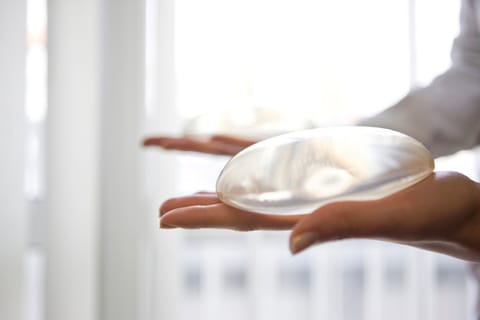
Breast augmentation increases the size of the breasts using implants. The surgeon makes a cut next to or below the breast, places the implant either between the breast tissue and the chest muscle or behind the muscle, and closes the cut with stitches and a dressing.
Implants are silicone-filled (the most common in the UK; less likely to wrinkle and more natural to the feel, but able to spread into the breast and cause lumps) or saline-filled (more likely to fold, rupture or deflate over time; the body absorbs the saline if that happens). Our register also lists breast implant and breast implant removal as separate entries. If you are considering lifting as well as enlarging, see breast lift.
Who it is for, and who it is not for
People choose augmentation for size or shape, or to restore volume after weight change or pregnancy. In the UK it is rarely funded by the health service, and then only in cases such as very uneven breasts or no breasts, depending on the area.
Think about the long term before you travel. Implants need monitoring and, in time, replacement, so you are committing to future surgery at your own expense. If you plan to breastfeed, ask the surgeon about it. If you are being treated for a mental-health condition or are unsure of your reasons, speak to the clinician treating you first.
How it is done in Türkiye
Expect a general anaesthetic and an operation of about 60 to 90 minutes. Some people go home the same day, while others stay overnight. You move around soon after, take 1 to 2 weeks off work, avoid driving for at least a week, and avoid heavy lifting and strenuous exercise for at least a month. Some surgeons advise a sports bra day and night for up to three months. Stitches come out after 1 to 2 weeks unless dissolvable, and by six weeks most normal activity is possible.
The register's own scheme files breast augmentation under plastic, reconstructive and aesthetic surgery; Turkish plastic surgery is a five-year specialty. Ask for the specialty and certificate in writing.
On facility type, the Ministry's rules for outpatient facilities let a medical centre operate only under a surgical permit limited to the specialties named on it; patients graded ASA 3 or above (a standard anaesthetic risk grade) cannot be operated on there, and observation is limited to 24 hours. A polyclinic may not run around the clock or have an emergency unit. A hospital can admit you overnight. We found no rule that ties this operation to one facility type, so ask for the place in writing.
The register records that a facility is authorised to treat international patients; each facility enters its own treatment list, and the authorisation does not certify the procedure.
What to check before you book
- The surgeon, by name, specialty, and that they will operate themselves: how to check a doctor.
- The place, type and authorisation number: how to read one.
- The implant: manufacturer, model, size, shape, surface and lot or serial number, in writing before the operation and again on the day. Ask who approved this model for sale and where.
- The implant card and an operation note naming the implant, pocket and incision.
- The anaesthetist, named, present throughout.
- Two consultations, the first in person with the surgeon, with a cooling-off period between them, as UK guidance advises.
- Your flight: 5 to 7 days is the public-health minimum; get the surgeon's clearance in writing.
- Future records: In the UK, surgeons and clinics keep implant records for a limited period, and a UK register of breast implants exists so people can be traced if a safety concern arises. Ask your own GP how an implant placed abroad is recorded, and keep every record: what to ask for.
What a package must state
- Implant make and model, size and type, and that you will receive the details in writing.
- Pocket placement and cut location.
- Surgeon, anaesthetist, facility name, type, address and authorisation number.
- Nights in hospital and type of room.
- Dressings, bras, medicines: included or charged separately.
- Consultations, review dates, the minimum stay.
- Follow-up after you return, for how long, in which language.
- What is covered if an implant must be removed or replaced soon after, who performs it, in which country and who pays.
- Documents on leaving, including the implant card.
Risks, complications and aftercare
Implant-specific: scar tissue shrinking around the implant so the breast feels hard (capsular contracture); rupture, which may form small tender lumps visible only on scans and needs removal; creases, folds, rotation and rippling; changed nipple sensation, temporary or permanent; slightly less milk when breastfeeding; thick, obvious scars. A very small number of people with implants have developed breast implant-associated anaplastic large cell lymphoma (BIA-ALCL), an uncommon immune-cell cancer in the scar tissue around the implant. Some people report tiredness, anxiety and joint pain, sometimes called breast implant illness. General risks: bleeding, a blood clot (which can be life-threatening), infection and an allergic reaction.
An ultrasound or MRI scan can check for rupture, and a ruptured implant should be removed promptly. One manufacturer's implants were banned in the UK in 2010 for containing unapproved silicone gel and a higher rupture risk; this is why make and model matter.
Contact the clinic promptly for unexpected pain, burning, unusual swelling or skin colour change. In the UK, implant problems can be reported through the Yellow Card scheme. See aftercare abroad.
Questions to ask in writing
- Who will operate, and with what specialty? Please send the certificate.
- Which implant exactly (manufacturer, model, size, surface), and who approved it?
- Will I receive an implant card and the lot or serial number?
- Where will the operation take place, and where will I spend the night?
- Who is the anaesthetist, and are they present throughout?
- How many days must I stay after surgery, and when will you confirm I may fly?
- What follow-up is there at home, and who treats a complication there?
- If an implant must be replaced early, who pays and where?
- Can I see the contract and cancellation terms before paying any deposit?
To have a named clinic checked, see the Research Pass.
Frequently asked questions
Do breast implants last for life?
No. Implants do not last a lifetime and will probably need replacing at some point. Some women need further surgery after about 10 years, because of implant problems or changes in the breast.
What should I be given about my implants?
At least the manufacturer, model, size and, where the maker supplies it, the lot or serial number, ideally on an implant card. UK regulators list manufacturer, model, batch number and surface texture as the details that help if a problem is ever reported.
Will I still need breast screening?
Yes. You can still develop breast cancer, and mammograms can be done with implants and do not cause rupture. Tell the mammography staff you have implants, because they may use a modified technique.
How long should I stay in Türkiye?
UK public-health guidance says to avoid flying for 5 to 7 days after breast surgery. UK surgeons' guidance for operations under general anaesthetic of up to three hours suggests staying 1 to 2 weeks. The operating surgeon should decide and confirm in writing.
What about breastfeeding?
Breast augmentation may mean slightly less milk. Ask about it if you plan children.
This page is an information service, not medical advice. Clinimora is an independent, patient-funded research service. It does not sell treatment, does not diagnose and does not recommend any clinic.